Inside 21-Storey Ikoyi Tower Betting on Luxury, Sustainable Living
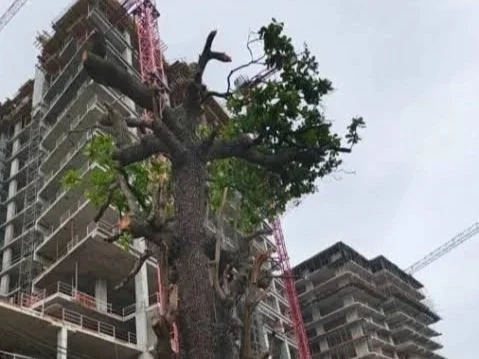
New 21-storey tower rises in Ikoyi
A new 21-storey residential tower in Ikoyi, Lagos, is targeting Nigeria’s growing premium housing market with a development model that combines luxury accommodation, sustainability features and modern building infrastructure.
/ You Might Also Like /




growing demand for premium homes that offer security, modern amenities and environmentally conscious infrastructure.
Ikoyi continues to attract high-rise residential development
Ikoyi remains one of Lagos’s most established high-value residential markets, with limited land availability and strong demand supporting the development of high-rise properties.
The emergence of 21-storey residential projects reflects a broader shift towards vertical development in areas where land costs and development constraints make large-scale low-density housing increasingly difficult.
For developers, high-rise construction provides a way to accommodate more residential units within strategically located urban districts while responding to demand for premium housing close to business and commercial centres.
Tower targets premium residential demand
The new development is positioned within the luxury residential segment, with its offering built around high-end accommodation, modern amenities and enhanced safety standards.
According to BusinessDay, the project is designed to meet the expectations of buyers and residents seeking premium homes in a location where demand for quality residential accommodation remains strong.
The development therefore reflects the continued willingness of high-income buyers and investors to pay a premium for properties that combine location, quality and modern facilities.
Sustainability forms part of the development strategy
Environmental considerations are also a major component of the project.
The developers are incorporating environmentally friendly infrastructure into the tower as part of an effort to make the building more sustainable.
This reflects a broader shift within the Nigerian property market, where sustainability is increasingly becoming part of the conversation around premium developments.
Energy efficiency, responsible resource use and improved building performance can help reduce operating costs over the life of a property while also supporting broader environmental objectives.
Safety remains critical for high-rise development
The development comes against the backdrop of increased scrutiny of high-rise construction in Lagos.
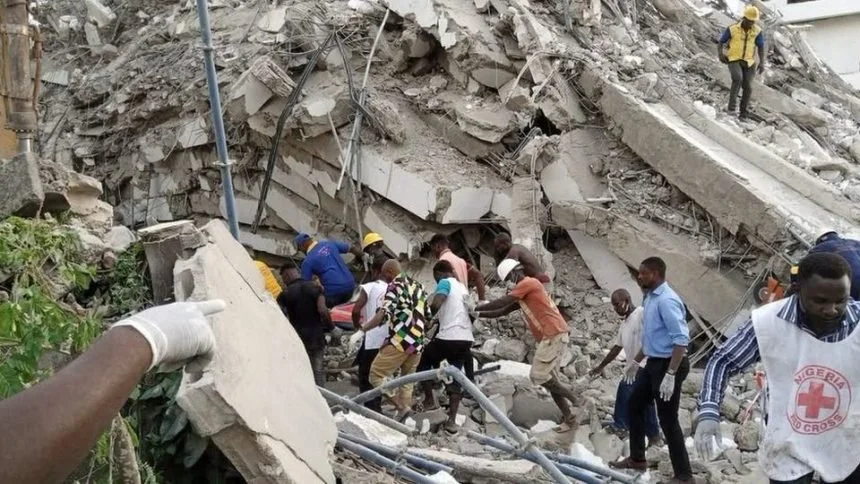
The collapse of a 21-storey building under construction in Ikoyi in November 2021 heightened concerns about structural integrity, regulatory compliance and professional oversight in high-rise projects. BusinessDay has previously reported extensively on the implications of that incident for Lagos’s housing and construction industry.
Consequently, safety standards and regulatory compliance remain critical considerations for any new high-rise development in the area.
For investors and prospective buyers, structural certification, professional supervision, planning approvals and evidence of compliance are important components of property due diligence.
Vertical development responds to Lagos land constraints
The project also illustrates the economic case for vertical development in Lagos.
As demand for centrally located housing increases and developable land becomes more expensive, developers can use vertical construction to maximise the value of strategically located sites.
High-rise residential developments can also support more efficient use of existing urban infrastructure by concentrating residents within established areas.
However, increased density requires adequate supporting infrastructure, including roads, drainage, water supply, electricity, waste management and emergency-response systems.
Premium housing market remains investment-driven
The development highlights the continued importance of investment demand within Lagos's luxury residential segment.
High-end residential projects can attract buyers seeking both accommodation and capital preservation, particularly in established locations where land availability is limited.
However, the performance of premium residential developments ultimately depends on demand, pricing, financing conditions and the wider economic environment.
A luxury development can command strong prices when location and product quality align with demand, but the market remains sensitive to changes in purchasing power and investment sentiment.
Sustainable construction could influence future developments
The incorporation of sustainability features into the Ikoyi tower could also contribute to changing expectations within Nigeria's property sector.
As developers compete for buyers and investors, environmentally efficient buildings could become increasingly important, particularly for institutional investors and high-net-worth purchasers who place greater emphasis on operating efficiency and long-term asset value.
This could encourage developers to consider sustainability earlier in the design and construction process rather than treating it as an additional feature after development has begun.
Implications for Lagos real estate
The project represents more than another luxury development in Ikoyi. It illustrates how Lagos's property market is adapting to land scarcity, rising demand for centrally located homes and changing expectations around building quality.
The continued development of high-rise residential projects could support more efficient land use in established urban areas.
At the same time, the concentration of premium developments in districts such as Ikoyi also highlights the affordability divide within Lagos's housing market. Luxury projects can increase the supply of high-quality accommodation but do not directly address the shortage of affordable housing for middle- and lower-income households.
Outlook
The 21-storey Ikoyi tower reflects the continued evolution of Lagos's premium residential market towards vertical development, modern amenities and more sustainable building practices.
Its success will depend not only on the quality of the finished property but also on market demand, construction standards, infrastructure capacity and long-term operating performance.
For Lagos's wider housing market, the development reinforces the role of high-rise construction in making more efficient use of scarce urban land. However, the city's broader housing challenge will require a parallel expansion of affordable and middle-income housing alongside premium developments.
READ MORE