Government Revenue Hits ₦118.8 Trillion, Yet Fiscal Pressures Persist Across Three Tiers
Higher Government Revenue Yet Limited Capital Spending Raises Accountability Concerns
Nigeria's three tiers of government generated an estimated ₦118.8 trillion in combined Federation Account allocations and internally generated revenue between 2023 and May 2026. Despite the significant increase in public revenue following recent economic reforms, governments at the federal, state and local levels continue to face mounting financial obligations, prompting renewed calls for improved fiscal transparency, stronger accountability and more efficient public spending.
/ You Might Also Like /




According to findings reported by Financial Vanguard, the Revenue Mobilisation, Allocation and Fiscal Commission (RMAFC) estimated that about ₦53.3 trillion was distributed through the Federation Account Allocation Committee (FAAC) during the period, while internally generated revenue across the three tiers of government reached an estimated ₦65.5 trillion. Analysts project that total public revenue could rise to ₦150 trillion by the end of 2026 if current trends continue.
Revenue Growth Driven by Economic Reforms
The report attributed the sharp increase in government revenue largely to the Federal Government's economic reforms, particularly the removal of petrol subsidies and the liberalisation of the foreign exchange market.
Average monthly FAAC allocations rose steadily from about ₦758 billion in 2022 to approximately ₦845 billion in 2023, ₦1.3 trillion in 2024, ₦1.93 trillion in 2025 and around ₦2.08 trillion during the first five months of 2026. These figures exclude the Federal Government's independent revenues and the internally generated revenues of states and local governments.
Financial Obligations Continue to Mount
Despite stronger revenue performance, governments continue to face significant fiscal pressures. The report noted persistent challenges in meeting obligations such as payments to contractors, pension arrears and implementation of agreed wage commitments in several states.
At the federal level, contractor groups have continued to demand settlement of outstanding verified payments, while government officials have acknowledged processing hundreds of billions of naira in outstanding obligations. Debt servicing and recurrent expenditure also continue to consume a substantial share of government resources, limiting available funding for capital projects.
Budget performance data cited in the report indicate that capital expenditure has consistently fallen below budgeted levels in recent years, with significant portions of approved capital budgets either delayed or rolled over into subsequent fiscal years.
Experts Call for Greater Accountability
Economic and public policy experts argue that increasing revenue alone will not improve development outcomes without stronger fiscal discipline and transparent resource management.
Chief Executive Officer of the Centre for the Promotion of Private Enterprise (CPPE), Dr Muda Yusuf, said the priority should shift from revenue generation to ensuring public funds are managed efficiently and disclosed transparently. He stressed that many state and local governments still provide limited information on budget implementation, procurement and project execution, making public accountability difficult.
Civil society organisations also called for greater citizen participation in budget monitoring and stronger oversight of public spending to ensure increased revenues translate into improved infrastructure, public services and economic development.
Implications for Housing and Infrastructure
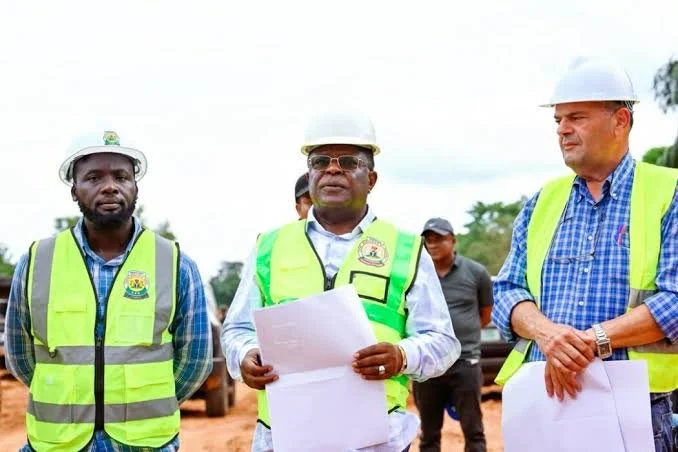
For Nigeria's housing and infrastructure sectors, the report underscores the importance of efficient public finance management. Capital budgets provide funding for roads, housing schemes, urban renewal projects and other critical infrastructure needed to support economic growth and improve living standards.
Industry stakeholders have consistently argued that stronger budget implementation, timely payment of contractors and greater transparency in public procurement would improve project delivery, strengthen investor confidence and reduce delays affecting housing and infrastructure development.
As governments continue to benefit from higher revenues, expectations are growing that a larger share of available resources will be directed towards productive capital investment capable of supporting long-term economic and urban development.
Conclusion
The increase in government revenue to an estimated ₦118.8 trillion reflects the fiscal impact of recent economic reforms and stronger revenue mobilisation. However, persistent financial obligations, limited capital budget implementation and ongoing concerns over public spending continue to highlight the need for improved fiscal management. For the housing, construction and infrastructure sectors, effective deployment of public resources will remain critical to accelerating project delivery, supporting investment and achieving sustainable national development.
READ MORE