Why Government JVs Struggle to Deliver Low-Income Housing
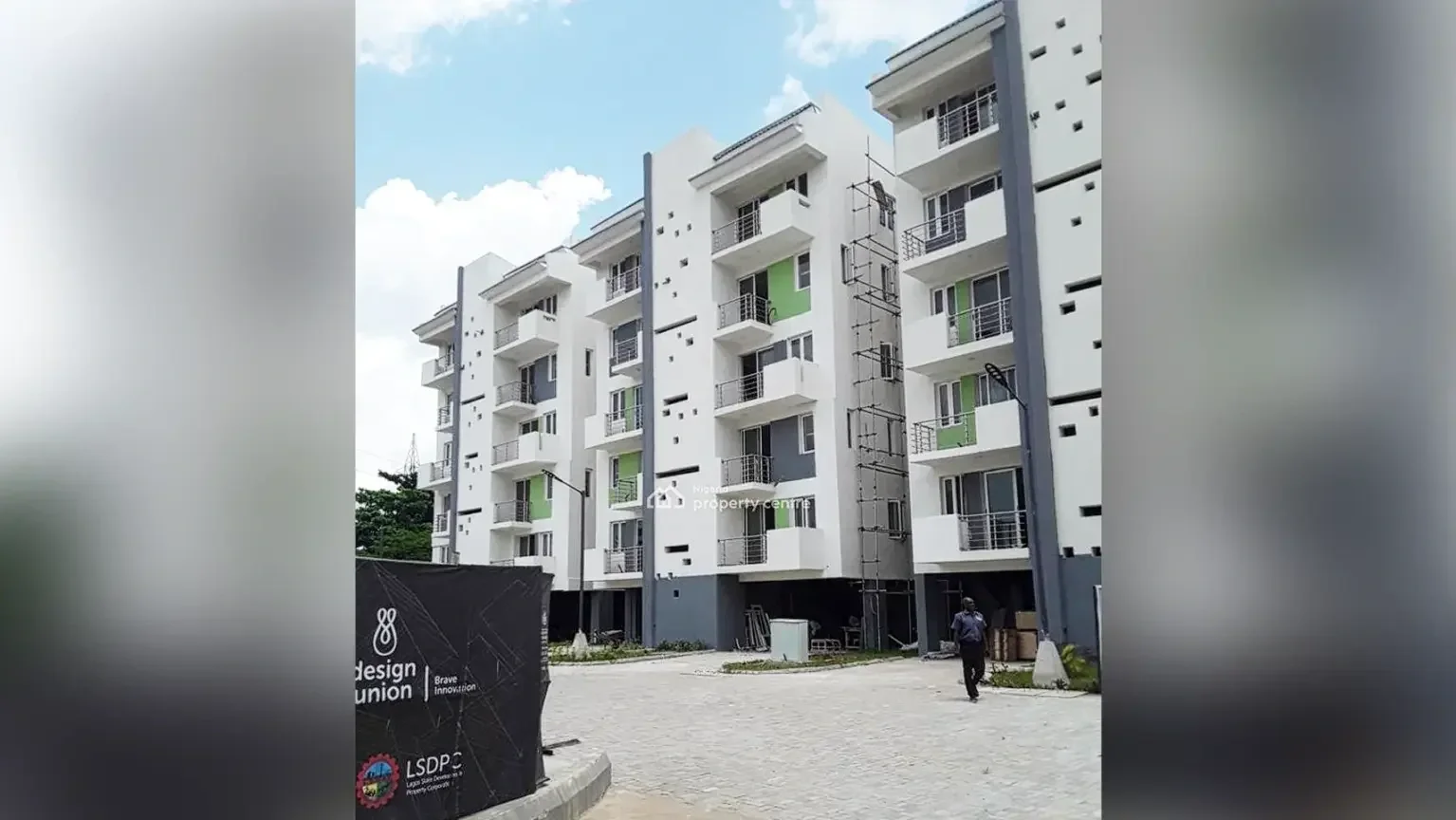
A joint venture project between Lagos government and a private firm
Government joint ventures with private developers have expanded Nigeria’s housing stock, but many projects continue to fall short of the low-income market they are intended to serve. Housing stakeholders say the model cannot deliver genuinely affordable homes without stronger government intervention through subsidised infrastructure, cheaper land, concessional financing and tax incentives.
/ You Might Also Like /




Why Many JV Homes Remain Unaffordable
Under most government-private joint ventures, the public sector contributes land and sometimes basic infrastructure, while private developers provide financing, construction expertise and project management.
The challenge arises from the commercial structure of these partnerships. Private developers need to recover construction and financing costs and generate returns, while governments may also seek financial value from the land contributed to the project.
These costs ultimately influence the selling price of completed homes, making many JV developments inaccessible to low-income households.
Rising Construction Costs Add to the Challenge
The cost of delivering housing has increased significantly, putting additional pressure on developers seeking to serve lower-income buyers.
Construction materials, infrastructure and financing all contribute to the final cost of a housing unit. Property developer Olajide Dosunmu said the rising cost of cement has become a particular constraint, noting that prices had increased from about ₦9,500–₦10,000 to an average of ₦13,000–₦14,000 over the previous six months.
Higher input costs reduce the room developers have to lower selling prices while maintaining commercially viable projects.
Mortgage Access Remains a Major Barrier
Even when developers succeed in producing relatively lower-priced homes, access to mortgage finance remains a significant obstacle for many potential buyers.
Low-income earners, particularly those working in the informal sector or with irregular incomes, often struggle to meet the requirements of formal mortgage institutions.
High interest rates and relatively short repayment periods can further increase monthly repayments beyond what many households can afford.
This means that housing affordability depends not only on the price of the property but also on the availability and cost of long-term financing.
Developers Often Target Higher-Income Buyers
The commercial realities of property development can also influence where developers choose to build and who they target.
Housing stakeholders told The Guardian that developers often favour middle- and high-income locations because properties in those markets can be sold more quickly and generate stronger returns.
As a result, some homes developed under government JVs are ultimately purchased by higher-income earners, investors and Nigerians in the diaspora rather than the low-income households the schemes were originally intended to support.
Government Land Alone Is Not Enough
Industry stakeholders argue that government must contribute more than land if JVs are to become an effective mechanism for affordable housing.
The Association of Housing Corporations of Nigeria said public intervention should include support for land, infrastructure and financing.
The association's Executive Secretary, Toye Eniola, said social housing requires government subsidies because private developers cannot deliver affordable homes while bearing the full cost of development and relying on expensive commercial financing.
This suggests that the structure of a partnership is as important as the partnership itself. If government provides land but leaves developers to absorb expensive infrastructure and financing costs, the resulting houses are likely to remain commercially priced.
Infrastructure Costs Push Up House Prices
Infrastructure represents another major component of housing development costs.
Where government does not provide roads, drainage, water and other basic infrastructure in areas designated for housing, developers may have to fund those facilities themselves.
Those costs are subsequently reflected in the selling price of the homes.
Property developer Olajide Dosunmu called for governments to provide infrastructure in areas earmarked for JV housing projects, arguing that public investment in infrastructure could reduce development costs and make homes more affordable.
Disagreements Can Delay Projects
The challenges facing government JVs extend beyond affordability.
Some projects have struggled because of disagreements between partners over responsibilities, funding, timelines and returns.
Housing stakeholders said successful JVs require clearly defined agreements covering each partner's obligations, project schedules, funding arrangements, risk allocation and profit-sharing mechanisms.
Without these provisions, projects can experience delays that increase costs and further weaken their ability to deliver affordable housing.
JVs Still Play an Important Role
Despite the challenges, stakeholders do not consider joint ventures ineffective.
Rogba Orimalade, former chairman of the Lagos branch of the Nigerian Institution of Estate Surveyors and Valuers, said JVs provide an avenue for developers to work with landowners and governments to unlock land for development.
He argued that without such partnerships, Nigeria's housing situation could be worse because JVs enable developers to combine land and development expertise to create additional housing supply.
The issue, therefore, is not necessarily whether governments should abandon JVs but whether the model can be redesigned to achieve clearer affordability objectives.
Need for Clear Affordability Targets
Experts say governments should define what constitutes affordable housing before entering into development partnerships.
Public land and other government incentives could be tied to specific affordability targets, ensuring that the benefits of the partnership reach the intended income groups.
This would require governments to establish eligibility criteria, monitor sales and prevent projects intended for low-income households from being dominated by investors or higher-income buyers.
Lower Development Costs Could Improve Outcomes
Stakeholders also called for reductions in development charges and regulatory costs.
Lower approval and consent charges could reduce the overall cost of development and create more room for developers to price homes competitively.
However, regulatory cost reductions would need to operate alongside other interventions, including cheaper land, infrastructure provision and affordable financing.
Implications for Nigeria's Housing Market
The difficulties facing government JVs highlight a broader problem within Nigeria's housing market: increasing housing supply does not automatically translate into affordable housing.
A project can add hundreds or thousands of units to the housing stock while remaining inaccessible to households that need affordable accommodation most.
For policymakers, the challenge is therefore to measure housing programmes not only by the number of units delivered but also by who can afford them, where they are located and whether buyers can access suitable financing.
For developers, predictable land arrangements, lower infrastructure costs and access to long-term finance could improve the commercial viability of projects targeted at lower-income households.
Outlook
Government-private joint ventures remain an important tool for expanding Nigeria's housing supply, but their ability to address the affordability gap will depend on stronger public-sector intervention.
Providing land alone is unlikely to produce low-income housing at scale when developers must also absorb expensive construction, infrastructure and financing costs. Subsidised infrastructure, concessional finance, lower development charges and clear beneficiary-targeting mechanisms could make the model more effective.
As Nigeria seeks to close its housing deficit, the focus will increasingly need to shift from simply delivering more homes to delivering homes that the households most affected by the housing crisis can actually afford.
READ MORE