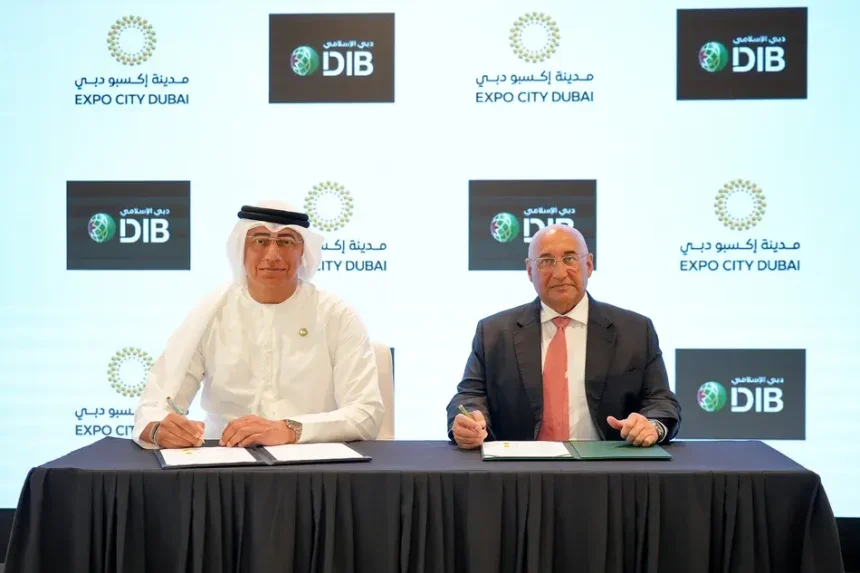
DIB, Expo City Dubai Expand Off-Plan Financing as Homebuyers Seek Flexible Payment Options
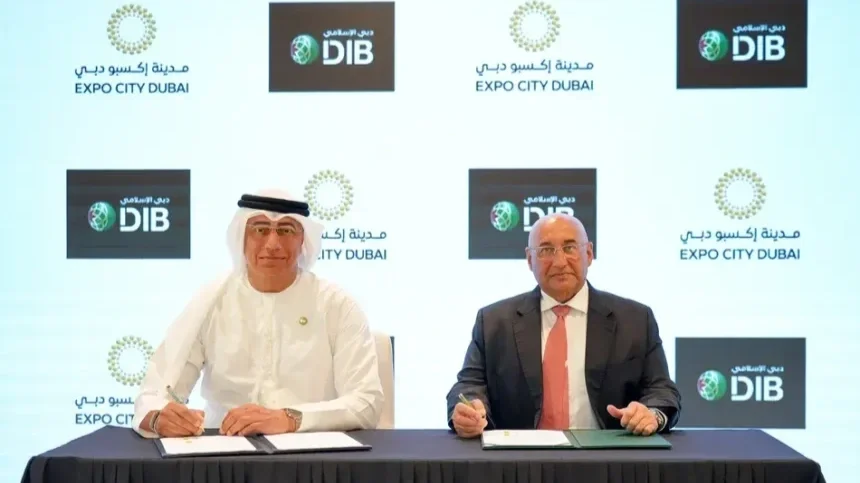
New Dubai Financing Model Gives Off-Plan Buyers Up to 25 Years to Pay
Dubai Islamic Bank (DIB) has partnered with Expo City Dubai to expand home-financing options for buyers purchasing properties under construction, introducing a financing structure designed to give eligible customers access to funding before their homes are completed.
/ You Might Also Like /




The partnership connects mortgage-style financing with Dubai’s growing off-plan property market, allowing eligible UAE nationals, residents and non-residents to arrange funding once an approved project reaches at least 35 per cent construction completion and the buyer has paid at least 50 per cent of the purchase price.
Under the arrangement, DIB can finance up to 50 per cent of the property value, subject to its credit, regulatory and eligibility requirements.
Financing Structure Targets Off-Plan Buyers
The new arrangement is designed around the financing challenges that buyers face when purchasing properties still under construction.
Eligible customers can secure DIB financing during the construction phase rather than waiting until handover. The financing does not require salary transfer and can be structured over a period of up to 25 years.
Customers pay only the profit amount during the construction period, while full monthly instalments begin at handover or within 24 months of receiving the financing, whichever comes first.
This structure gives buyers greater visibility over their financing commitments while allowing them to participate in the off-plan market before projects reach completion.
Expo City Dubai Expands Residential Development
Expo City Dubai is a master-planned urban development built around the legacy of Expo 2020 Dubai.
The development combines residential, commercial and cultural uses and forms part of Dubai’s broader strategy of creating integrated urban communities.
The partnership with DIB provides an additional financing channel for buyers seeking properties within the development, while supporting Expo City Dubai’s expansion of its residential offering.
For developers, access to financing at the construction stage can also strengthen the link between project delivery and buyer demand by giving customers a clearer route from property reservation to long-term financing.
Islamic Finance Creates an Alternative Route to Homeownership
DIB’s financing model is based on Shariah-compliant principles, providing an alternative to conventional mortgage structures.
The partnership demonstrates how Islamic financial institutions can participate more directly in property markets by developing financing products around the specific characteristics of off-plan transactions.
The approach could be particularly relevant in markets where buyers seek longer-term housing finance while also requiring financing structures that comply with Islamic principles.
For Dubai, where off-plan transactions form an important part of the residential property market, such products can help broaden the pool of buyers able to participate in new developments.
Financing Could Strengthen Off-Plan Demand
The availability of construction-stage financing could support demand for off-plan homes by reducing the gap between a buyer’s commitment to purchase and the point at which conventional long-term repayments begin.
For buyers, the 25-year maximum tenure provides a longer period over which financing costs can be spread.
For developers, stronger access to buyer financing can potentially improve sales conversion and provide greater visibility over demand during project construction.
However, financing alone does not eliminate the risks associated with off-plan property purchases. Buyers still need to consider project delivery timelines, developer track records, contractual terms, property valuations and their ability to sustain repayments.
Lessons for Housing Finance Markets
The DIB–Expo City Dubai partnership offers a useful example of how housing finance can be designed around the realities of property development.
Traditional mortgage products often become most relevant when completed properties are available as collateral. Off-plan developments, however, require financing structures that accommodate construction periods and staged payments.
By allowing eligible buyers to arrange financing before completion, the model creates a closer relationship between development finance, buyer finance and the eventual handover of housing units.
This approach could offer lessons for other emerging housing markets, including Nigeria, where limited access to long-term mortgage finance remains a major constraint on homeownership and housing supply.
Implications for Nigeria’s Housing Finance Market
Nigeria’s housing market faces a different set of challenges, including high construction costs, expensive credit, limited mortgage penetration and weak purchasing power.
Nevertheless, the underlying financing principle is relevant: housing finance products can be structured to accommodate the construction cycle rather than treating completed properties as the only point at which meaningful financing becomes available.
A comparable model in Nigeria would require stronger mortgage-market infrastructure, reliable property documentation, effective valuation systems and financing costs that households can realistically sustain.
It would also require developers and lenders to manage construction and repayment risks carefully, particularly where projects take several years to complete.
For Nigeria’s private developers and housing financiers, the Dubai model reinforces the importance of developing financing products that connect the buyer, lender and developer throughout the property-development cycle.
Outlook
The DIB–Expo City Dubai partnership highlights the growing importance of flexible financing in sustaining demand for off-plan housing.
By combining construction-stage financing, Shariah-compliant funding and repayment periods of up to 25 years, the model gives eligible buyers a longer-term route into Dubai’s residential property market.
For the wider housing-finance industry, the development underscores a broader lesson: expanding housing supply requires not only more construction, but also financing structures that match how homes are developed, purchased and ultimately paid for.
For markets such as Nigeria, adapting elements of such models could help broaden housing-finance options, provided lenders can manage affordability, property documentation, construction risk and long-term repayment capacity.
READ MORE