Government Expands Infrastructure, Economic Opportunities Across Communities - Shettima
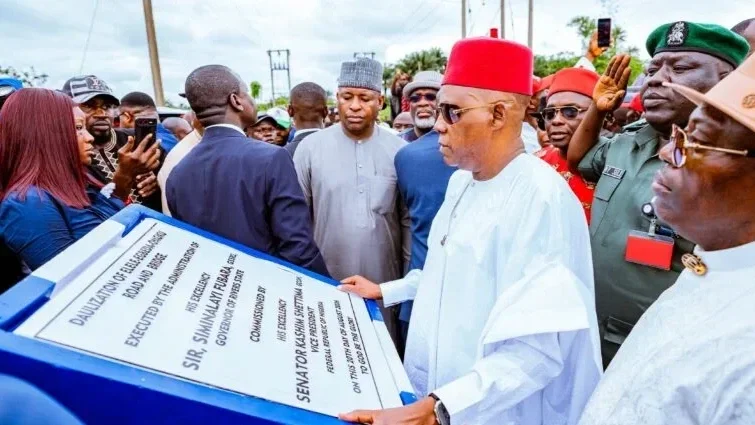
Tinubu Administration Spreading Infrastructure and Economic Opportunities Across Communities – Shettima
The Federal Government is expanding infrastructure and economic opportunities across communities as part of efforts to reduce congestion, create jobs and promote more balanced development nationwide, Vice President Kashim Shettima has said.
Shettima said the approach reflects the administration's focus on spreading economic activity beyond major urban centres and improving opportunities for communities across Nigeria.
/ You Might Also Like /




Infrastructure Positioned as Driver of Economic Development
According to the Vice President, infrastructure investment remains central to the administration's strategy for stimulating economic activity and improving living conditions.
The expansion of infrastructure can strengthen connections between communities, businesses and markets while creating conditions for investment and employment.
For Nigeria's rapidly urbanising population, improved infrastructure also has direct implications for housing and real estate development.
Development Beyond Major Urban Centres
The emphasis on distributing opportunities across communities is significant as population growth continues to place pressure on major Nigerian cities.
Lagos, Abuja, Port Harcourt, Ibadan and other major urban centres face growing demand for housing, transport, utilities and other infrastructure as people migrate towards locations with greater economic opportunities.
Creating economic activity and infrastructure in other communities could help reduce some of this concentration by making emerging locations more attractive for businesses, workers and investors.
Implications for Housing Development
Infrastructure and economic activity are closely linked to housing demand.
When roads, power, water, transport and other infrastructure improve in an area, businesses are more likely to establish operations and workers may increasingly seek accommodation nearby.
This can stimulate demand for residential and commercial property while creating opportunities for developers to invest in previously underserved locations.
For the housing market, however, infrastructure expansion needs to move alongside proper urban planning. Without coordinated land-use planning, rapid development around new infrastructure corridors can result in informal settlements, congestion and pressure on existing services.
Opportunity for Emerging Property Markets
The government's emphasis on spreading economic opportunities could create new investment corridors outside established property markets.
Improved connectivity can make peri-urban and secondary cities more viable for residential and commercial development, particularly where land costs remain lower than in major metropolitan centres.
For investors, such locations may offer opportunities for early-stage property development, provided that infrastructure improvements translate into sustained economic activity and population growth.
Balanced Development Requires Coordinated Planning
Spreading economic opportunities across communities requires more than infrastructure projects alone.
Housing, transportation, employment centres, utilities and social infrastructure need to develop together to create functional communities.
For policymakers, this means linking infrastructure investment with long-term urban and regional development plans.
Such coordination can help prevent situations where new roads or economic projects increase land values without creating sufficient affordable housing for workers and surrounding communities.
Job Creation Could Strengthen Housing Demand
Shettima also linked the administration's approach to job creation.
Employment growth typically increases demand for housing, retail space, transportation and other services. Where jobs are created outside traditional economic centres, new residential markets can emerge around those employment clusters.
This could support the growth of smaller cities and communities while reducing some of the pressure on Nigeria's largest urban centres.
Outlook
The Federal Government's stated focus on distributing infrastructure and economic opportunities across communities could have significant implications for Nigeria's urban development and property markets.
If infrastructure investment is accompanied by effective planning, affordable housing supply and reliable public services, emerging communities could attract greater private-sector investment and support more balanced population growth.
For the real estate sector, the key question will be whether infrastructure projects translate into sustained economic activity and new housing demand. The stronger the connection between infrastructure, employment and housing planning, the greater the potential for these investments to support more inclusive and sustainable urban development.
READ MORE