CBN faces fresh rate-cut decision as inflation eases
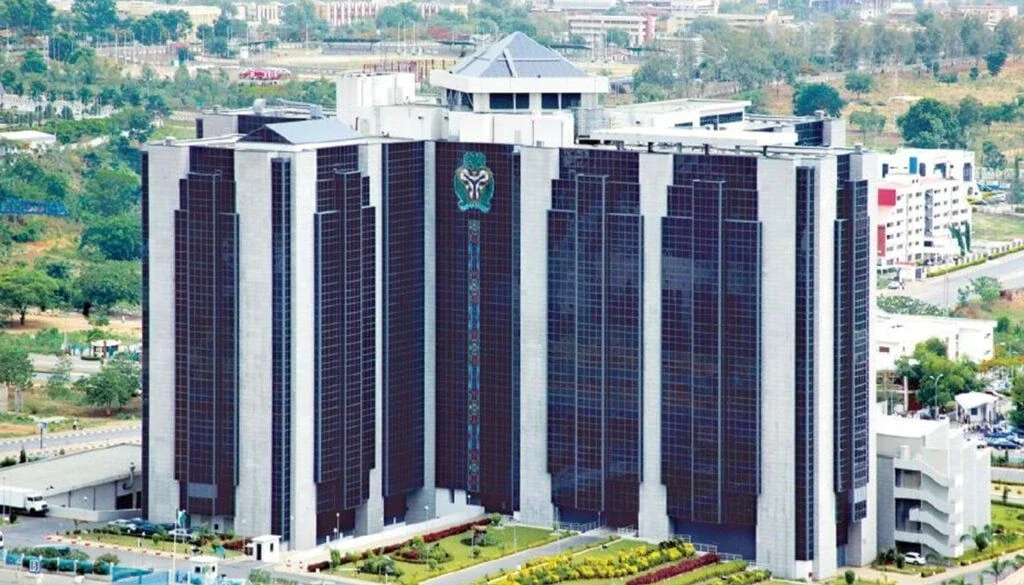
Nigeria’s inflation rate fell to a six-year low of 14.06% in October 2026, strengthening expectations that the Central Bank of Nigeria (CBN) could reduce interest rates further when its Monetary Policy Committee (MPC) meets on November 23 and 24. However, despite the improvement in headline and core inflation, analysts remain divided over whether the latest figures provide sufficient evidence for another rate cut.
/ You Might Also Like /




The National Bureau of Statistics (NBS) reported that headline inflation declined from 14.63% in September to 14.06% in October, its lowest level since September 2020, when the rate stood at 13.71%.
The latest figures present the CBN with a more favourable inflation outlook ahead of its final scheduled MPC meeting for 2026. Nevertheless, persistent food-price pressures, rising monthly headline inflation and uncertainty over exchange-rate stability could encourage policymakers to maintain the current interest rate.
The CBN currently holds its Monetary Policy Rate (MPR) at 23%, following a 350-basis-point reduction from 26.5% in September.
October inflation data strengthens the case for monetary easing
The October inflation report showed a broader moderation in price pressures than the previous month's figures.
According to the NBS, food inflation declined to 19.13% year-on-year from 19.59% in September, while core inflation, which excludes agricultural produce and energy prices, fell to 10.78% from 12.95%.
The monthly figures also showed improvements in these two categories. Food prices declined by 0.75% in October, while core inflation contracted by 0.53%, reversing the 1.11% increase recorded in September.
The Food Price Index also fell from 152.28 points in September to 151.13 points in October.
These movements suggest that the decline in annual inflation was supported by easing food and underlying price pressures rather than the headline figure alone.
However, the broader picture remains mixed. Monthly headline inflation accelerated to 0.43% in October from 0.06% in September, indicating that average consumer prices increased at a faster monthly pace despite the decline in the annual inflation rate.
Housing, water, electricity, gas and other fuels recorded a 1.97% monthly increase, while transport prices rose by 1.86%. Restaurants and accommodation services also recorded a 1.54% increase.
The figures show that lower annual inflation does not necessarily mean that the cost of living has fallen. Rather, prices are increasing more slowly over the year, while some essential expenditure categories continue to experience monthly increases.
Why the CBN may consider another rate cut
The decline in inflation has strengthened the argument for reducing borrowing costs, particularly as the MPR remains significantly above the headline inflation rate.
At 23%, the policy rate stands 8.94 percentage points above October's headline inflation rate. This gap suggests that monetary conditions remain restrictive, giving the MPC some room to consider a gradual adjustment.
The September decision provides important context for the next meeting. The CBN reduced the MPR by 350 basis points, from 26.5% to 23%, describing the move as an operational reset intended to bring the policy rate closer to prevailing market rates and improve monetary-policy transmission.
The adjustment did not necessarily signal the beginning of an aggressive interest-rate reduction cycle.
The committee must therefore assess whether the latest inflation figures demonstrate a sufficiently sustained improvement to justify further easing.
A rate reduction could gradually lower financing costs for businesses and households, although commercial banks do not automatically adjust their lending rates by the same amount or at the same time as changes in the MPR.
For businesses, cheaper credit could support working capital, investment and expansion. For households, it could eventually improve access to personal and mortgage financing, depending on how lenders respond.
However, a premature reduction could increase liquidity and spending before inflation has stabilised, potentially weakening the progress recorded in recent months.
Analysts remain cautious despite improved inflation figures
Before the October inflation figures became available, five market analysts surveyed by Nairametrics expected the MPC to retain the MPR at 23% during its November meeting.
The new data has strengthened the case for easing, particularly because core inflation reversed its September increase. However, analysts who assessed the latest figures still favour caution.
Igho Erakpotobo, Lead, Corporate Finance and Research at Futureview Financial Services, expects the CBN to maintain the rate at 23%. He argued that the September reduction represented a technical adjustment rather than the beginning of a sustained easing cycle.
He also identified seasonal demand for foreign exchange, election-related spending and possible changes in US monetary policy as factors that could influence the CBN's decision. Although he did not rule out a 50-basis-point reduction, he considered another large cut unlikely.
Vincent Oshoma, Business Development Manager at Blue Marina Securities, said the six-year inflation low had strengthened the argument for another reduction. However, he expects the CBN to balance cheaper borrowing costs against exchange-rate stability and inflation expectations.
Francis Nkem, an Investment Analyst at Iron Capital Asset Management, also expects either a hold or a marginal reduction. He cited persistent food-price pressures, recent naira movements and the risk of higher US interest rates as reasons for avoiding an aggressive adjustment.
Their assessments suggest that the MPC could favour maintaining the current rate or making a modest reduction rather than repeating September's 350-basis-point adjustment.
What the November MPC decision means for borrowers and investors
The MPC's decision will influence borrowing costs, savings returns, investment decisions and the wider financial market.
If the CBN cuts the MPR, banks could eventually reduce lending rates, making credit more affordable for businesses seeking expansion capital and households financing major purchases.
However, the transmission of monetary policy to commercial lending rates is not immediate. Banks also consider their funding costs, liquidity positions, credit risks and operating expenses when determining loan rates.
A reduction could also affect returns on fixed-income investments, including Treasury bills and government bonds. As interest rates decline, investors may reassess the attractiveness of these instruments and consider equities and other assets.
For the government, lower interest rates could eventually reduce the cost of borrowing through the domestic debt market, although the actual outcome would depend on investor demand and broader market conditions.
The housing sector could also benefit if lower policy rates translate into cheaper mortgage and construction financing. Developers rely on credit to fund land acquisition, building materials, infrastructure and project development, while prospective homeowners need affordable long-term loans to purchase properties.
However, a reduction in the MPR alone will not resolve Nigeria's housing-finance challenges. Mortgage rates also reflect funding availability, lending risks, loan tenures, property documentation and the cost of raising long-term capital.
CBN faces a balance between inflation control and economic growth
Beyond the latest inflation figures, the MPC must consider exchange-rate stability, liquidity conditions, economic growth, foreign reserves and developments in international financial markets.
The CBN has maintained that future monetary-policy decisions will depend on economic data. This approach allows the committee to respond to changing conditions without committing to a predetermined sequence of rate reductions.
The November 23–24 meeting will therefore test whether policymakers consider October's inflation improvement sufficient to begin another phase of monetary easing.
While the six-year low strengthens the case for lower borrowing costs, food inflation remains elevated, monthly headline inflation has accelerated and the impact of September's major policy adjustment is still unfolding.
The immediate question is no longer simply whether inflation has declined, but whether the improvement is sustainable enough to support cheaper credit without reigniting price pressures.
READ MORE