FG Unveils National Agricultural Mechanisation Policy, Targets 4,000-Unit Tractor Plant
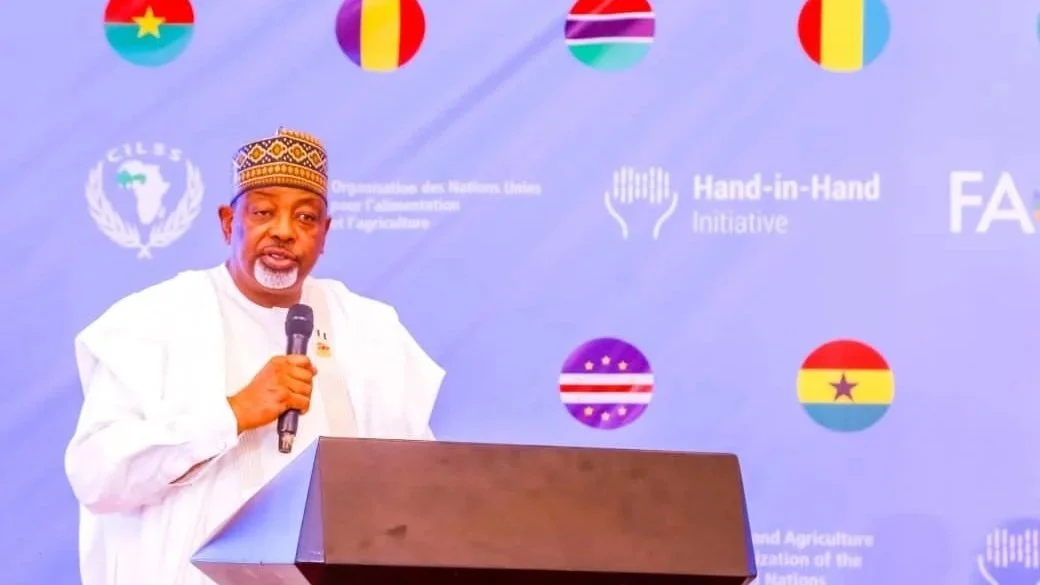
FG targets local tractor production
The Federal Government has unveiled the National Agricultural Mechanisation Policy and the National Agricultural Mechanisation Investment Strategy, with plans to establish a mega tractor assembly plant capable of producing between 2,000 and 4,000 tractors annually.
/ You Might Also Like /




Minister of Agriculture and Food Security, Abubakar Kyari, unveiled the policy frameworks on August 12, 2026, at a high-level national policy dialogue on agricultural mechanisation in Abuja. The government says the strategy will shift Nigeria from fragmented public procurement towards a commercially viable, private-sector-led mechanisation ecosystem.
Government targets domestic tractor production
The proposed tractor assembly plant forms a major component of the new investment strategy.
Kyari said the facility would have an annual production capacity of between 2,000 and 4,000 units, with the objective of reducing Nigeria's dependence on imported agricultural machinery and strengthening domestic industrial capacity.
The government also expects local production to create jobs and support the development of businesses around machinery maintenance, spare parts, equipment operations and other agricultural services.
The policy therefore positions mechanisation as an industrial and investment opportunity rather than simply a government equipment procurement programme.
FG moves towards mechanisation-as-a-service
Kyari said the policy goes beyond increasing the number of tractors available to farmers.
The government wants to establish a "Mechanisation-as-a-Service" model under which farmers can access machinery when and where they need it at commercially sustainable costs.
The broader mechanisation ecosystem will cover land preparation, planting, irrigation, crop protection, harvesting, processing, storage and logistics. It will also incorporate precision agriculture, digital technology, financing, insurance, maintenance, spare parts and after-sales services.
This approach could reduce the financial burden on individual farmers who cannot afford to purchase and maintain large agricultural machinery themselves.
2,000 tractors and 9,000 implements already being deployed
The Federal Government said procurement and deployment have commenced under the Renewed Hope National Agricultural Mechanisation Programme.
The programme includes 2,000 tractors and more than 9,000 assorted implements and spare parts. Kyari described the intervention as the largest single agricultural mechanisation programme undertaken in Africa.
However, the minister stressed that the success of the programme should not be measured simply by the number of machines acquired.
He said machinery must remain productive economic assets through proper maintenance, financing, utilisation and access for farmers.
Policy seeks to attract private investment
The investment strategy is designed to encourage private-sector participation in agricultural mechanisation.
The government wants to move from public procurement to sustainable investment and from fragmented interventions to bankable opportunities that can attract capital and entrepreneurial participation.
This could create opportunities for investors and businesses involved in equipment leasing, machinery operations, repairs, logistics, digital fleet management, spare-parts distribution and agricultural services.
The strategy also aims to create a more predictable framework for businesses considering long-term investment in agricultural mechanisation.
Mechanisation could strengthen agricultural land productivity
For Nigeria's agricultural sector, increased access to machinery could improve the speed and scale of farm operations.
Mechanisation can reduce dependence on manual labour for activities such as land preparation and harvesting, potentially allowing farmers to cultivate larger areas within shorter production cycles.
The government is also linking mechanisation to food sovereignty, productivity and rural economic development.
The policy framework therefore places machinery within a wider agricultural value chain rather than treating tractors as standalone assets.
Rural infrastructure will remain important
The success of the mechanisation strategy will also depend on infrastructure around agricultural production areas.
Farm roads, storage facilities, irrigation systems, electricity, logistics networks and telecommunications will influence how effectively machinery can reach farms and how efficiently agricultural products move from production areas to markets.
This creates an important connection between agricultural mechanisation and rural infrastructure development.
Improved agricultural productivity can also increase demand for warehouses, processing facilities, worker accommodation and commercial services in areas where agricultural activity expands.
Potential implications for land and property markets
The expansion of mechanised agriculture could gradually influence rural and peri-urban property markets.
As agricultural production becomes more commercialised, areas with improved road access, irrigation, processing facilities and logistics infrastructure could become more attractive for agro-industrial investment.
Demand could increase for industrial land suitable for storage, processing and equipment servicing, while growing agricultural communities could generate demand for residential and commercial developments.
However, the property-market impact will depend on the geographic distribution of mechanisation infrastructure and whether supporting infrastructure develops alongside agricultural investment.
Government seeks wider participation from youth and women
The Federal Government is also encouraging young people and women to participate in the mechanisation economy.
Kyari said the sector offers opportunities beyond farming, including equipment operation, technology, maintenance, entrepreneurship and agricultural services.
This could create new employment opportunities in rural areas while expanding the pool of skilled workers required to operate and maintain agricultural machinery.
Policy implementation will determine impact
The launch of the two policy frameworks provides a national structure for agricultural mechanisation, but implementation will determine whether the strategy delivers its intended results.
Access to affordable financing, machinery maintenance, spare-parts availability, operator training and reliable after-sales services will be critical.
The government will also need to ensure that mechanisation services reach smallholder farmers, who account for a significant share of Nigeria's agricultural production.
Outlook
Nigeria's new agricultural mechanisation policy represents a shift towards treating farm machinery as part of a broader commercial ecosystem involving finance, technology, services and infrastructure.
The planned tractor assembly plant, with a proposed capacity of 2,000 to 4,000 units annually, could strengthen local manufacturing while reducing reliance on imported equipment. Meanwhile, the wider mechanisation strategy could support agricultural productivity, rural employment and agro-industrial investment if implementation remains commercially sustainable.
For the housing and real estate sectors, the longer-term opportunity will depend on whether increased agricultural investment stimulates new processing centres, logistics hubs and rural growth corridors, creating additional demand for industrial, commercial and residential property.
READ MORE