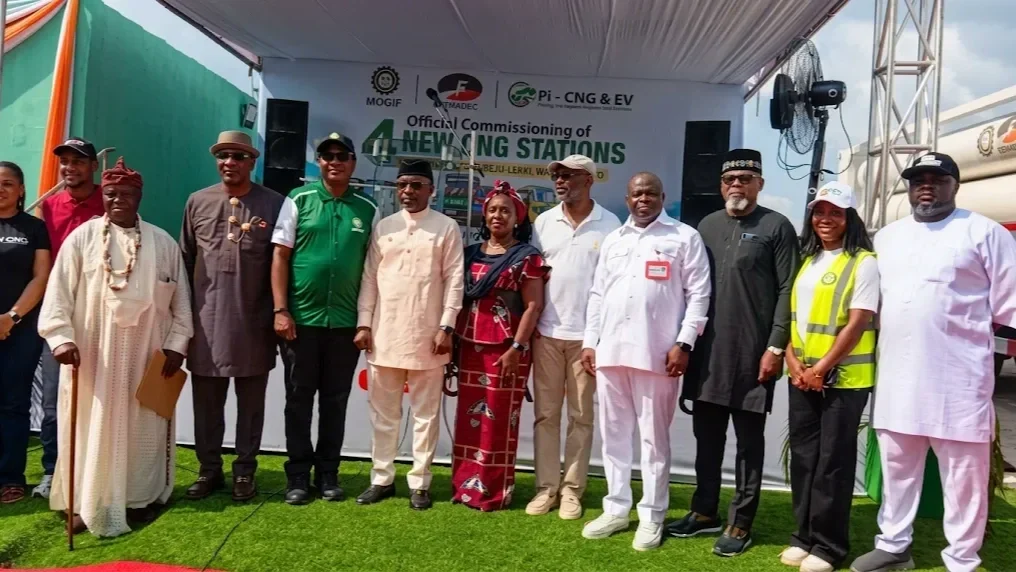
The Federal Government has commissioned compressed natural gas refuelling stations at four universities in the South-South and South-East
The Federal Government has inaugurated Compressed Natural Gas (CNG) stations at four Nigerian universities as part of efforts to reduce transportation costs for students, university staff and residents of surrounding communities.
The facilities are located at the University of Uyo in Akwa Ibom State, University of Calabar in Cross River State, University of Nigeria, Nsukka, in Enugu State, and the Federal University of Petroleum Resources, Effurun, in Delta State.
/ You Might Also Like /




The Minister of State for Petroleum Resources (Gas), Ekperikpe Ekpo, inaugurated the initiative on Tuesday, November 17, 2026, at the University of Uyo. The other three stations were commissioned virtually.
The four facilities have a combined capacity to refuel approximately 540 vehicles daily, according to the Executive Director of the Midstream and Downstream Gas Infrastructure Fund (MDGIF), Oluwole Adama.
Four Universities Receive New CNG Refuelling Facilities
The installations form part of the Federal Government's 20 Universities CNG Ecosystem Initiative, which seeks to expand access to natural gas-powered transportation within tertiary institutions.
The stations are intended to serve students, lecturers, university employees, campus shuttle operators and residents of neighbouring communities.
Ekpo said CNG generally costs less than petrol and diesel, offering vehicle owners and commercial transport operators an opportunity to reduce fuel expenditure.
He added that the facilities would connect universities to Nigeria's wider gas development strategy while providing opportunities for research, technical training and the development of local expertise in CNG technologies.
Stations Can Serve About 540 Vehicles Daily
Adama said the four stations in Uyo, Calabar, Nsukka and Warri could collectively refuel about 540 vehicles per day.
Beyond their transportation function, he said the facilities could serve as practical training centres, giving students exposure to gas operations, engineering, safety procedures and equipment maintenance.
The initiative could also create opportunities for technical workers and businesses involved in the installation, operation and servicing of CNG infrastructure.
Adama disclosed that approximately 50 additional projects were expected to approach commissioning before the end of 2026. The statement indicates a wider project pipeline, rather than confirmation that all the facilities will be operational by that deadline.
Tinubu Approves University Transportation Relief Programme
Ekpo also disclosed that President Bola Tinubu had approved the Special Palliative Relief on University Transportation Programme.
The programme forms part of the 20 Universities CNG Ecosystem Initiative and is intended to cushion the impact of petrol subsidy reforms on students and university employees.
The minister said access to cheaper fuel could reduce transport expenses for students and commercial operators, leaving households with more money for education and other essential needs.
However, the extent of the savings will depend on the price of CNG at the stations, vehicle conversion costs, availability of CNG-compatible transport and the extent to which operators pass lower fuel expenses on to passengers.
Private Sector Partnership Supports CNG Expansion
The stations were developed through collaboration involving the MDGIF, the Presidential Initiative on Compressed Natural Gas and Electric Vehicles (Pi-CNG & EV), and FEMADEC Energy Limited.
FEMADEC Energy's Chief Executive Officer, Fola Akinnola, said the facilities were designed to bring CNG refuelling closer to university communities and reduce fuel expenditure for campus transport operators.
The partnership reflects the role of private-sector operators in expanding Nigeria's gas distribution infrastructure, with government funding and programme support helping to advance the rollout.
CNG Infrastructure Expansion Could Support Wider Economic Activity
The university stations add to the Federal Government's efforts to expand domestic natural gas use and establish alternatives to petrol and diesel in the transport sector.
For the institutions involved, the facilities could reduce fuel-related operating costs for campus transport services and create practical learning opportunities for students pursuing engineering and energy-related disciplines.
The wider economic impact will depend on reliable gas supply, station availability, competitive pricing, safety standards and the adoption of CNG-powered vehicles.
The planned commissioning of additional facilities could expand the network, but sustained use will require more than infrastructure installation. Vehicle conversions, refuelling access and dependable supply will determine whether CNG becomes a practical transport option for more university communities.
READ MORE