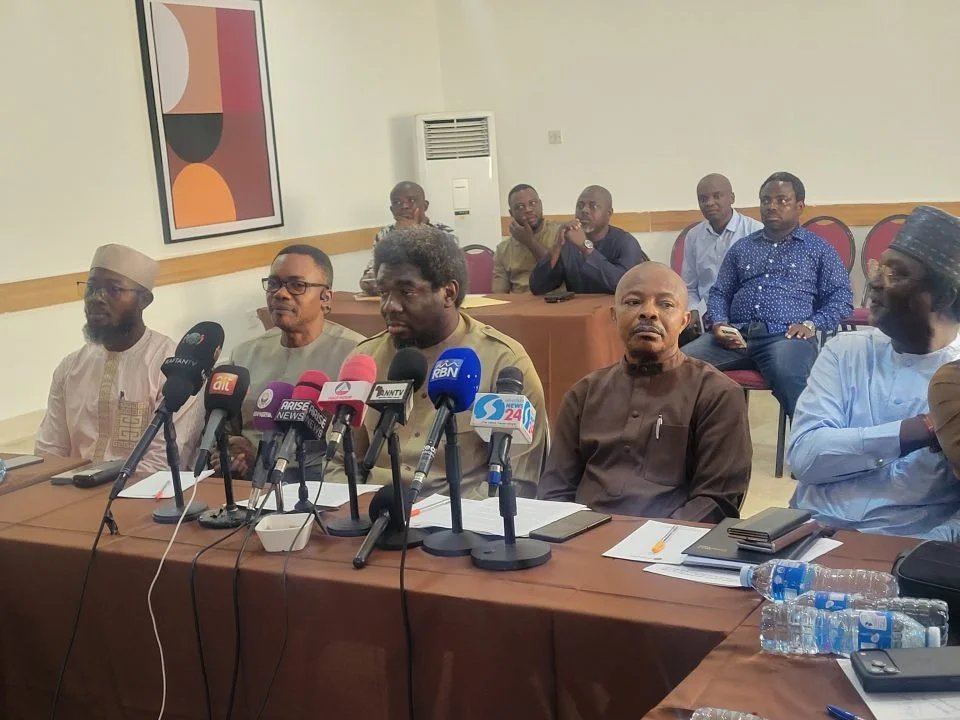
NLC and TUC leaders reconcile over the transport allowance dispute
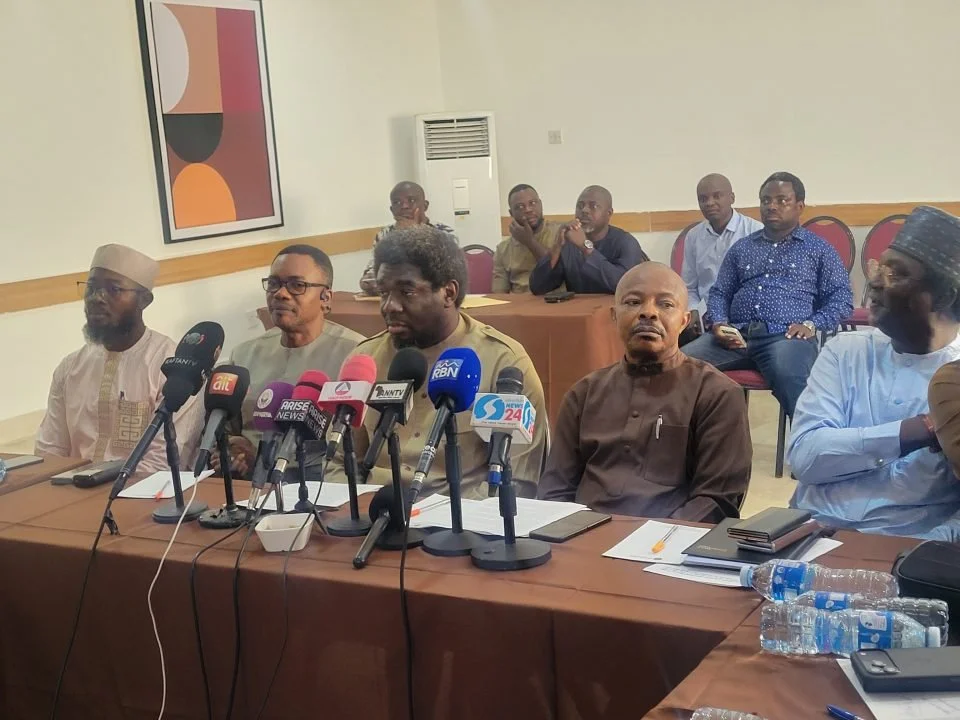
The Nigeria Labour Congress (NLC) and the Trade Union Congress of Nigeria (TUC) have resolved their public disagreement over the Federal Government’s ₦70,000 monthly transport allowance for public servants, pledging to restore cooperation in the interest of Nigerian workers. The two labour centres announced the reconciliation at a joint press conference in Abuja on November 18, 2026, following weeks of disagreement over the negotiations that produced the six-month transport intervention.
/ You Might Also Like /




In a joint statement signed by NLC President Joe Ajaero and TUC President-General Festus Osifo, the unions described their differences as a family misunderstanding that former labour leaders helped settle.
The resolution ends the public confrontation between the two major labour organisations, but it does not resolve the wider debate over workers’ earnings. The TUC continues to advocate a more sustainable salary adjustment rather than a temporary transport allowance.
How the ₦70,000 allowance triggered the disagreement
The dispute followed the Federal Government’s announcement on October 28, 2026, of a ₦70,000 monthly transport allowance for public servants for six months, beginning in November.
The agreement emerged from negotiations between the government and the NLC, alongside other labour representatives. The TUC, however, objected to the arrangement, arguing that it had not received adequate representation during the negotiations.
The disagreement centred on both the process used to reach the agreement and the form of support offered to workers.
The NLC defended its decision to negotiate with the government, with Ajaero arguing that his organisation could negotiate independently under the principle of the most representative workers’ organisation recognised by the International Labour Organisation (ILO).
He also cited the Trade Union Amendment Act 2005 and Section 40 of the 1999 Constitution, which protects workers’ freedom to belong to unions of their choice.
The TUC challenged that position. Osifo argued that the NLC could not negotiate on behalf of workers represented by the TUC without consulting the organisation. He also questioned the legitimacy of the meeting that produced the agreement, saying it did not constitute a properly convened meeting of the Joint National Public Service Negotiating Council (JNC) or satisfy its quorum requirements.
The TUC maintained that the government should pursue a salary increase rather than rely on a temporary transport intervention.
TUC wants a more permanent improvement in workers’ earnings
Beyond its objections to the negotiation process, the TUC argued that the six-month allowance would provide only temporary relief from rising transport and living costs.
Osifo had advocated an increase in the salary of the lowest-paid federal worker to ₦300,000 monthly, alongside broader adjustments to workers’ remuneration.
The distinction between the two positions reflects a wider challenge in Nigeria's wage policy. A temporary allowance can provide immediate support against higher commuting costs, but it does not permanently increase workers’ basic earnings or necessarily improve their long-term capacity to meet household expenses.
For the NLC, the ₦70,000 intervention represented an immediate gain secured through negotiations with the government. For the TUC, a temporary payment did not adequately address the erosion of workers’ purchasing power.
The disagreement therefore extended beyond the allowance itself to questions about labour representation, collective bargaining and the approach organised labour should take when negotiating workers’ welfare.
Labour leaders pledge unity after reconciliation
At the November 18 press conference, both organisations pledged to work together with mutual respect, trust and cooperation in defending the interests of workers, pensioners and other vulnerable groups.
They emphasised that the unity of Nigerian workers should take precedence over disagreements between their leaderships.
The intervention of former leaders from both labour centres helped bring the dispute to an end. Their involvement reflects concerns that a prolonged disagreement could weaken organised labour's ability to negotiate collectively with the Federal Government and employers.
A divided labour movement could face greater difficulty coordinating demands, organising industrial action and holding government institutions accountable for outstanding agreements.
The reconciliation, however, does not mean that both organisations have abandoned their individual positions on the transport allowance or wider wage negotiations. Their commitment to cooperation will be tested by how they approach outstanding labour demands.
Federal Government committee to examine outstanding demands
The reconciliation also comes amid renewed discussions between the Federal Government and the TUC over workers’ remuneration and other labour concerns.
The government has approved a high-powered committee to examine the TUC’s demands, including its position on the ₦70,000 transport intervention and the need for a salary increase.
The committee is expected to review issues already addressed by the government, identify outstanding matters and submit its findings and recommendations to the Secretary to the Government of the Federation within two weeks of commencing work.
The committee's review provides a separate channel for considering the TUC's concerns. However, its establishment does not amount to approval of the proposed ₦300,000 salary for the lowest-paid federal worker or any new wage adjustment.
Meanwhile, the existing ₦70,000 monthly transport intervention remains a six-month arrangement beginning in November 2026.
Minimum wage implementation remains a wider concern
The dispute comes as workers continue to assess the impact of Nigeria's current minimum wage framework.
President Bola Tinubu signed the ₦70,000 National Minimum Wage Act into law on July 29, 2024, reducing the statutory minimum wage review period from five years to three years.
Implementation has varied across states. Nairametrics Research reported in May 2026 that Imo State paid a minimum wage of ₦104,000, while Ebonyi paid ₦90,000. Lagos and Rivers paid ₦85,000, while several other states remained at the national benchmark of ₦70,000.
These differences highlight the uneven capacity and willingness of state governments to implement wage adjustments, as well as the continuing pressure on workers' earnings.
For public servants, the immediate concern remains whether the six-month transport support will reach eligible workers as scheduled and whether the government will address demands for more lasting improvements in remuneration.
The NLC-TUC reconciliation removes an immediate source of tension within organised labour, but the underlying wage dispute remains relevant. The outcome of the government's committee review and the unions' ability to maintain a common position will shape the next phase of negotiations over workers' welfare.
READ MORE