Over 80 Buildings Destroyed in Enugu Storm, Hundreds Left Homeless
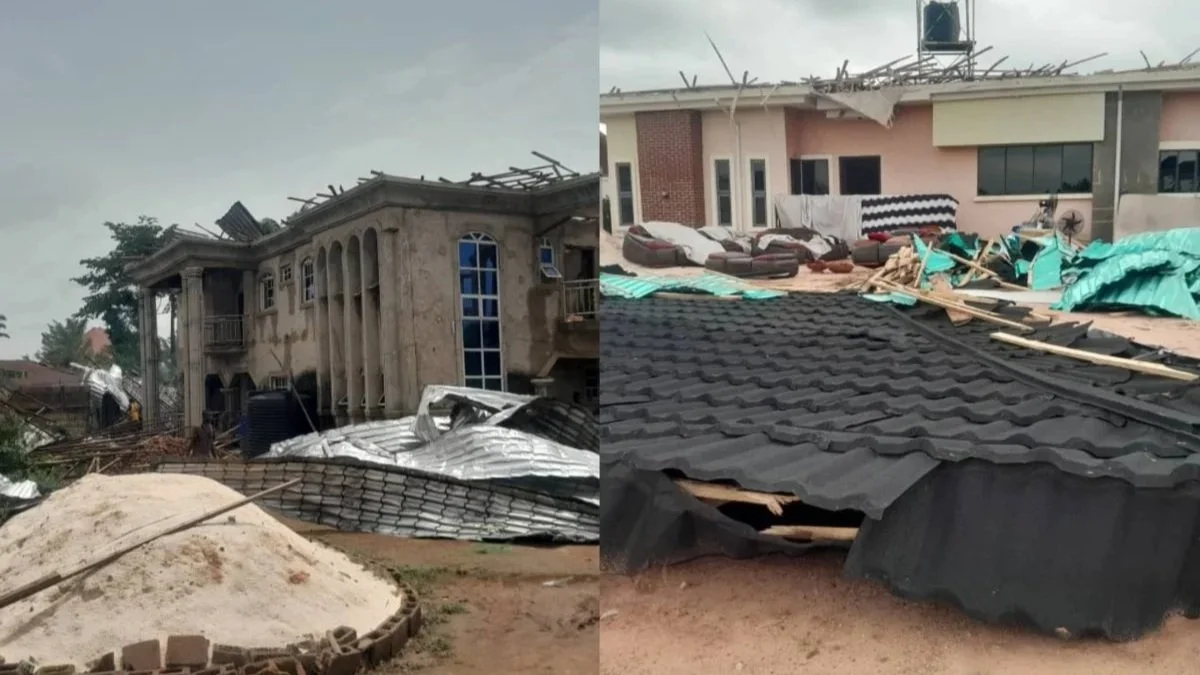
Severe Windstorm Destroys Dozens of Buildings in Enugu
A severe windstorm has devastated a community in Enugu State, destroying more than 80 buildings and leaving hundreds of residents homeless. The incident, which affected homes, schools, and critical infrastructure, has triggered urgent calls for humanitarian assistance and exposed vulnerabilities in housing resilience across rural Nigeria.
/ You Might Also Like /




Scale of Destruction
The storm struck Ukete Oduma community in Aninri Local Government Area, causing widespread structural damage within a short period. Residential buildings bore the brunt of the impact, with roofs torn off and entire structures severely compromised.
Public infrastructure, including schools and churches, also suffered significant damage, alongside electricity poles and economic assets such as crops and livestock. The destruction extended beyond housing, affecting livelihoods and local economic stability.
Community leaders described the incident as unprecedented in scale, with some comparing its intensity to a hurricane.
Humanitarian Impact
The disaster has displaced hundreds of residents, many of whom now lack access to shelter and basic necessities. Eyewitness accounts indicate that families have resorted to temporary arrangements, with communal spaces—including traditional institutions—serving as emergency shelters.
Personal belongings, including mattresses, clothing, and household items, were either destroyed or damaged by rain, compounding the hardship faced by affected households. Residents continue to salvage what remains of their property as recovery efforts begin.
Community and Leadership Response
Local leaders have called for immediate intervention from government authorities and humanitarian agencies. The traditional ruler of the affected community emphasised the urgency of relief support, noting that many displaced persons currently have no means of accommodation.
Community representatives also highlighted the need for coordinated emergency response measures, including temporary housing, food assistance, and infrastructure repair.
Broader Housing and Climate Implications
Rising Climate-Related Risks
The incident underscores increasing exposure to climate-related disasters, particularly in vulnerable rural and peri-urban communities. Extreme weather events, including storms and flooding, continue to pose significant risks to housing stock across Nigeria.
Structural Weakness in Housing
The scale of destruction highlights underlying weaknesses in building standards and construction resilience. Many affected structures lack the capacity to withstand severe weather conditions, raising concerns about long-term housing durability.
Pressure on Housing Supply
With over 80 buildings destroyed, the disaster further exacerbates Nigeria’s existing housing deficit. Displacement at this scale places additional pressure on already limited housing supply, particularly in low-income communities.
Policy and Recovery Considerations
The Enugu incident reinforces the need for stronger building regulations, climate-resilient infrastructure, and proactive disaster risk management. Policymakers face increasing pressure to integrate resilience into housing development frameworks, particularly in high-risk areas.
Experts also emphasise the importance of insurance penetration and financial protection mechanisms to support recovery for affected households.
The destruction of more than 80 buildings in an Enugu community and the displacement of hundreds of residents highlight the intersection of climate risk and Nigeria’s housing challenges. Immediate relief efforts remain critical, but the longer-term priority lies in strengthening housing resilience and improving disaster preparedness.
For policymakers and investors, the incident serves as a reminder that sustainable housing development must account for environmental risks to ensure durability, safety, and long-term value.
READ MORE