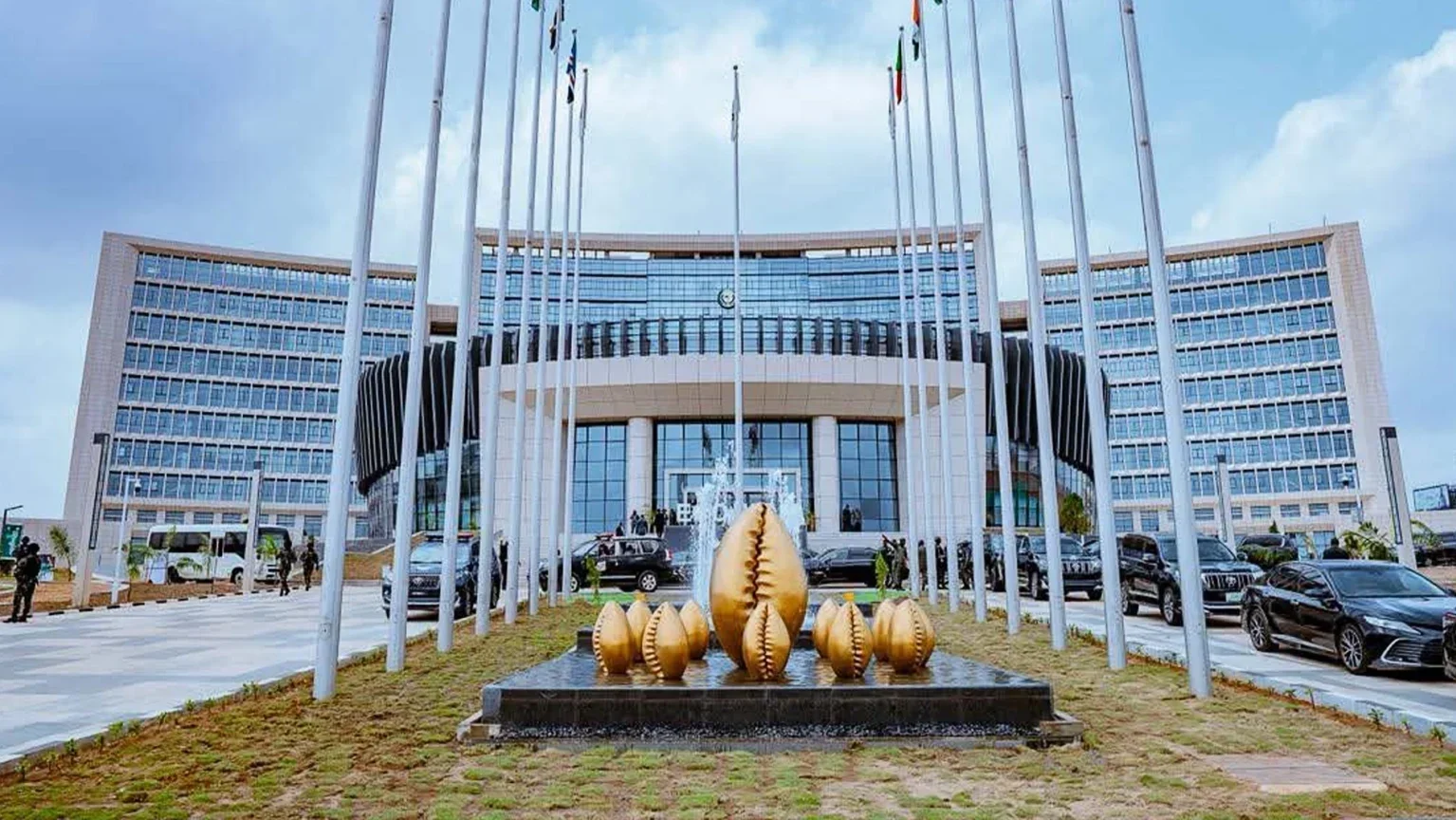
The Economic Community of West African States (ECOWAS) new headquarters complex in Abuja
The Economic Community of West African States (ECOWAS) has renewed efforts to establish a single regional currency, with the bloc maintaining that the 2027 launch of the ECO remains achievable despite outstanding economic and institutional requirements.
/ You Might Also Like /




The position followed the 14th Session of the ECOWAS Convergence Council, convened by the ECOWAS Commission on September 7, 2026, to assess progress towards the long-delayed monetary integration programme.
ECOWAS Reviews Economic Convergence
The meeting examined the economic performance and convergence status of member states, alongside outstanding requirements that must be addressed before the ECO can be introduced.
The council considered the report of the 68th Meeting of the Committee of Governors of ECOWAS central banks, held on September 4.
That meeting followed a joint session of the ECOWAS Commission’s Technical Committee on Macroeconomic Policies and the West African Monetary Agency’s Technical Committee on Economic and Monetary Affairs, held from August 31 to September 2.
The sequence of meetings reflects an effort to resolve the technical and economic conditions required for a functioning monetary union.
2027 Launch Remains on the Table
Following its assessment, the Convergence Council said the objective of launching the ECO in 2027 remains achievable.
The council also requested that the ECOWAS Commission immediately convene the Presidential Task Force on the single-currency programme to accelerate the process.
The latest development does not mean that the currency will automatically be introduced across all ECOWAS economies in 2027. Member states must continue to make progress towards the prescribed convergence requirements before participating in the monetary union.
ECOWAS leaders had already reaffirmed their commitment to the 2027 target in July, while adopting a phased approach under which countries meeting the convergence criteria could participate in the initial stage.
What the ECO Could Mean for Regional Trade
A common currency is intended to deepen economic integration across West Africa by reducing currency-related barriers to trade and investment.
For businesses operating across multiple West African markets, a common currency could reduce foreign-exchange conversion costs and some of the risks associated with fluctuating national currencies.
It could also make regional transactions more predictable and potentially encourage greater cross-border investment.
However, these benefits would depend heavily on the monetary framework established for the ECO, including fiscal discipline, inflation management, exchange-rate arrangements and the strength of the proposed regional monetary institutions.
Implications for Nigeria
Nigeria's participation would be particularly significant because of the size of its economy and its role in regional trade.
The introduction of a common currency could affect businesses involved in construction materials, manufacturing, logistics, property development and other sectors with regional supply chains.
For the Nigerian property market, easier cross-border capital movement could potentially create additional opportunities for institutional investors and developers operating across West Africa.
It could also support investment in logistics parks, industrial property, commercial centres and other real estate linked to regional trade.
However, these potential benefits would depend on the final structure of the currency union and the ability of participating economies to maintain macroeconomic stability.
Convergence Remains Critical
The biggest challenge remains ensuring that participating economies are sufficiently aligned before adopting a common currency.
ECOWAS's convergence framework focuses on macroeconomic conditions including inflation, fiscal discipline and other economic indicators. The objective is to prevent significant differences between member economies from undermining the stability of the monetary union.
This is particularly important given the different monetary and fiscal conditions across West African countries.
Nigeria operates the naira, while several countries within the ECOWAS region use the CFA franc through the West African Economic and Monetary Union. Other member states operate their own national currencies.
Bringing these different monetary systems under a single currency therefore requires substantial institutional and economic coordination.
Outlook
ECOWAS's latest review indicates that the regional bloc is attempting to move the ECO project beyond its previous cycles of delays and towards a more defined implementation process.
The 2027 target remains achievable according to the Convergence Council, but its success will depend on how quickly member states address outstanding convergence requirements and how effectively ECOWAS resolves the technical issues surrounding monetary integration.
For Nigeria's housing and real estate sector, the potential significance lies mainly in the wider economic effects. A stable regional monetary framework could support cross-border investment, trade and infrastructure development, creating new opportunities for property markets connected to growing commercial activity across West Africa.
READ MORE