Darma Pledges Faster Housing Delivery, Orders Verification of 15,000 Housing Units
New Housing Minister Prioritises Fast-Track Delivery and PPP Expansion
Nigeria’s Minister of Housing and Urban Development, Engr. Muttaqha Rabe Darma, has pledged to accelerate housing delivery nationwide as the Federal Government begins verification of more than 15,000 housing units developed under ongoing public housing programmes.
Speaking at the Renewed Hope Housing Public-Private Partnership (PPP) Summit in Abuja, Darma said the ministry would prioritise implementation, accountability, and measurable outcomes rather than prolonged policy discussions.
/ You Might Also Like /


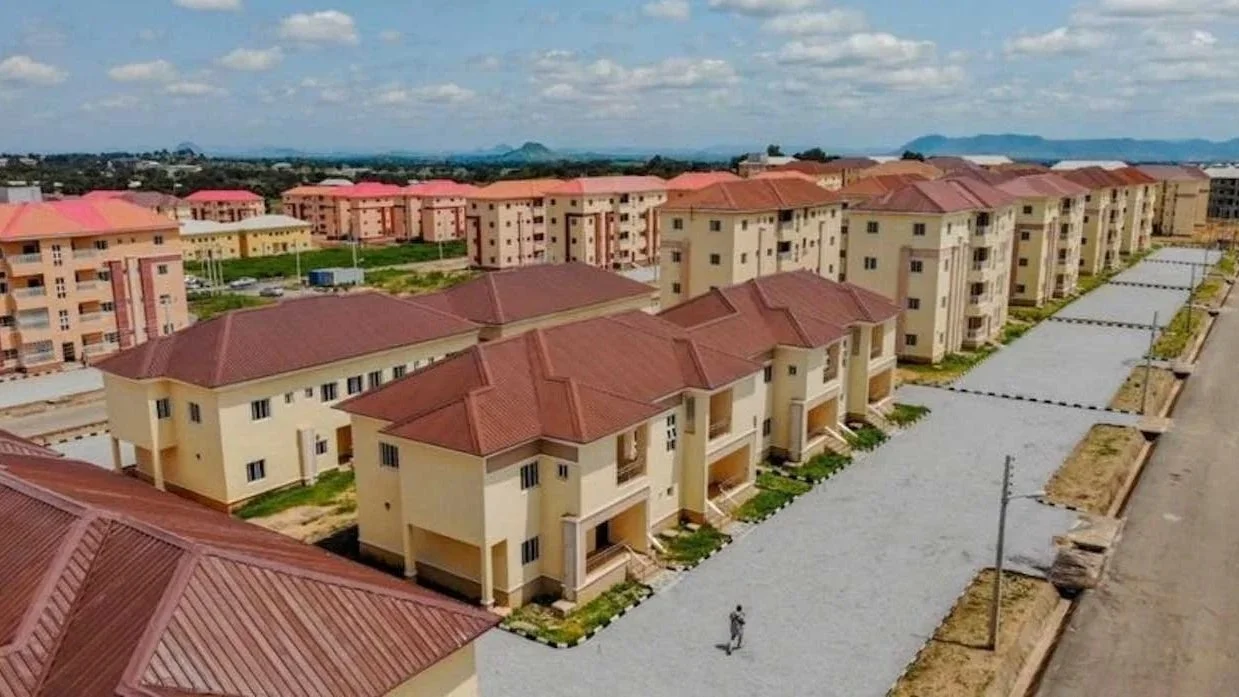

The minister disclosed that officials had informed him that over 15,000 housing units currently exist nationwide under different government-backed housing schemes. He stated that nationwide inspections would commence immediately to verify the projects’ existence, completion status, and readiness for occupation.
According to Darma, successful verification and activation of the units could provide housing access to more than 60,000 Nigerians within the next three months, based on an estimated average household size of four persons.
Government Shifts Focus From Policy to Execution
Darma’s remarks signal a broader shift in the Federal Government’s housing strategy towards project execution and delivery under the Renewed Hope Housing Agenda.
Addressing stakeholders at the summit, the minister criticised what he described as a culture of excessive policy discussions without corresponding implementation outcomes. He stressed that the housing sector requires practical action capable of producing measurable improvements in home ownership and housing accessibility.
The minister also revealed that consultations were ongoing with agencies and departments under the Federal Ministry of Housing and Urban Development to develop a comprehensive one-year strategic roadmap for the sector. The framework is expected to be unveiled before the end of May.
According to Darma, the roadmap will focus on expanding housing delivery through stronger public-private partnerships, innovative financing structures, and broader stakeholder participation across the real estate and infrastructure sectors.
Nationwide Housing Projects Under Review
The minister confirmed that the ministry would conduct physical assessments of housing projects nationwide to ensure transparency and verify that reported housing stock exists beyond official documentation.
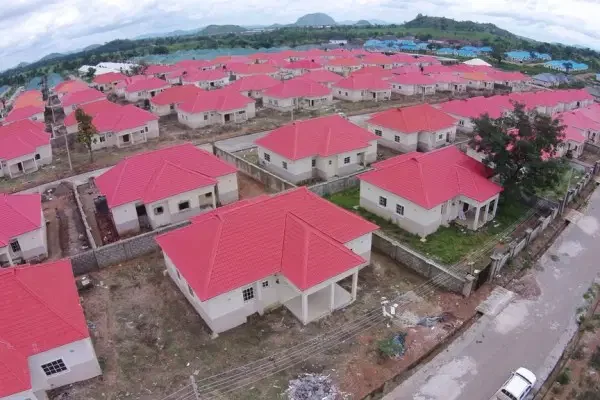
The proposed inspections are expected to cover key Renewed Hope Housing projects in locations including Ibeju-Lekki in Lagos State, Lambu in Kano State, and Karsana in Abuja.
Darma stated that completed projects would eventually be commissioned by President Bola Ahmed Tinubu as part of broader federal housing delivery efforts.
The minister added that project delivery timelines and quality standards would remain a major priority under the ministry’s new implementation framework.
PPPs Positioned at the Centre of Housing Expansion
The Federal Government continues to position PPP structures as a central mechanism for scaling housing delivery amid fiscal constraints and rising infrastructure demands.
At the summit, stakeholders from government agencies, financial institutions, and the private sector discussed financing models, land accessibility, and project execution strategies aimed at improving housing supply nationwide.
Permanent Secretary of the Federal Ministry of Housing and Urban Development, Dr Shuaib Belgore, stated that large-scale housing developments are already ongoing in Abuja, Lagos, and Kano through a combination of direct government interventions and PPP-backed arrangements.
Belgore noted that the current challenge facing the housing sector is no longer policy formulation but implementation capacity, project financing, and sustainable delivery structures.
Industry analysts argue that stronger PPP frameworks could improve delivery efficiency and attract institutional investment into Nigeria’s housing sector, particularly in affordable housing and urban infrastructure development.
Federal Mortgage Bank Expands Housing Financing Support
The Federal Mortgage Bank of Nigeria (FMBN) also announced expanded financial commitments aimed at supporting developers participating in the Renewed Hope Housing Programme.
Managing Director of FMBN, Engr. Shehu Usman Osidi, disclosed that the bank had approved a ₦100 billion off-taker guarantee for developers involved in housing projects across Abuja, Kano, Lagos, Port Harcourt, Enugu, and Maiduguri.
Osidi further revealed that the bank committed ₦27 billion to the Ibeju-Lekki Renewed Hope City project and another ₦19.9 billion to the Karsana Renewed Hope City development in Abuja.
According to the bank, 420 mortgage applications valued at ₦14.2 billion have already been approved for Nigerians seeking access to homes under the programme.
The ministry also disclosed that ongoing housing initiatives have generated employment opportunities for engineers, artisans, contractors, and suppliers within the construction value chain.
Housing Deficit Remains a Major Challenge
Nigeria continues to face one of Africa’s largest housing deficits, with rapid urbanisation, population growth, inflation, and rising construction costs increasing pressure on residential housing supply.
Industry experts estimate that millions of Nigerians still lack access to adequate and affordable housing, particularly within major urban centres where land prices and infrastructure costs continue to rise.
Developers and housing analysts have also identified high mortgage rates, weak infrastructure, and limited access to long-term financing as major barriers to large-scale affordable housing delivery.
The Federal Government’s renewed emphasis on PPPs and direct intervention programmes reflects growing recognition that public funding alone may not be sufficient to address the country’s housing shortfall.
Outlook
Darma’s commitment to physically verify and accelerate delivery of more than 15,000 housing units signals an attempt to reposition the Federal Ministry of Housing and Urban Development around execution and measurable impact.
If successfully implemented, the proposed inspections and strategic housing roadmap could improve transparency, restore investor confidence, and accelerate occupancy within ongoing federal housing projects.
However, analysts note that long-term success will depend on sustained financing, implementation efficiency, infrastructure provision, and the ability to maintain affordability amid Nigeria’s challenging economic environment.
READ MORE