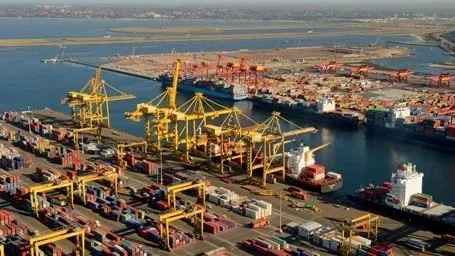
China remains Nigeria’s largest import source
China has emerged as the dominant source of Nigeria’s imported goods, accounting for 39 per cent of the country’s total import value of about ₦28 trillion, highlighting the scale of Nigeria’s dependence on Chinese products and supply chains.
The figures underline the importance of the Nigeria-China trade relationship to businesses and consumers, while also raising questions about the country’s capacity to expand domestic manufacturing and reduce exposure to imported goods.
/ You Might Also Like /




Recent trade data cited by Punch showed that Nigeria imported approximately ₦19.79 trillion worth of goods from China in 2025, while exports to China stood at about ₦2.78 trillion, leaving a trade deficit of roughly ₦17 trillion.
China’s Dominant Position in Nigeria’s Import Market
China’s position reflects the country's extensive role in supplying manufactured goods, machinery, equipment and other products required by Nigerian businesses and consumers.
The relationship extends across several areas of the economy, including construction, manufacturing, telecommunications, consumer goods and infrastructure.
Earlier National Bureau of Statistics data also identified China as Nigeria’s largest import partner. In the second quarter of 2024, Chinese imports were valued at ₦3.03 trillion, representing 24.29 per cent of Nigeria’s total imports for the period.
The more recent figures point to the continued significance of China in Nigeria’s import structure and the broader challenge of developing competitive domestic production.
Implications for Nigeria’s Construction Sector
For the property and construction industry, Nigeria’s dependence on imported goods has direct implications for project costs.
Construction companies rely on imported machinery, equipment, fittings and, in some cases, materials and components that are either unavailable locally or produced in insufficient quantities.
Changes in exchange rates, shipping costs, import duties and international supply chains can therefore affect the cost of housing development and infrastructure projects.
A stronger domestic manufacturing base could reduce some of these vulnerabilities by increasing the local supply of construction inputs and allowing developers to rely less heavily on imported products.
Trade Imbalance Raises Local Production Concerns
The scale of Nigeria’s trade deficit with China has renewed calls for policies that strengthen domestic productive capacity.
Trade experts recently argued that Nigeria should focus not simply on increasing exports but on developing the manufacturing and processing capacity required to compete internationally. Okey Ibeke, an international trade consultant, said Nigeria needs to address high energy and transport costs, expensive financing, foreign-exchange constraints, inadequate infrastructure and limited processing capacity.
This is particularly relevant to the housing market, where high input costs can ultimately be transferred to developers, landlords and homebuyers.
Opportunity for Domestic Manufacturing
Nigeria’s large import market also represents an opportunity for local manufacturers and investors.
The scale of demand for imported products suggests there is a substantial domestic market that could support businesses producing construction materials, building components, machinery, furniture and other property-related products locally.
Reducing import dependence, however, would require more than restrictions on imports. Reliable electricity, affordable financing, efficient transport infrastructure, competitive taxation and a stable foreign-exchange environment would be necessary for local manufacturers to compete effectively.
Recent trade discussions have similarly emphasised that increased Nigerian exports to China will only have a lasting economic impact if the country improves productivity, local processing and value addition.
What It Means for Property Investors
For property investors, the issue extends beyond the trade balance.
A stronger domestic manufacturing sector could support industrial property, warehouses, logistics facilities and commercial real estate as businesses expand production and distribution within Nigeria.
At the same time, continued dependence on imported inputs leaves property developers exposed to exchange-rate movements and international supply-chain disruptions.
The development of local manufacturing clusters could therefore create new investment opportunities while helping to reduce some of the cost pressures facing the construction industry.
Outlook
China’s 39 per cent share of Nigeria’s ₦28tn import bill demonstrates the depth of the country’s reliance on Chinese supply chains.
For Nigeria’s housing and wider property market, the longer-term priority is not necessarily to eliminate imports but to develop enough domestic productive capacity to reduce excessive dependence on foreign supply.
Improving local manufacturing, energy supply, infrastructure and access to finance would strengthen Nigeria’s ability to produce more of the materials and equipment required for housing and infrastructure development while creating opportunities across industrial, logistics and commercial property markets.
READ MORE