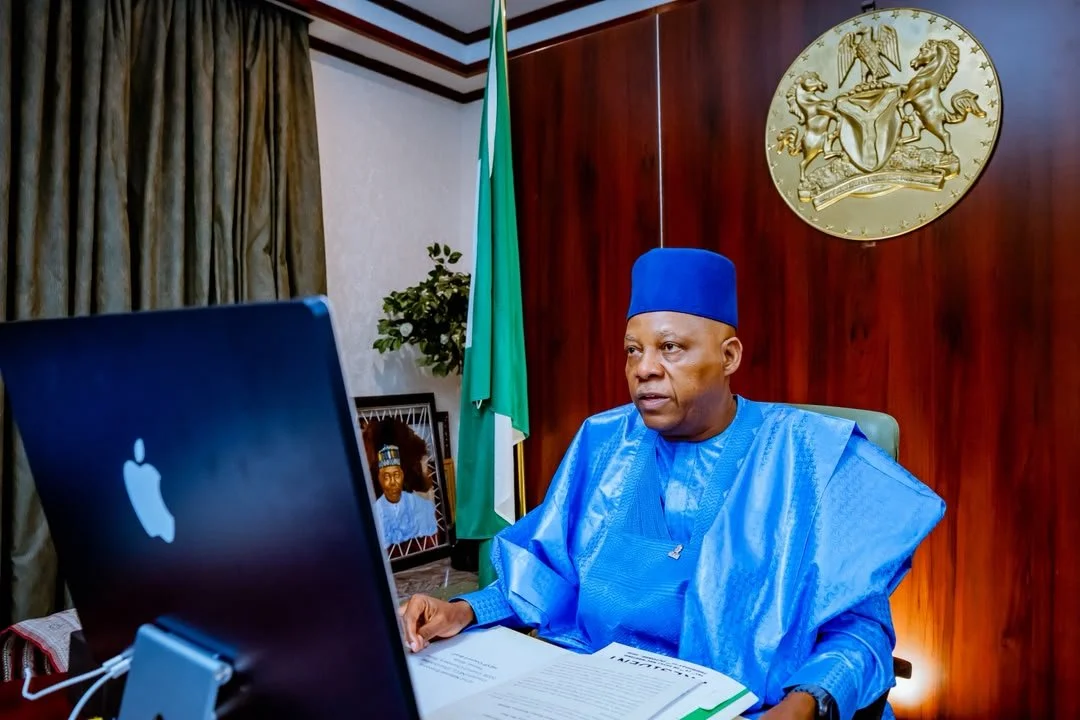
CBN says economic stability gains will reach households
The Central Bank of Nigeria (CBN) says Nigerians should begin to feel the benefits of improving economic stability as fiscal and monetary reforms continue to strengthen the economy.
CBN Governor Olayemi Cardoso gave the assurance on September 8, 2026, at the 19th Annual Banking and Finance Conference of the Chartered Institute of Bankers of Nigeria (CIBN) in Abuja. He was represented at the event by CBN Deputy Governor, Economic Policy Directorate, Philip Ikeazor.
/ You Might Also Like /




The statement comes as Nigeria records stronger economic indicators, including 4.43 per cent year-on-year GDP growth in the second quarter of 2026, easing inflation and rising external reserves.
CBN Acknowledges Gap Between Economic Indicators and Household Welfare
Cardoso acknowledged that improvements in Nigeria’s major economic indicators have not yet fully translated into better living conditions for many Nigerians.
The CBN's assurance therefore centres on the next phase of the economic adjustment: ensuring that greater macroeconomic stability leads to stronger household incomes, improved business conditions and broader economic activity.
This distinction is important for the housing market because stronger headline economic figures do not automatically create effective housing demand. Households need sufficient income, employment stability and access to affordable financing before they can translate economic confidence into decisions to rent, buy or build homes.
Nigeria’s Economy Expands by 4.43 Per Cent
Nigeria's real GDP expanded by 4.43 per cent year-on-year in Q2 2026, compared with 4.23 per cent in the corresponding period of 2025, according to figures reported by Punch from the National Bureau of Statistics.
The growth provides evidence of continued economic expansion following the government's fiscal and monetary reforms.
However, the quality and distribution of that growth remain important. An economy can expand while households continue to experience pressure from high living costs if income growth and employment do not keep pace with essential expenses.
For the housing sector, this means monitoring household purchasing power alongside GDP growth.
External Reserves Strengthen
Nigeria has also recorded a significant improvement in its external reserves.
The country's reserves have crossed $54 billion, according to recent figures cited by the presidency and other reports.
Higher reserves can strengthen confidence in the country's ability to meet external obligations and support foreign-exchange market stability.
For the property and construction industries, improved foreign-exchange conditions can have an important secondary effect. Nigeria imports several construction-related materials, equipment and machinery, meaning greater exchange-rate stability can improve cost planning for developers and contractors.
However, stronger reserves alone will not automatically reduce property prices. The effect depends on how exchange-rate stability feeds through to imported inputs, financing costs, construction activity and ultimately housing supply.
CBN Wants Reforms to Translate Into Real Economic Benefits
The central bank's message reflects a broader shift from stabilising the economy towards ensuring that reforms produce measurable economic benefits.
Recent policy changes have focused on improving foreign-exchange market functioning, containing inflationary pressures and strengthening macroeconomic stability.
The next challenge is transmission.
Businesses need access to credit at sustainable rates, while households need stronger purchasing power and employment opportunities. Without these improvements, macroeconomic stability may have limited impact on living standards.
Banks Have a Role in Economic Transmission
The banking sector will play a significant role in determining how quickly improved economic conditions reach businesses and households.
At the same CIBN conference, banking industry leaders and policymakers called for stronger financing of productive sectors.
President Bola Tinubu separately urged banks to move from traditional financial intermediation towards financing investment, production and job creation. He said Nigeria was shifting from macroeconomic stability towards investment and production.
Greater lending to productive businesses could increase employment and household incomes, creating stronger foundations for consumption and investment.
For the housing market, increased credit to construction companies, suppliers and developers could also support housing delivery if financing costs become more manageable.
Housing Demand Depends on More Than Economic Growth
Nigeria's housing market illustrates why the transmission of economic gains matters.
Housing demand remains substantial, but the ability to convert that demand into actual transactions depends on affordability.
A household may need accommodation but remain unable to purchase a home because of high property prices, rising rents, limited mortgage availability or insufficient income.
Similarly, developers may identify strong demand but struggle to deliver affordable homes because of expensive land, construction materials, infrastructure and finance.
Economic stability can address some of these constraints, particularly where it reduces exchange-rate volatility and improves access to capital. But housing affordability also requires supply-side reforms.
Stable Exchange Rates Could Improve Development Planning
One of the most important potential benefits for the construction sector is greater exchange-rate predictability.
Currency volatility makes it difficult for developers to accurately forecast the cost of imported building materials and equipment. Contractors may respond by including larger contingencies in project budgets, while some projects may be delayed when costs change sharply.
Greater currency stability can improve project planning and reduce some of the uncertainty surrounding development costs.
The impact, however, will depend on the durability of the improvement and whether other domestic costs, including land, labour, energy, logistics and financing, remain under control.
Stronger Growth Could Support Property Investment
If economic stability continues and begins to translate into higher employment and household incomes, property investment could benefit from stronger effective demand.
Commercial property could gain from increased business activity, while residential markets could benefit from improved household purchasing power.
Industrial and logistics real estate could also benefit if economic expansion encourages greater manufacturing, trade and distribution activity.
For investors, the key consideration will therefore be whether the current improvement in macroeconomic indicators develops into sustained growth in real economic activity.
The Challenge Is Turning Stability Into Prosperity
The CBN's assurance highlights an important stage in Nigeria's economic reform process.
Stabilising inflation, strengthening external reserves and supporting economic growth provide a foundation, but the ultimate test is whether these improvements result in better living standards.
For households, that means stronger purchasing power and access to essential services. For businesses, it means affordable financing, predictable operating conditions and increased investment. For the housing sector, it means the combination of stronger household incomes, accessible mortgages, lower development costs and increased housing supply.
Outlook
The CBN expects the benefits of Nigeria's improving economic stability to become increasingly visible to households and businesses.
The country's 4.43 per cent Q2 GDP growth, easing inflation and reserves above $54 billion point to improving macroeconomic conditions, but the next challenge is translating those indicators into tangible improvements in household welfare.
For Nigeria's housing market, sustained economic stability could improve investment confidence and development planning, but meaningful gains will depend on whether households gain the income and financing capacity needed to participate in the property market.
READ MORE