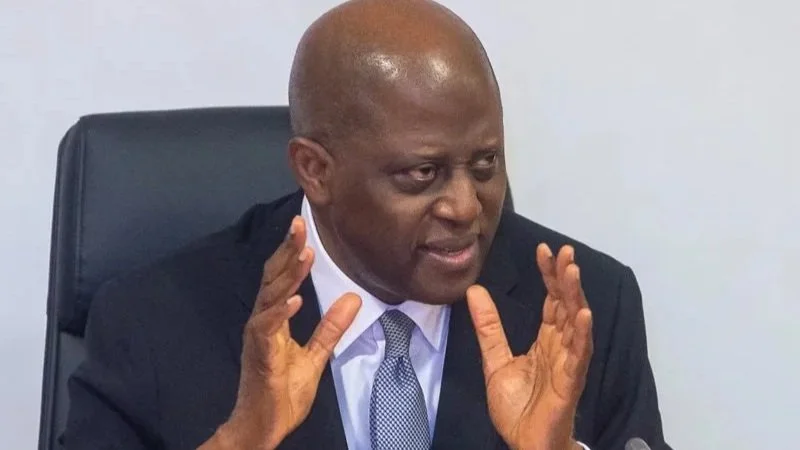
Cardoso Defends Market-Driven Exchange Rate, Says Naira Should Compete
Central Bank of Nigeria (CBN) Governor Olayemi Cardoso has reaffirmed the apex bank's commitment to a market-driven foreign exchange regime, stating that the naira requires competition rather than protection to achieve long-term stability. Speaking on Nigeria's exchange rate policy, Cardoso said the CBN would continue to support a transparent and liquid foreign exchange market instead of defending the currency through administrative controls or a fixed exchange rate.
/ You Might Also Like /




The remarks come as the CBN maintains its broader monetary reform agenda aimed at restoring confidence in Nigeria's financial markets, improving foreign exchange liquidity and attracting long-term investment into the economy.
CBN Reaffirms Market-Based Exchange Rate Policy
Cardoso dismissed suggestions that the naira should be maintained at a predetermined exchange rate, stressing that sustainable currency strength depends on market fundamentals rather than artificial protection.
According to the CBN Governor, maintaining a transparent, liquid and competitive foreign exchange market remains central to restoring confidence among investors and ensuring efficient price discovery. He argued that a competitive currency encourages economic adjustment while supporting long-term macroeconomic stability.
The position is consistent with the Central Bank's ongoing shift toward orthodox monetary policy, which prioritises price stability, exchange rate transparency and reduced market distortions.
Focus on Building Investor Confidence
Since the introduction of foreign exchange reforms, the CBN has pursued policies designed to improve liquidity in the official market and rebuild investor confidence.
Cardoso noted that confidence in the exchange rate framework depends on predictable policies, efficient market operations and adequate liquidity rather than administrative restrictions. A transparent FX market, he said, provides greater certainty for businesses, exporters and investors making long-term investment decisions.
Improved confidence in Nigeria's financial markets has become an important objective of the government's wider economic reform programme, particularly as the country seeks to attract greater foreign capital and strengthen private sector investment.
Implications for Housing and Real Estate
For Nigeria's housing sector, exchange rate stability remains a significant factor influencing construction costs, project financing and investment decisions.
Many construction inputs—including machinery, equipment, building technologies and specialised materials—are either imported or priced against foreign exchange movements. Greater transparency and liquidity in the FX market can improve access to foreign currency, reduce pricing uncertainty and support better project planning for developers.
Institutional investors also tend to favour markets with predictable exchange rate policies, as currency volatility directly affects investment returns and financing costs. Improved confidence in the naira could therefore encourage greater participation in housing finance, commercial real estate and infrastructure development.
Infrastructure and Economic Growth Linked to Stable Markets
A competitive and transparent currency regime also has broader implications for infrastructure financing.
Large-scale infrastructure projects often depend on a combination of domestic and foreign capital. Stable macroeconomic policies can reduce investment risk, improve access to international financing and support the delivery of projects in transport, energy, housing and urban development.
For developers and policymakers, a well-functioning foreign exchange market helps create a more predictable operating environment, enabling long-term planning and more efficient capital allocation across the economy.
Outlook
Cardoso's remarks reinforce the Central Bank's commitment to allowing market forces to play a greater role in determining the value of the naira. Rather than defending the currency through administrative measures, the CBN continues to prioritise liquidity, transparency and investor confidence as the foundations of exchange rate stability.
For Nigeria's housing and real estate sector, sustained progress in foreign exchange reforms could improve investment conditions, reduce financing uncertainty and strengthen the environment for infrastructure delivery. While exchange rate stability alone will not resolve the sector's challenges, a more predictable macroeconomic framework can support long-term residential development, institutional investment and broader urban growth.
READ MORE