Lagos developers target prime residential locations
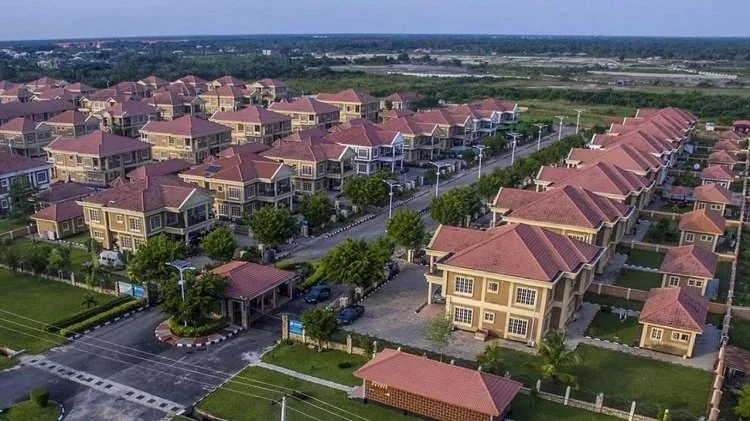
Lagos developers are increasingly seeking financing for residential projects in prime locations such as Ikoyi, Victoria Island and Lekki, as infrastructure improvements and rising purchasing power among parts of the middle class support demand for higher-end housing.
Temitope Runsewe, Managing Director of Sage Grey Group, disclosed the trend at the company's 10th anniversary news conference in Lagos, attributing the growing interest in prime locations to infrastructure development and increased prosperity among sections of the middle class.
/ You Might Also Like /




Developers Focus on High-Income Locations
According to Runsewe, developers seeking project financing are increasingly targeting high-growth, high-income areas including Ikoyi, Victoria Island and Lekki.
He said infrastructure improvements and stronger spending power among some consumers were supporting demand for high-end residential properties, despite wider macroeconomic pressures.
The concentration of investment in these locations reflects the economics of Lagos' property market, where strong demand and limited development land can support higher property values.
However, it also raises concerns about the affordability of new housing for the majority of households whose incomes have not increased at the same pace as property and construction costs.
Rising Costs Make Affordable Housing More Difficult
The growing preference for prime locations is not necessarily a deliberate decision by developers to focus exclusively on luxury housing.
Ayodeji Johnson, CEO of Elara Development, told Nairametrics that high land and financing costs were influencing the type of housing developers could deliver profitably.
According to Johnson, the combination of limited land supply and strong demand in prime areas is supporting property values, while making lower- and middle-income developments more challenging to finance and deliver commercially.
He called for lower financing costs, tax incentives and faster approval processes to make affordable housing more commercially viable for private developers.
Lagos Land Scarcity Drives Vertical Development
Land scarcity is also changing the physical structure of housing development in Lagos.
Developers are increasingly turning to vertical developments in areas such as Ikoyi, Victoria Island, Oniru and Lekki Phase 1, where available land is limited and demand remains strong.
Higher-density development allows developers to maximise the use of expensive land while creating more units on relatively smaller sites.
However, the approach tends to favour developments that can command higher prices, particularly where land acquisition, construction finance and regulatory costs are substantial.
Mass Housing Could Expand Beyond Prime Districts
Runsewe expects the current concentration of development in prime locations to change as rising housing costs push more residents and developers towards areas outside established high-income districts.
He projects stronger growth in mass housing over the next two years as households search for more affordable accommodation and developers respond to demand beyond the traditional prime markets.
The expansion could increasingly follow major transport corridors, particularly where improved infrastructure reduces the travel time between peripheral residential areas and employment centres.
Runsewe cited the potential impact of infrastructure such as the coastal road, arguing that households may accept longer distances from prime districts when improved transport connections make commuting more manageable.
Housing Affordability Remains a Major Challenge
The shift towards prime housing comes against a difficult affordability backdrop in Lagos.
Fortren & Company estimates that only 31 per cent of Lagos residents live in homes they own, while 51 per cent live in rented accommodation.
The same report found that prime land in Lagos costs about US$1 million for 507 square metres, making Lagos the second-most expensive of 11 major African cities assessed, behind Cape Town.
These figures highlight the widening gap between the cost of developing property and the purchasing power of many households.
Limited access to affordable mortgages and high interest rates further restrict the ability of middle- and lower-income households to purchase newly developed homes.
Infrastructure Could Reshape Lagos Housing Growth
Improved infrastructure could play an important role in changing this pattern.
Better roads and transport connections can make locations outside established prime districts more attractive to both developers and residents. If commuting times fall, households may become more willing to live farther from expensive employment and commercial centres.
This could encourage the development of new residential clusters along major transport corridors and help distribute Lagos' housing growth beyond Ikoyi, Victoria Island and Lekki.
For developers, however, infrastructure alone will not resolve affordability challenges. Access to lower-cost finance, serviced land, efficient approvals and more predictable development costs will also be necessary to make mass-market housing commercially viable.
Outlook
The increasing focus on prime housing demonstrates the strong demand for residential property in Lagos' high-income districts, but it also exposes the structural challenges facing affordable housing delivery.
As land and financing costs remain elevated, developers may continue to favour projects capable of generating higher returns. At the same time, improving infrastructure around the outskirts of Lagos could create opportunities for a broader mass-housing market.
The balance between these two trends will be critical to determining whether future housing supply can meet the needs of Lagos' growing population while remaining within reach of middle- and lower-income households.
READ MORE