Abia Women Protest Alleged Farmland Seizure for Smart City Housing Estate
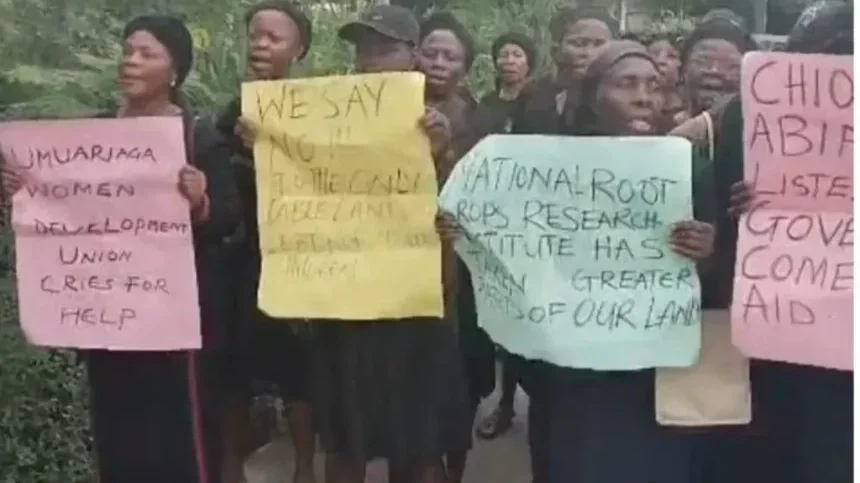
Women Protest Alleged Land Takeover for Housing Estate in Abia
Women from communities in Abia State have protested against the alleged takeover of farmland for a proposed smart city housing estate, raising concerns over displacement, land rights, and the impact on local agricultural livelihoods.
The protesters accused authorities and project promoters of attempting to acquire ancestral farmland without adequate consultation, transparency, or compensation arrangements. According to reports by Housing TV Africa, the affected women claimed the disputed land serves as a major source of food production and household income for several families within the community.
/ You Might Also Like /




The development has intensified debate around land acquisition practices, urban expansion, and community engagement in Nigeria’s growing housing and infrastructure sectors.
Protesters Raise Concerns Over Livelihood Disruption
The protesting women said the proposed acquisition threatens farmlands relied upon for subsistence farming and local economic activity.
According to community members, the land under dispute supports cultivation of staple crops and serves as a major source of livelihood for households within the affected area.
The women argued that the loss of agricultural land could worsen economic hardship and food insecurity within the community, particularly amid rising food inflation and increasing living costs nationwide.
Some protesters also alleged that the acquisition process lacked adequate stakeholder engagement and failed to properly inform residents about the scope and implications of the proposed housing development.
Community representatives called on the Abia State Government and relevant authorities to suspend the project pending further dialogue and clarification regarding ownership, compensation, and resettlement concerns.
Land Acquisition Disputes Remain Common in Urban Expansion Projects
Land disputes linked to urban development projects remain a recurring issue across several Nigerian states.
Rapid urbanisation and growing demand for housing infrastructure have increased pressure on peri-urban and rural land, particularly in areas targeted for new housing estates, industrial corridors, and smart city developments.
Urban planning experts note that weak land administration systems, inadequate compensation frameworks, and poor stakeholder engagement frequently contribute to tensions between communities, developers, and government authorities.
Analysts argue that disputes involving ancestral land and communal farmland often become more sensitive due to the cultural, economic, and historical significance attached to land ownership within many Nigerian communities.
Smart City Projects Expanding Across Nigeria
Several state governments have intensified efforts to promote smart city and urban renewal initiatives aimed at improving infrastructure, attracting investment, and supporting modern housing development.
Smart city projects typically include planned residential districts integrated with road networks, digital infrastructure, utilities, commercial hubs, and public services.
Supporters argue that such projects can stimulate economic growth, improve urban planning efficiency, and expand housing supply in rapidly growing urban centres.
However, critics warn that weak implementation frameworks and inadequate social safeguards can lead to displacement concerns, land conflicts, and unequal access to development benefits.
Urban development analysts note that balancing infrastructure expansion with community protection remains one of the major governance challenges affecting large-scale housing projects in Nigeria.
Food Security Concerns Emerge
The protest also highlights broader concerns regarding the conversion of agricultural land into residential and commercial developments.
Agricultural economists have repeatedly warned that uncontrolled urban expansion into farming areas could affect food production and increase pressure on already fragile supply chains.
Nigeria continues to face rising food inflation driven by insecurity, climate pressures, transportation costs, and supply disruptions across major agricultural regions.
Analysts note that preserving productive farmland has become increasingly important to national food security and rural economic stability.
Experts argue that urban development policies must incorporate balanced land-use planning capable of protecting critical agricultural zones while accommodating housing and infrastructure growth.
Land Rights and Compensation Remain Key Issues
Community activists and civil society groups continue to advocate stronger protections for local landowners affected by development projects.
Under Nigeria’s Land Use Act of 1978, state governors retain statutory authority over land allocation and acquisition. However, compensation and resettlement disputes remain common across several states.
Legal experts note that many communities lack formal title documentation despite longstanding ancestral occupation, making land ownership disputes more complicated during acquisition processes.
Analysts argue that transparent valuation systems, proper consultation, and fair compensation frameworks are critical to reducing conflict surrounding public and private development projects.
Human rights advocates have also emphasised the importance of including women and vulnerable groups in land negotiations and compensation discussions.
Calls for Greater Community Engagement
Urban development experts say early stakeholder engagement and participatory planning processes are essential for reducing tensions linked to infrastructure and housing projects.
Community consultation helps improve transparency, build trust, and address concerns relating to displacement, environmental impact, compensation, and livelihood protection.
Analysts note that development projects implemented without strong local engagement often face delays, protests, legal disputes, and social resistance.
Stakeholders increasingly advocate community-inclusive urban planning models capable of balancing economic growth objectives with social protection and sustainable development outcomes.
Housing Demand Continues to Rise
Nigeria’s housing sector continues to face significant pressure due to rapid urbanisation, population growth, and widening housing deficits.
Industry estimates place Nigeria’s housing deficit at more than 20 million units, with demand rising across major urban centres and emerging suburban districts.
Government authorities and private developers have intensified efforts to increase residential construction activity through affordable housing schemes, urban renewal initiatives, and public-private partnerships.
However, analysts caution that housing expansion must be carefully managed to avoid worsening social inequality, environmental degradation, and land-related conflicts.
Government Yet to Fully Address Allegations
At the time of reporting, there had been no detailed official response addressing the specific allegations raised by the protesting women regarding the disputed farmland acquisition.
Observers note that the handling of the dispute could influence broader public perceptions regarding land governance, transparency, and urban development practices within the state.
Policy analysts argue that resolving such disputes through dialogue, legal clarity, and transparent engagement will be critical to maintaining investor confidence while protecting community rights.
The protest by women in Abia State over the alleged takeover of farmland for a smart city housing estate highlights growing tensions between urban expansion and community land rights in Nigeria.
As governments and private developers pursue large-scale housing and infrastructure projects to address urban growth pressures, analysts say stronger land governance frameworks, transparent compensation systems, and inclusive stakeholder engagement will be essential to preventing conflict and ensuring sustainable development.
The dispute also underscores the broader challenge of balancing housing development objectives with agricultural preservation, food security, and the protection of vulnerable communities within rapidly urbanising regions.
READ MORE