World Bank Raises Nigeria’s 2026 Growth Forecast to 4.3% as Economic Outlook Improves

The World Bank has raised its forecast for Nigeria’s economic growth in 2026 to 4.3%, signalling stronger confidence in the country’s ongoing economic reforms and improving macroeconomic conditions.
The revised projection forms part of the World Bank’s latest assessment of economic conditions across Africa. The lender has also projected Nigeria’s growth at about 4.4% in 2027 and 2028, pointing to continued expansion over the medium term.
/ You Might Also Like /




The upgrade comes as Nigeria records stronger economic activity following reforms aimed at improving fiscal and monetary stability, strengthening external buffers and creating conditions for private-sector investment.
Growth Outlook Strengthens as Reforms Gain Traction
The World Bank’s improved outlook reflects greater confidence in the economic adjustments taking place across Nigeria and other major African economies.
At the regional level, the World Bank raised its 2026 growth forecast for Africa to 4.3%, from 4.1% previously, citing stronger performance across the continent despite elevated global energy prices and geopolitical risks.
Nigeria is among the economies contributing to the improved regional outlook, with the World Bank pointing to stronger macroeconomic stability and continued reform momentum.
Nigeria’s own economic performance has also strengthened. The World Bank reports that real GDP grew by 4.2% in the first half of 2026, compared with 3.9% a year earlier, driven largely by services and stronger agricultural activity.
Real Estate and Construction Could Benefit From Stronger Growth
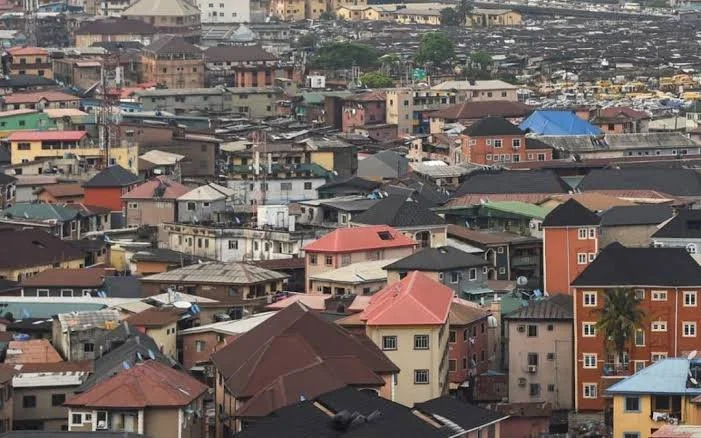
For Nigeria’s property market, faster economic growth could support stronger demand for residential, commercial and industrial real estate if it translates into higher incomes, employment and private investment.
Real estate and construction are closely linked to wider economic activity. Stronger business conditions can increase demand for offices, warehouses, retail facilities and industrial property, while rising employment and household incomes can improve effective demand for housing.
The World Bank has previously identified real estate among the sectors expected to contribute to Nigeria’s medium-term growth, alongside agriculture, information and communication, and oil and gas.
However, stronger GDP growth alone will not automatically resolve Nigeria’s housing shortage or affordability problems.
Stronger GDP Growth Does Not Guarantee Better Housing Outcomes
The central challenge for the housing market is whether economic growth can translate into stronger household purchasing power.
The World Bank continues to warn that Nigeria’s growth remains insufficient to generate enough productive jobs and materially reduce poverty. Its latest country assessment estimates that poverty remains widespread, with weak real income growth continuing to constrain household welfare.
That distinction matters for housing.
A growing economy can expand the value of property assets and increase investment while many households remain unable to afford rents, mortgage payments or homeownership.
For the property market, therefore, the quality of economic growth may matter as much as the headline GDP figure.
Infrastructure Remains Critical to Property Investment
Infrastructure gaps remain another constraint on how strongly economic growth can feed into real estate development.
The World Bank identifies deficiencies in electricity, transport and logistics as continuing obstacles to productivity and domestic market integration.
For developers, these deficiencies increase the cost of delivering housing and commercial property.
Reliable electricity, roads, transport networks, water infrastructure and other public services can reduce operating costs and make new development corridors more commercially viable.
Improved infrastructure would also expand the areas where developers can build economically viable housing, potentially easing some of the pressure on established urban centres.
Investment Conditions Could Improve for Developers
A more stable macroeconomic environment could gradually strengthen investor confidence and improve the conditions for long-term property investment.
The World Bank says Nigeria’s external and fiscal positions have strengthened, while inflation has eased significantly from earlier highs. However, it also notes that high debt-service costs and weaknesses in public investment management continue to limit the impact of stronger revenues.
For real estate, lower macroeconomic uncertainty can support longer-term investment decisions.
Developers and institutional investors are more likely to commit capital to large housing, infrastructure and commercial projects when they can make more reliable assumptions about inflation, exchange rates, financing costs and demand.
Housing Finance Remains a Major Constraint
The benefits of stronger economic growth will also depend on whether Nigeria can expand access to long-term housing finance.
Mortgage affordability remains a significant challenge because high financing costs and limited household incomes restrict the number of Nigerians capable of servicing long-term home loans.
Economic expansion could improve mortgage demand if it produces better-paying formal employment and more predictable household incomes.
But without corresponding improvements in housing finance, land administration and construction costs, stronger GDP growth may have only a limited impact on the country's housing deficit.
Jobs Will Determine Whether Growth Reaches Households
Employment remains one of the most important links between macroeconomic growth and the housing market.
The World Bank says Nigeria needs to absorb about 3.5 million people entering the labour force every year, while weak job creation and limited entrepreneurial opportunities remain significant challenges.
This creates a direct housing implication.
Without sufficient income-generating opportunities, millions of Nigerians will remain unable to convert housing need into effective purchasing power.
Conversely, stronger job creation could increase demand for rental housing, homeownership and commercial property while supporting the expansion of urban economies.
Property Market Needs More Inclusive Growth
Nigeria’s improving growth outlook provides a stronger foundation for the property sector, but the benefits will depend on how investment is distributed across the housing market.
High-value residential and commercial developments may continue to attract capital, but Nigeria also needs substantial investment in affordable housing, rental housing, infrastructure-linked developments and housing for lower- and middle-income households.
This requires stronger cooperation between government, developers, financial institutions and institutional investors.
Public policy can help by reducing land and infrastructure bottlenecks, improving housing finance and creating investment structures that make affordable housing commercially viable.
Growth Outlook Faces External and Domestic Risks
Despite the more positive outlook, the World Bank has warned that significant risks remain.
At the continental level, elevated energy prices linked to the Middle East conflict, high global interest rates, debt-service pressures and climate-related shocks could affect growth. The World Bank also noted that stronger regional GDP growth has not yet translated into comparable improvements in per-capita income.
For Nigeria, external oil-price movements, inflation, fiscal pressures and infrastructure constraints remain important risks.
These factors could affect construction costs, mortgage rates, household purchasing power and property investment decisions.
Outlook
The World Bank’s 4.3% growth forecast for Nigeria in 2026 provides a more positive backdrop for investment, including real estate and construction.
But the more important test for the housing market will be whether that growth produces jobs, higher real incomes, better infrastructure and more accessible financing.
Nigeria’s economic expansion can create a stronger foundation for property investment, but without broader improvements in household purchasing power and housing supply, GDP growth alone will not resolve the country’s housing affordability challenge.
READ MORE