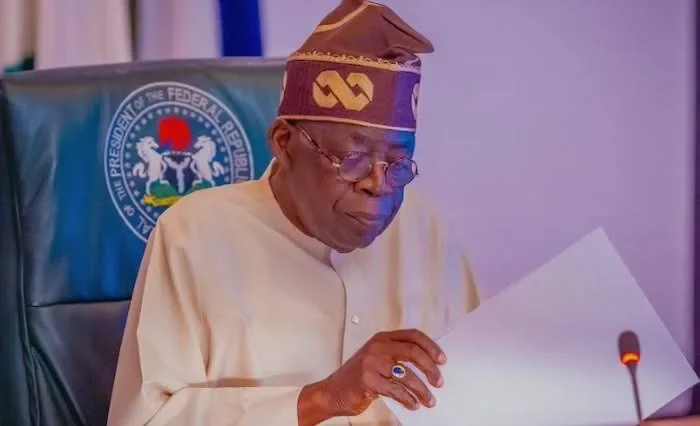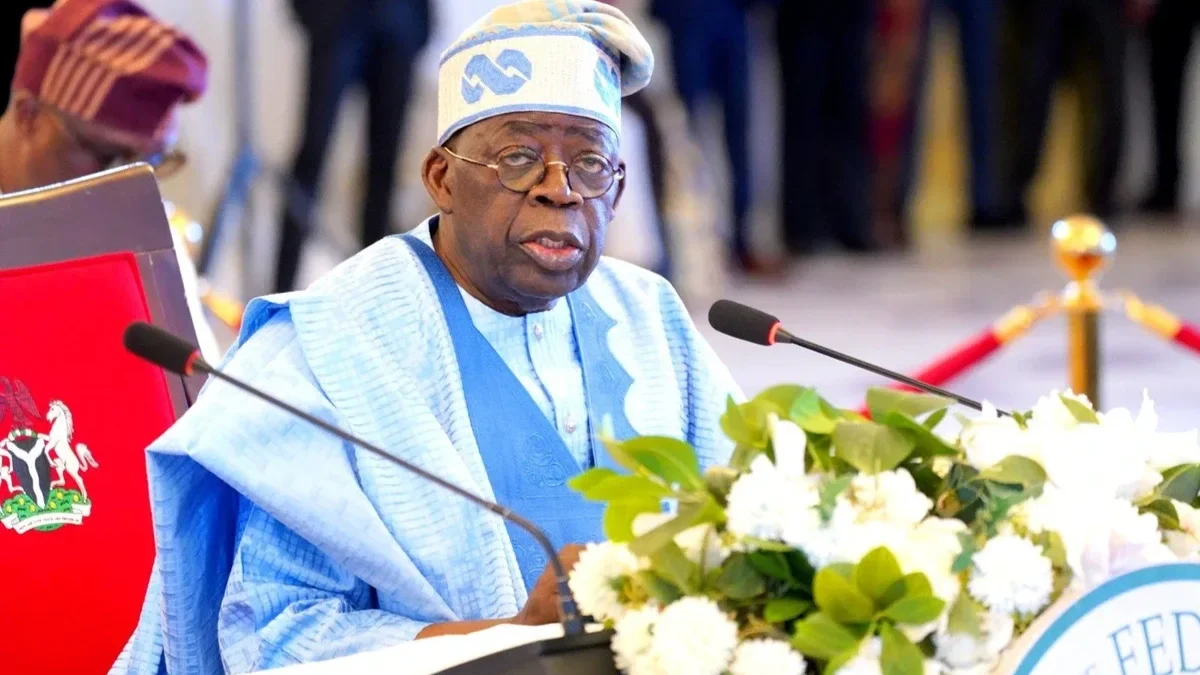
President Bola Tinubu defends the Federal Government's proposed $21.7 billion
President Bola Tinubu has defended his administration's proposed $21.7 billion external borrowing programme, arguing that Nigeria needs sustained investment in critical infrastructure to achieve its ambition of becoming a $1 trillion economy by 2030.
In an essay titled From Reforms to Delivery: Our Infrastructure Investment and Growth Strategy, published on October 29, 2026, the President maintained that the success of government borrowing should be measured by the economic value of the projects it finances rather than the amount of debt accumulated.
His defence comes amid renewed scrutiny of Nigeria's borrowing plans following his request to the National
/ You Might Also Like /




Assembly for approval of an additional external financing programme covering 2026 and 2027.
Tinubu identified major highway projects, electricity grid upgrades and the modernisation of commercial ports as key investments expected to improve connectivity, reduce operating costs, stimulate industrial activity and attract private-sector investment.
He argued that Nigeria cannot achieve its economic growth ambitions without infrastructure capable of supporting a significantly larger economy.
Tinubu Identifies Major Infrastructure Projects to Support Economic Growth
The President identified the Lagos-Calabar Coastal Highway, Sokoto-Badagry Superhighway and Trans-Sahara Superhighway among the major infrastructure projects expected to strengthen Nigeria's productive capacity.
He also highlighted investments in electricity transmission and distribution infrastructure, alongside the modernisation of major commercial ports in Lagos.
According to Tinubu, these projects are intended to connect economic regions, improve the movement of goods and people, reduce logistics costs and unlock investment opportunities across agriculture, manufacturing, trade and other productive sectors.
The President placed particular emphasis on the Lagos-Calabar Coastal Highway, which he said could reduce logistics costs along its corridor by 15% to 20%.
He also projected that the project could contribute up to 2% to Nigeria's gross domestic product through expanded trade, tourism and industrial activity.
The highway is expected to generate approximately 100,000 direct jobs in construction and engineering, alongside more than 150,000 indirect jobs in logistics, building materials and related industries.
Tinubu maintained that the projects represent more than transportation investments, describing them as economic corridors capable of connecting markets, opening new commercial locations and changing the country's economic geography.
For the real estate sector, improved highway connectivity could create opportunities for residential and commercial development along emerging transport corridors. However, the extent of these benefits will depend on supporting infrastructure, land-use planning, access to utilities and the ability of surrounding communities to attract sustainable investment.
FG's $21.7bn Borrowing Plan Covers Federal, State and Agency Projects
The President's defence follows his request to the National Assembly for approval of a supplementary external borrowing programme worth $20.52 billion and €1.05 billion, equivalent to approximately $21.7 billion.
The proposed financing will cover projects and development programmes across the 2026–2027 period.
The borrowing arrangement involves several financing sources, including multilateral and bilateral development partners, export credit agencies, regional development finance institutions and commercial lenders.
According to Finance Minister and Coordinating Minister of the Economy, Taiwo Oyedele, approximately $7.9 billion will come from multilateral and bilateral development partners, with the World Bank expected to provide $5 billion at an average interest rate of 2.1%.
The government also indicated that about $4 billion allocated to social sectors, agriculture, energy, social protection, climate and education would be financed entirely on concessional terms.
Oyedele explained that the proposed borrowing also includes financing for state governments and government agencies rather than the Federal Government alone.
Of the total, approximately $4.8 billion is earmarked for subnational governments and agencies. This includes $3.3 billion for state governments and $1.45 billion for agencies and development finance institutions, including the Bank of Industry, Development Bank of Nigeria, Transmission Company of Nigeria and electricity distribution companies.
The minister said the Federal Government acts as the coordinating authority for external borrowing by states and relevant agencies.
He also disclosed that the commercial component of the financing programme carries an average indicative interest rate of 7.8%, compared with yields of between 9.1% and 9.6% on Nigeria's November 2025 Eurobond.
Tinubu Cites Economic Indicators to Support Borrowing Strategy
Tinubu defended the proposed borrowing by pointing to improvements in Nigeria's economic indicators since his administration introduced major reforms in May 2023.
He cited real GDP growth of 4.43% in the second quarter of 2026, compared with 2.74% in May 2023, as evidence of improving economic activity.
The President also reported that headline inflation declined to 14.63% in September 2026 from 20.98% in September 2025.
Gross external reserves stood at $55.1 billion as of October 9, 2026, including approximately $46 billion in net reserves, according to figures cited by the President. He also said Nigeria's tax-to-GDP ratio had increased from 7% to 12.5%.
Tinubu attributed these developments to policies introduced since May 2023, including petrol subsidy removal, exchange rate unification and tax reforms.
He argued that improved macroeconomic conditions and positive assessments from international credit rating agencies had strengthened investor confidence and improved Nigeria's access to international financing.
The President added that the government was shifting its borrowing strategy away from short-term fiscal pressures towards longer-term investments expected to generate economic returns.
He said longer financing arrangements would help match repayment obligations with the useful lives of infrastructure assets, reducing refinancing pressures and improving the sustainability of government borrowing.
Nigeria's Rising Debt Raises Questions Over Borrowing Sustainability
Despite the government's justification, the proposed borrowing has attracted scrutiny over its implications for public debt, repayment obligations and the transparency of project financing.
Data from the Debt Management Office showed that Nigeria's total public debt increased to ₦166.79 trillion as of June 30, 2026, from ₦159.35 trillion at the end of March 2026.
The proposed $21.7 billion financing programme would add to the country's external borrowing obligations if approved and subsequently drawn down.
Former Vice-President Atiku Abubakar has called on the Federal Government to publish detailed information identifying the projects expected to receive funding from the proposed loans.
He urged the National Assembly to suspend consideration of the borrowing request until the government provides greater clarity on how the funds would be allocated and utilised.
The concerns reflect broader questions about the relationship between infrastructure financing and public debt management, particularly the need to ensure that borrowed funds translate into completed projects and measurable economic benefits.
In defending the borrowing strategy, Tinubu maintained that the government should not avoid financing productive investments simply because they require external funding.
He argued that responsible borrowing could generate economic value exceeding the cost of financing, provided the funds support projects that expand productivity and create lasting economic opportunities.
Infrastructure Investment Could Influence Property and Real Estate Development
The proposed infrastructure programme has implications for Nigeria's property market, particularly through its potential impact on transportation networks, commercial activity and the development of new economic corridors.
Major highway projects can improve access to previously underserved locations, reduce travel times and increase the attractiveness of surrounding areas for residential, commercial and industrial development.
The Lagos-Calabar Coastal Highway, for example, could influence property development along parts of the coastal corridor by improving connectivity between communities and commercial centres across the southern states.
Similarly, the Sokoto-Badagry Superhighway could strengthen connections between northern agricultural production centres and commercial markets in the south-west.
However, infrastructure development does not automatically translate into affordable housing or increased property supply. The benefits will depend on complementary investments in roads, electricity, water, drainage, land administration and other essential urban services.
For property investors and developers, the implementation of these projects could create opportunities in locations where improved accessibility supports economic activity and demand for commercial and residential properties.
The financing structure also matters because delays, cost overruns or inadequate project execution could weaken the expected economic returns and increase the burden on public finances.
FG Outlines Priorities for the Next Phase of Economic Strategy
Tinubu outlined five priorities for the next phase of the Federal Executive Council's economic strategy.
These include improving food affordability and energy price stability, harmonising budgets and maintaining fiscal discipline, completing major infrastructure projects, improving the economic policy and regulatory environment, and expanding targeted household support alongside investments in human development.
The priorities indicate that the administration intends to combine infrastructure investment with measures aimed at improving household welfare and strengthening the business environment.
The President maintained that the government's performance should ultimately be assessed through completed projects, increased investment, employment opportunities and improvements in living standards.
He stressed that securing financing alone does not constitute economic progress, arguing that the actual value lies in completing projects and delivering benefits to Nigerians.
Outlook: Infrastructure Delivery Will Determine the Value of New Borrowing
The Federal Government's proposed $21.7 billion external borrowing programme places infrastructure financing at the centre of its strategy to achieve a $1 trillion economy by 2030.
The proposed investments could improve transportation, electricity supply, trade and regional connectivity while creating opportunities for private investment and property development.
However, the economic benefits will depend on how effectively the government deploys the funds, manages project costs and delivers the infrastructure within reasonable timelines.
For Nigeria's real estate sector, the completion of major transport and electricity projects could influence development patterns, improve access to emerging locations and support commercial and residential investment.
The immediate challenge for the government is therefore to demonstrate that additional borrowing will produce measurable infrastructure improvements and economic returns without creating unsustainable repayment obligations.
READ MORE