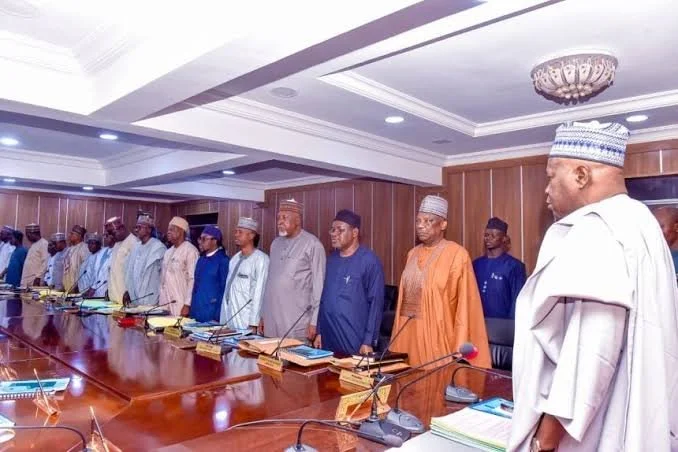
President Bola Tinubu approves ₦450 billion in agricultural funding and a ₦1.5 trillion bank recapitalisation programme
President Bola Tinubu has committed ₦450 billion to agricultural financing programmes and approved a planned ₦1.5 trillion recapitalisation of the Bank of Agriculture (BoA), according to a statement issued by Dele Alake, spokesperson for the All Progressives Congress (APC) Presidential Campaign Council, on November 22, 2026.
/ You Might Also Like /




The proposed recapitalisation aims to strengthen the bank’s capacity to finance farmers, agricultural cooperatives, processors and other businesses across the agricultural value chain. The administration also plans to support the cultivation of 500,000 hectares of farmland as part of its Renewed Hope Agenda.
The announcement comes as the Federal Government seeks to expand domestic food production, improve farmers’ access to credit and address constraints affecting agricultural productivity.
₦450 Billion Agricultural Financing Commitment
Alake said the administration’s agricultural financing interventions have reached more than 500,000 smallholder farmers across 16 states, including over 70,000 women.
The ₦450 billion commitment comprises two major programmes implemented through the Bank of Agriculture: the ₦250 billion Renewed Hope Smallholder Support and Value Chain Fund and the ₦200 billion Guaranteed Minimum Price Programme.
Under the smallholder support fund, the bank provides financing through Farmer Aggregation Companies. These organisations coordinate farmer registration, distribute agricultural inputs, provide extension services and connect farmers to markets.
The programme has facilitated the distribution of approximately 2.5 million bags of fertiliser and 300,000 bags of certified seeds. Its broader target is to reach two million farmers and distribute more than 10 million bags of fertiliser.
The beneficiary states include Kaduna, Kano, Katsina, Niger, Borno, Gombe, Taraba, Adamawa, Yobe and Bauchi, among others.
The second component, the ₦200 billion Guaranteed Minimum Price Programme, seeks to protect farmers from market volatility and distress sales. Through the initiative, the Bank of Agriculture has procured approximately 170,000 metric tonnes of maize, rice, sorghum and cassava.
The programme is designed to provide a more dependable market for agricultural produce while helping farmers avoid selling their harvests at unfavourable prices.
Bank of Agriculture Set for ₦1.5 Trillion Recapitalisation
The planned ₦1.5 trillion recapitalisation is intended to expand the Bank of Agriculture’s lending capacity and improve access to financing across the agricultural sector.
According to Alake, the additional capital would enable the bank to support larger agricultural investments and extend funding to underserved farming communities, cooperatives, processors and aggregators.
The recapitalisation is also expected to support the cultivation of 500,000 hectares of farmland under the Renewed Hope Agenda.
A stronger agricultural development bank could help address longstanding financing constraints, particularly for smallholder farmers and businesses that struggle to secure affordable credit from commercial lenders.
However, the announcement did not provide a detailed timetable for the recapitalisation, explain its funding structure or outline when the additional capital would become available to borrowers.
Government Expands Support Across Agricultural Value Chains
Beyond direct financing, the administration is pursuing programmes focused on improving access to inputs, strengthening commodity markets and reducing post-harvest losses.
One of these initiatives is the Onion Financing Programme, which the Bank of Agriculture operates in partnership with the National Onion Producers, Processors and Marketers Association of Nigeria (NOPPMAN). The association represents more than 11,800 farmers.
The programme provides improved agricultural inputs and financing for commodity purchases, alongside plans for solar-powered cooling and storage facilities. Under its financing arrangement, participating cooperatives contribute 30% of input costs, while the bank covers the remaining 70%.
The bank is also working with the All-Farmers Association of Nigeria on a programme targeting 400,000 farmers for the 2026 farming cycle.
The proposed intervention covers 120,000 hectares of wheat cultivation and another 300,000 hectares for crops including rice, maize, sorghum, millet, cassava and soybeans under the dry-season farming scheme.
In the ginger subsector, the Nigeria Ginger Recovery Programme has supported 3,200 farmers in Kachia, Kaduna State, with blight-free seeds. The initiative has also recovered more than 9,000 bags of ginger for multiplication, ahead of a planned expansion across 20,000 hectares in 16 states.
The Bank of Agriculture is further targeting at least 50,000 women through insured cooperative production financing at an interest rate of 9%, alongside programmes supporting youth participation and commercial poultry production.
Financing Remains Central to Agricultural Expansion
The latest commitments place agricultural finance at the centre of the Federal Government’s strategy to increase domestic production and strengthen food security.
The combination of smallholder credit, input distribution, commodity procurement and proposed bank recapitalisation addresses several financing and market-access challenges that affect agricultural production.
For farmers, the effectiveness of the programmes will depend on how consistently funding reaches beneficiaries, whether inputs arrive at the right time and whether farmers can access reliable markets for their produce.
The proposed ₦1.5 trillion recapitalisation could also expand the Bank of Agriculture’s ability to finance activities beyond primary production, including processing, aggregation and storage.
The figures and programme details were disclosed by the APC Presidential Campaign Council through its spokesperson, Dele Alake. The statement did not set out the recapitalisation's implementation timetable or provide further details on how the proposed capital would be mobilised.
The scale and delivery of the announced commitments will therefore be important in determining their impact on agricultural investment, farmer incomes and Nigeria’s domestic food supply.
READ MORE