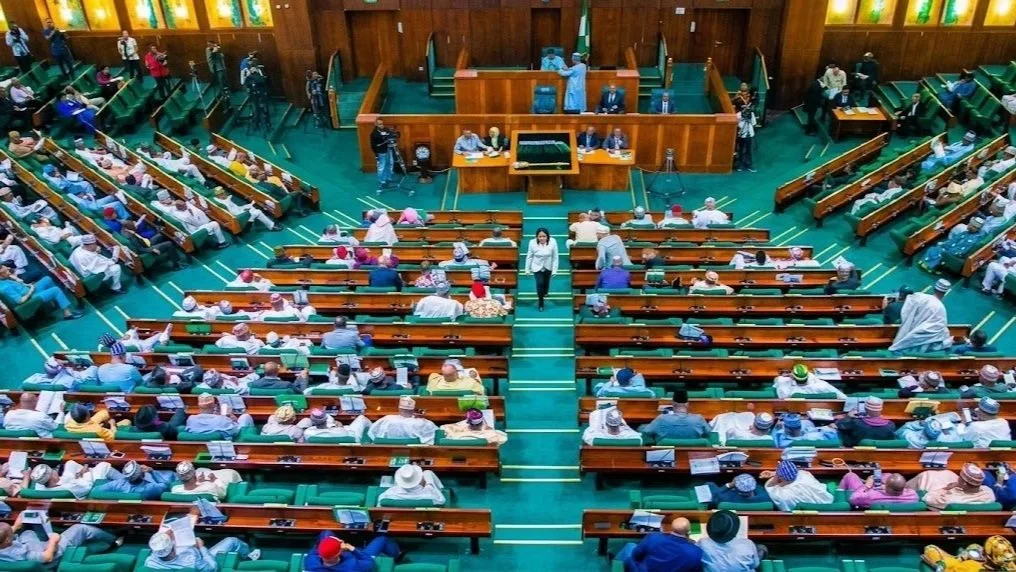
The House of Representatives Committee on Petroleum Resources
The House of Representatives Committee on Petroleum Resources (Downstream) has dismissed a petition alleging money laundering and conflict of interest against Nigerian National Petroleum Company Limited (NNPCL) Executive Vice-President, Downstream, Dr Mumuni Dagazau, saying the petitioners failed to provide sufficient evidence to support their claims.
/ You Might Also Like /




The committee, chaired by Ikenga Ugochinyere, announced the decision at a sitting at the National Assembly in Abuja on 26 October 2026. It also passed a vote of confidence in President Bola Tinubu and NNPCL’s management, citing their handling of reforms in the downstream petroleum sector.
The petition was submitted by the Coalition for Transparency and Accountability in Nigeria’s Petroleum Sector and referred to an ad hoc subcommittee for investigation. The committee said the petitioners presented newspaper clippings rather than documentary evidence and did not return to submit further supporting documents when given additional opportunities.
Dagazau, meanwhile, responded to the committee’s invitation through representatives who answered questions put to them, according to the committee’s account.
The decision followed the review of the subcommittee’s findings and an existing court order relating to the matter. The committee said it remained open to petitions supported by credible evidence.
Committee Says Allegations Were Not Substantiated
Ugochinyere said the committee dismissed the petition after reviewing the evidence submitted during the investigation. He stressed that allegations against public officials must be supported by verifiable documentation.
The committee criticised the petitioners for failing to substantiate their claims despite being given opportunities to present evidence. It said its oversight responsibilities would remain open to properly documented complaints.
The decision reflects the committee’s findings on the material presented to it; it should not be interpreted as a general judicial determination of matters beyond the petition it considered.
Lawmakers Back Downstream Petroleum Reforms
The committee also expressed confidence in Tinubu and NNPCL’s management, arguing that the administration’s downstream reforms had helped improve petroleum supply stability and strengthen domestic participation in the market.
Ugochinyere cited increased contributions from domestic refineries to petrol supply, measures to improve crude supply to local refiners and the expansion of alternative-fuel infrastructure.
He also referred to initiatives intended to reduce pressure on consumers, including a reported ₦66-per-litre petrol discount introduced by NNPCL on 1 October and a temporary suspension of NNPCL Retail’s profit margin, announced by the Federal Government on 8 October.
The committee further highlighted the expansion of compressed natural gas (CNG) infrastructure. It said more than 120,000 vehicles were operating on CNG and that NNPCL had acquired 500 CNG-powered trucks for petroleum-product distribution.
These figures and assessments were presented by the committee in explaining its position on the reforms. Their wider impact will depend on sustained fuel availability, distribution efficiency and the extent to which cost savings reach businesses and consumers.
Supply Stability and Domestic Refining Remain Key Tests
Nigeria’s downstream petroleum market has been undergoing changes aimed at increasing domestic refining, improving product distribution and reducing reliance on imported fuel.
Greater domestic refining capacity could reduce exposure to some import-related costs and foreign-exchange pressures. However, the effect on retail prices depends on several factors, including crude oil costs, exchange rates, refinery operating expenses, transportation and market competition.
For construction firms, property developers and estate managers, fuel prices and supply reliability influence transport, equipment operation, generator use and the delivery of building materials. Changes in these costs can affect project budgets and the operating expenses of completed properties.
The committee’s statement therefore raises issues beyond the vote of confidence itself: whether the reforms can sustain reliable supply, improve distribution and reduce costs for businesses and households.
The committee said its oversight work would continue, including consideration of proposed amendments to the Petroleum Industry Act 2021 and measures to strengthen domestic refining, product distribution and energy security.
READ MORE