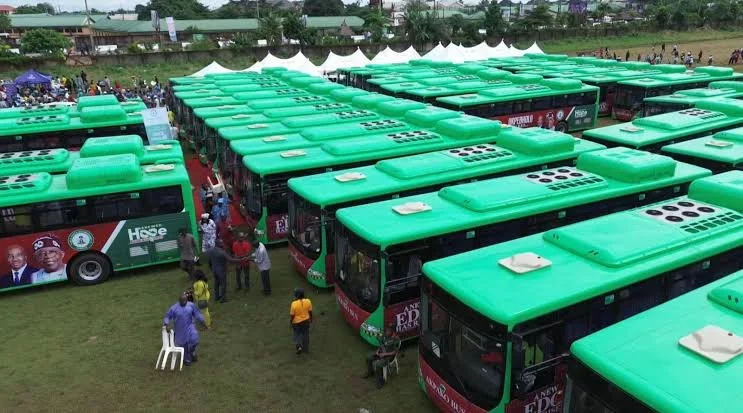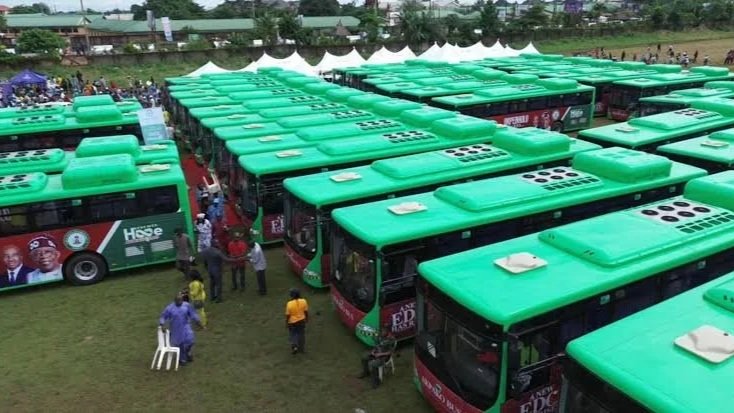
Edo State has deployed 50 new CNG buses, but commuters have raised concerns about refuelling access.
Edo State’s deployment of 50 compressed natural gas (CNG) buses has raised questions about whether the state has enough refuelling infrastructure to support the new fleet and deliver reliable, affordable public transport.
The buses, launched in Benin City on 15 October, have joined the Edo City Transport Service (ECTS), expanding the state’s efforts to provide lower-cost transportation for residents following the removal of the petrol subsidy.
/ You Might Also Like /




However, commuters have expressed concerns that the buses could face refuelling difficulties because the limited number of CNG stations in Benin City already attracts significant demand from motorists and commercial vehicle operators.
The concerns highlight a wider challenge facing Nigeria’s transition to alternative-fuel transportation: expanding the number of CNG-powered vehicles must go hand in hand with reliable access to fuel.
Edo Government Says Mobile Refuelling Units Are Ready
Edo State Commissioner for Transportation, Saturday Uwuilekhue, said the government had put arrangements in place to refuel the new buses.
He disclosed that the state had acquired mobile CNG refuelling units intended to improve efficiency and support the fleet’s operations.
The commissioner also confirmed that the buses had been integrated into the ECTS network and had started operating across the state.
The mobile units could help reduce the fleet’s dependence on existing public refuelling stations. However, their effectiveness will depend on their capacity, availability, operating arrangements and ability to meet the buses’ daily fuel requirements.
The state has not publicly detailed how many mobile units it has acquired, their refuelling capacity or how they will be deployed across the transport network.
New Buses Expand an Existing Public Transport System
The 50 CNG buses represent another expansion of Edo’s publicly supported transport system, which has previously relied on the Comrade Bus service.
The ECTS has provided relatively affordable transport on popular routes in Benin City and some other local government areas. However, an ageing and insufficient fleet has left many passengers dependent on commercial transport operators.
The addition of the new buses is intended to expand capacity and ease the pressure on commuters, including students, civil servants, traders and other residents who travel regularly within the state.
At the inauguration, Governor Monday Okpebholo said high transport costs continued to put pressure on household incomes and business activities. The new fleet, he said, was intended to reduce these costs and improve daily mobility.
The practical impact will depend on the number of routes served, service frequency, passenger capacity and the fares charged to commuters.
Refuelling Access Could Determine Operating Efficiency
CNG can offer transport operators fuel-cost savings compared with petrol, but those savings depend on consistent access to refuelling facilities.
Where stations are scarce or congested, drivers may spend substantial time waiting to refuel. These delays can reduce the number of trips a vehicle completes each day, disrupt schedules and increase operating costs.
For a public transport fleet, the consequences extend beyond individual drivers. Refuelling delays can leave fewer buses available during peak periods, increase passenger waiting times and weaken the reliability of the service.
Mobile refuelling units may provide an alternative supply arrangement for Edo’s buses, but their performance will need to be assessed against the size of the fleet and the routes it serves.
The state will also need reliable maintenance arrangements and clear operating procedures to ensure that the units support the buses safely and consistently.
CNG Infrastructure Remains a National Challenge
Edo’s concerns reflect a broader implementation challenge in Nigeria’s CNG transition.
The Federal Government has promoted CNG as a lower-cost alternative to petrol and encouraged states, transport operators and private investors to expand vehicle conversions and refuelling infrastructure.
However, the pace of infrastructure development has not been uniform. In some locations, motorists and commercial operators have complained about long queues, insufficient refuelling stations and the cost of converting vehicles.
These constraints can discourage adoption, particularly among operators who cannot afford to lose working hours while searching for fuel.
The challenge is especially important for public transport systems because the benefits of CNG-powered buses depend on their ability to remain in service throughout the day.
For states expanding alternative-fuel fleets, the number of buses purchased is therefore only one measure of progress. Fuel availability, maintenance capacity, service reliability and the cost of operations also matter.
Reliable Public Transport Has Wider Economic Implications
Affordable and dependable public transport can influence household budgets, access to employment and the cost of doing business.
For workers and families, lower transport expenses could leave more money available for rent, mortgage repayments, food and other essential needs. Businesses may also benefit when workers and goods can move more predictably.
For the housing market, transport reliability affects the practical accessibility of residential areas, particularly for households that depend on public transport to reach employment centres, schools and markets.
However, the deployment of CNG buses will not automatically reduce housing costs or improve access across Edo State. Those benefits depend on the routes covered, service frequency, affordability and the reliability of the transport network.
The new fleet’s contribution should therefore be measured by the transport services it delivers, rather than the number of buses commissioned alone.
Outlook
Edo State has expanded its public transport fleet with 50 new CNG buses and says mobile refuelling units will support their operations.
The next test is whether the state can maintain sufficient fuel access to keep the buses running reliably while providing an affordable service to commuters.
Regular reporting on bus availability, refuelling arrangements, routes, fares and passenger numbers would help residents assess whether the investment is delivering its intended benefits.
The experience could also offer lessons for other states seeking to expand CNG-powered public transport: vehicle deployment and refuelling infrastructure must develop together if lower fuel costs are to translate into reliable services and meaningful savings for commuters.
READ MORE