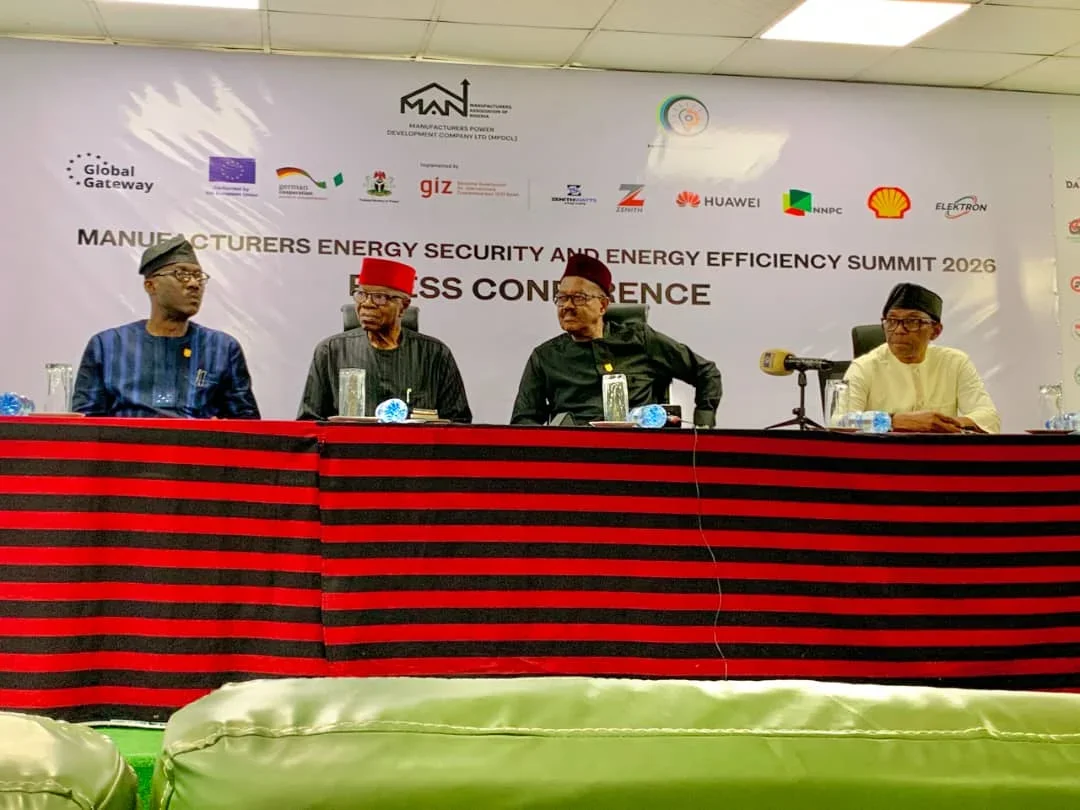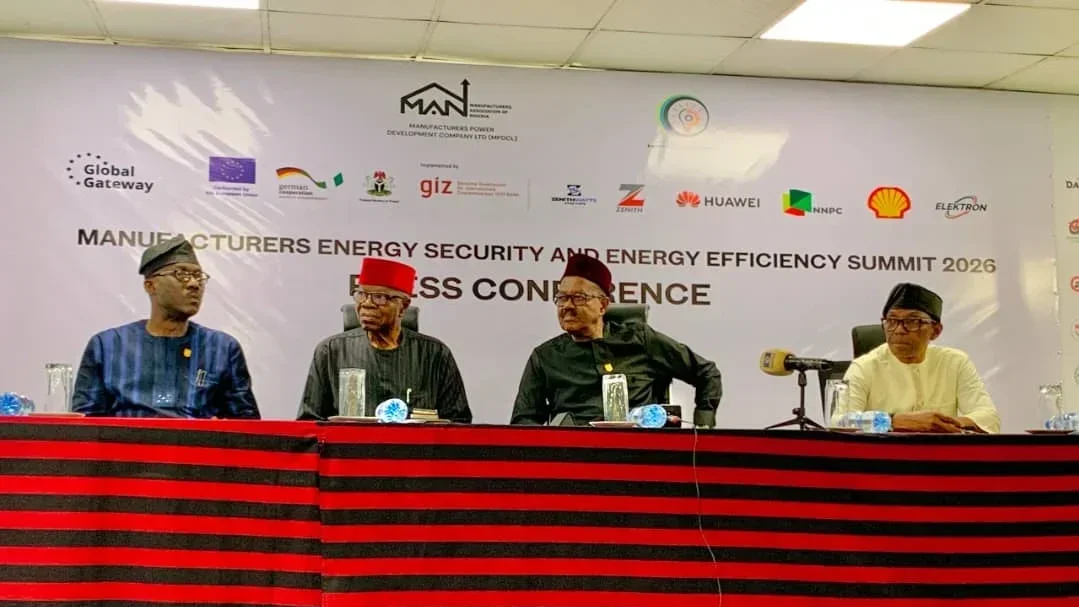
MAN President Ifeanyi Okoye says manufacturers need affordable energy
Nigeria’s manufacturers are seeking new financing arrangements and alternative energy solutions to reduce the cost of powering factories, as unreliable electricity supply and expensive self-generation continue to weigh on industrial productivity and business competitiveness.
The Manufacturers Association of Nigeria (MAN) will use its 2026 Manufacturers Energy Security and Energy Efficiency Summit to examine ways of reducing industrial energy costs, improving access to affordable gas and accelerating the adoption of energy-efficient technologies.
/ You Might Also Like /




The two-day summit will hold on 3 and 4 November in Lagos under the theme, “Innovative Energy for Cost-Effective Smart Manufacturing with Structured Financing”.
MAN President, Dr Ifeanyi Okoye, said the discussions would focus on affordable power solutions, financing options and technologies that could help manufacturers manage their energy requirements more efficiently.
The association is also preparing to launch an Industrial Energy Cost Reduction and Adoption Programme designed to encourage manufacturers to adopt alternative energy systems and improve energy efficiency.
For Nigeria’s housing and construction sectors, the outcome could have wider implications. Manufacturers of cement, steel, roofing sheets, ceramics, glass and other building materials depend on energy-intensive production processes. Persistent increases in electricity and fuel expenses can put pressure on production costs, supply prices and the budgets of developers.
Manufacturers Seek Alternatives to Expensive Power
Manufacturers in Nigeria often supplement grid electricity with diesel generators, gas-powered systems and other alternative sources to keep production running when public supply falls short.
This arrangement creates additional expenses because businesses must finance power-generation equipment, purchase fuel, maintain machinery and manage interruptions to production.
MAN has argued that high electricity tariffs, unreliable supply and dependence on expensive self-generation undermine the ability of local industries to compete with manufacturers in other markets.
The association’s proposed programme will encourage businesses to consider rooftop solar installations, battery energy storage, captive gas-to-power systems and other technologies suited to their operational needs.
MAN also intends to promote energy-efficiency practices that reduce waste and improve the amount of productive output businesses obtain from the energy they consume.
These measures could help factories reduce exposure to fuel-price volatility and unreliable grid supply. However, the savings will depend on installation costs, equipment performance, maintenance requirements and the share of a factory’s electricity demand that alternative systems can meet.
Financing Remains a Major Barrier
The transition to more efficient energy systems requires substantial upfront investment, particularly for manufacturers that need to upgrade existing equipment or install new power infrastructure.
Chief John Aluya, chairman of Manufacturers Power Development Company Limited (MPDCL), said access to affordable financing remained a major obstacle for businesses seeking to adopt alternative energy solutions.
High borrowing costs and short repayment periods can make it difficult for manufacturers to finance equipment whose benefits accumulate over several years.
The summit will therefore examine structured financing options, including debt and equity funding, climate finance and carbon credits for eligible industrial energy projects.
The programme is being advanced through MPDCL, MAN’s power and energy subsidiary, in partnership with the German development agency GIZ and the Nigerian Energy Support Programme.
Its success will depend on whether participating manufacturers can access financing on terms that allow them to recover their investments through lower energy bills and more efficient operations.
Smaller manufacturers may require financing arrangements tailored to their cash flows, energy needs and ability to provide collateral. Without accessible funding, the benefits of alternative energy technologies could remain concentrated among larger companies with stronger balance sheets.
Power Costs Matter for Building Materials and Housing Delivery
Energy costs are an important component of the economics of construction-material production. Manufacturers that spend more on electricity, gas and diesel may face pressure to increase prices, reduce investment or limit production when they cannot absorb the additional expenses.
For developers, higher prices for building materials can increase project budgets and complicate efforts to deliver homes at affordable prices.
The impact is particularly relevant in a market where developers already manage substantial expenses associated with land acquisition, infrastructure, financing and construction.
Reducing industrial energy costs could ease one source of pressure on building-material suppliers. More reliable electricity could also help manufacturers plan production, reduce downtime and make better use of installed capacity.
However, lower energy costs would not automatically translate into cheaper homes. The final effect would depend on whether manufacturers pass savings through to customers, alongside other costs affecting construction and property development.
The proposed programme should therefore be assessed by its measurable impact on factory energy bills, production costs and the prices of goods supplied to the construction industry.
MAN Calls for Greater Accountability in Electricity Supply
Beyond alternative energy, MAN is calling for greater accountability from electricity distribution companies over the service they provide to industrial customers.
The association has raised concerns about manufacturers paying higher tariffs under service-based electricity arrangements without consistently receiving the promised supply hours.
Under Nigeria’s service-based tariff framework, Band A customers are entitled to a minimum of 20 hours of electricity daily, while Band B customers are entitled to at least 16 hours.
For manufacturers, the issue is not only the price of electricity but also whether the supply is sufficiently reliable to justify the cost. Businesses that pay higher tariffs but continue to operate generators may face overlapping expenses.
MAN has called for stronger enforcement of service commitments and improvements to electricity infrastructure, arguing that industrial users need dependable power to plan production and investment.
Alternative energy systems may reduce exposure to these problems, but they cannot replace the need for a reliable and efficient electricity market.
Summit to Explore Investment and Energy-Efficiency Opportunities
The November summit will bring manufacturers, energy providers, financiers, technology companies and policymakers together to discuss practical responses to the sector’s energy challenges.
Sessions are expected to cover decentralised electricity systems, state-level electricity markets, net metering, climate finance and energy-management technologies.
The organisers also plan to promote business-to-business engagement to connect manufacturers with potential energy suppliers, investors and financing partners.
For investors, the discussions could highlight opportunities in industrial solar installations, battery storage, gas-powered generation and energy-efficiency services. The commercial viability of these opportunities will depend on project economics, regulatory conditions and manufacturers’ ability to pay for the solutions.
The programme’s longer-term value will depend on whether it moves beyond awareness and produces financeable projects, wider technology adoption and demonstrable reductions in energy costs.
Outlook
MAN’s planned energy programme reflects the growing importance of reliable and affordable power to Nigeria’s industrial competitiveness.
For manufacturers, lower energy expenses could release funds for equipment, production expansion and workforce development. For construction-material suppliers, the benefits could include more predictable production costs and improved operational efficiency.
The housing sector could benefit if energy savings help moderate the cost of materials used in residential and commercial developments. But that outcome will depend on implementation, financing and the extent to which manufacturers pass any savings on to customers.
The key measure of success will be whether the initiative enables manufacturers to secure reliable power at a sustainable cost, rather than simply expanding the range of energy technologies available to them.
READ MORE