Power Surge Triggers Fire Outbreak at Ilorin Housing Estate
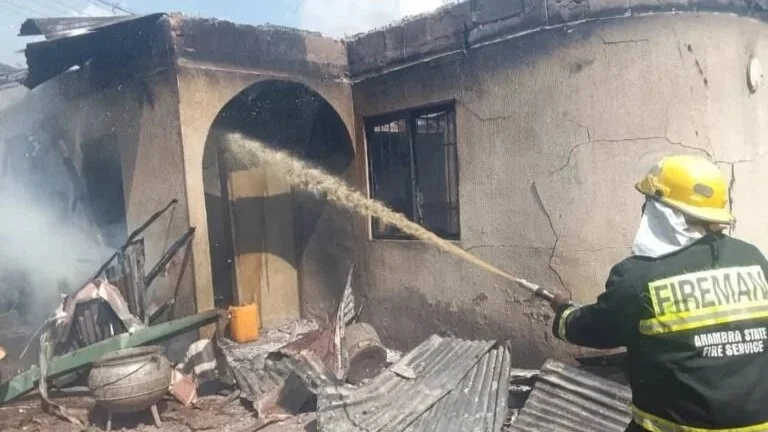
Ilorin Housing Estate Fire Linked to Power Fluctuation
A fire outbreak linked to a suspected power surge has affected a residential property in Ilorin, Kwara State, raising renewed concerns over electrical safety and fire prevention within Nigeria’s urban housing estates.
According to reports, the incident occurred after a sudden power fluctuation ignited combustible materials within part of the affected building, prompting panic among residents before emergency responders contained the blaze. Preliminary investigations by the Kwara State Fire Service identified unstable electricity supply as the likely cause of the outbreak.
/ You Might Also Like /




Emergency responders contain spread of fire
Officials of the Kwara State Fire Service reportedly responded swiftly to the emergency, preventing the fire from spreading to adjoining apartments and nearby structures.
The agency stated that firefighters arrived shortly after receiving the distress call and successfully limited the damage to a section of the property. Authorities noted that rapid intervention helped avert what could have escalated into a larger residential disaster.
No fatalities were officially recorded in connection with the incident, although residents reportedly fled the premises during the outbreak amid fears of wider structural damage.
Power fluctuations remain recurring fire risk
The incident adds to a growing number of fire outbreaks across Ilorin and other Nigerian cities linked to unstable electricity supply and power surges.
Recent reports from the Kwara State Fire Service show that several fire incidents recorded in the state over the past year were traced to electrical faults, sudden voltage fluctuations, and poor wiring systems.
Fire safety experts warn that erratic electricity restoration often triggers electrical overloads capable of igniting appliances, wiring systems, and combustible materials in residential and commercial buildings.
Authorities have repeatedly advised residents to install surge protectors, use certified electrical fittings, and avoid overloading circuits during unstable power conditions.
Housing safety concerns gaining attention
The outbreak has also intensified broader concerns surrounding fire preparedness and infrastructure safety within Nigeria’s residential estates and urban housing developments.
Urban safety analysts note that many residential buildings across the country still lack basic fire protection systems such as extinguishers, smoke detectors, emergency exits, and electrical protection devices.
Industry stakeholders argue that rapid urbanisation, weak enforcement of building safety standards, and poor electrical maintenance continue to increase fire risks in densely populated residential areas.
Authorities urge preventive measures
Following the incident, fire officials urged homeowners, landlords, and estate managers to strengthen safety protocols and prioritise preventive maintenance.
The Kwara State Fire Service also encouraged residents to report fire outbreaks immediately to emergency responders rather than attempting to contain major fires independently, warning that delays often worsen structural damage and increase risks to lives and property.
Outlook for urban fire safety
As electricity instability continues to affect households and businesses across Nigeria, fire incidents linked to power surges remain a growing urban safety challenge.
Safety experts believe stronger public awareness, improved electrical infrastructure, stricter building compliance standards, and wider adoption of fire prevention systems will be critical to reducing future incidents within residential estates and commercial properties nationwide.
READ MORE