Nubi Urges Shift From Housing Units to Sustainable, Inclusive Communities

Timothy Nubi advocates sustainable communities
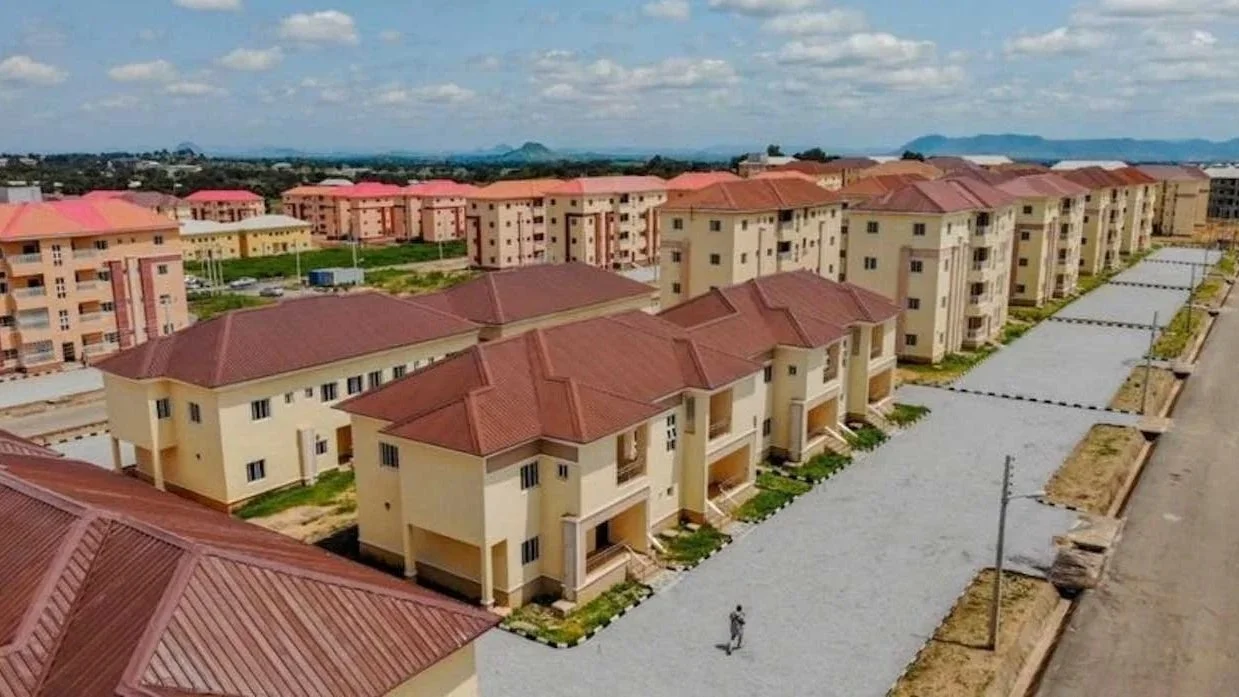
Nigeria needs to move beyond measuring housing delivery by the number of buildings constructed and focus instead on developing sustainable, inclusive and resilient communities, Professor Timothy Nubi of the University of Lagos has said.
/ You Might Also Like /



Nubi, a Professor of Estate Management and Valuation, made the call at the second lecture series of the Folawiyo Entrepreneurship Centre at Yaba College of Technology. The lecture, held on Wednesday, focused on sustainable estate development through clean water, clean energy and innovation.
He said Nigeria’s housing challenge extends beyond the shortage of housing units to include affordability, infrastructure, environmental risks, construction quality and institutional capacity.
According to Nubi, sustainable estate development should bring together land, buildings, infrastructure, institutions and communities to create long-term social, economic and environmental value.
Nubi Calls for Greater Focus on Urban Regeneration
Nubi advocated urban regeneration and in-situ upgrading as important components of Nigeria’s housing strategy, particularly in underserved settlements that can be made safer and more resilient.
In-situ upgrading involves improving existing communities rather than automatically clearing them and relocating residents elsewhere. Nubi said the approach should combine land-use planning with infrastructure improvements, environmental management, housing rehabilitation, tenure security and local economic development.
He identified roads, drainage, clean water, sanitation, electricity, waste management, public spaces, social facilities and housing rehabilitation as key areas for intervention.
The approach could allow governments and developers to improve existing neighbourhoods while retaining established social and economic networks within those communities.
Nubi also called for phased implementation of regeneration projects so that residents can remain in their communities wherever possible.
Housing Development Should Protect Existing Communities
The professor warned that urban regeneration can create unintended consequences if governments and developers do not adequately protect existing residents.
He identified land speculation, rising rents, forced displacement and the replacement of lower-income residents by wealthier households as potential risks associated with regeneration.
Where temporary relocation becomes unavoidable, Nubi said residents should receive clear information, fair compensation and secure rights to return or access suitable accommodation nearby. He also stressed the need to protect residents’ livelihoods during the process.
He recommended measures including tenure regularisation, affordability safeguards, community land arrangements, transparent property valuation and inclusive financing to reduce the risk of displacement.
These measures are particularly relevant in urban areas where infrastructure investment and regeneration can increase land values and subsequently place pressure on lower-income residents.
Sustainability Could Reduce Long-Term Development Costs
Nubi also challenged the perception that sustainable development necessarily makes real estate projects more expensive.
He argued that sustainability should be assessed using lifecycle costs rather than focusing only on the initial construction expenditure.
According to him, investment in responsible infrastructure and environmentally sustainable systems could reduce costs associated with energy consumption, water supply, infrastructure failure, flood damage, maintenance and environmental degradation.
For property developers and investors, this approach shifts the focus from the upfront cost of sustainable features to their potential effect on operating expenses, asset resilience and long-term property value.
It also highlights the importance of infrastructure quality in determining the long-term performance of residential developments.
Infrastructure Remains Central to Sustainable Housing
Nubi's position places infrastructure at the centre of housing delivery rather than treating it as a separate development concern.
Access to reliable electricity, water, drainage, roads, sanitation and waste management can influence both the quality of housing and the functionality of surrounding communities.
Poor infrastructure can increase household operating costs, contribute to environmental risks and reduce the attractiveness and resilience of residential areas. Conversely, coordinated infrastructure investment can support more functional communities and improve the long-term usability of housing developments.
Nubi therefore called for stronger coordination between housing development, spatial planning and infrastructure provision.
Government and Private Sector Need Greater Coordination
Nubi called for collaboration between government agencies, developers, financial institutions, professional bodies, communities, technology providers and educational institutions.
He said government should provide effective spatial planning, efficient development approvals, infrastructure coordination, environmental regulation, appropriate building standards and supportive financial frameworks.
The private sector, he added, should contribute investment, innovation and infrastructure development.
Such coordination could help address some of the institutional challenges that affect housing development, particularly where land, infrastructure, finance and planning responsibilities fall across different agencies.
YABATECH Links Sustainability to Innovation and Entrepreneurship
The lecture was organised by the Folawiyo Entrepreneurship Centre as part of its efforts to promote entrepreneurship, innovation and practical solutions to environmental and developmental challenges.
Yaba College of Technology Rector, Dr Ibraheem Abdul, said the programme was intended to expose students and staff to practical enterprise opportunities and encourage the development of solutions to real-world challenges.
The centre's programme focuses on clean water, clean energy and sustainable communities, areas the institution linked to the United Nations Sustainable Development Goals 6, 7 and 11.
Chief Tunde Fanimokun, chairman of the centre, also encouraged students to pursue entrepreneurship and highlighted real estate as an avenue for wealth creation. The programme included a business idea pitchathon, with awards presented to winning staff and students.
Sustainable Communities Could Reshape Housing Delivery
Nubi's call highlights a broader issue in Nigeria's housing sector: increasing housing supply alone does not necessarily guarantee functional or sustainable communities.
Housing developments require supporting infrastructure, access to essential services, effective land administration, environmental safeguards and financing structures that allow communities to remain affordable over time.
For developers, the approach also reinforces the importance of considering infrastructure, operating costs, environmental risks and community needs during project planning rather than treating them as secondary considerations.
A greater emphasis on urban regeneration and in-situ upgrading could also provide an alternative to large-scale clearance and relocation where existing settlements can be improved safely.
The challenge for policymakers and industry stakeholders will be translating these principles into planning standards, financing mechanisms and development programmes that can deliver better housing outcomes while protecting affordability and existing communities.
READ MORE