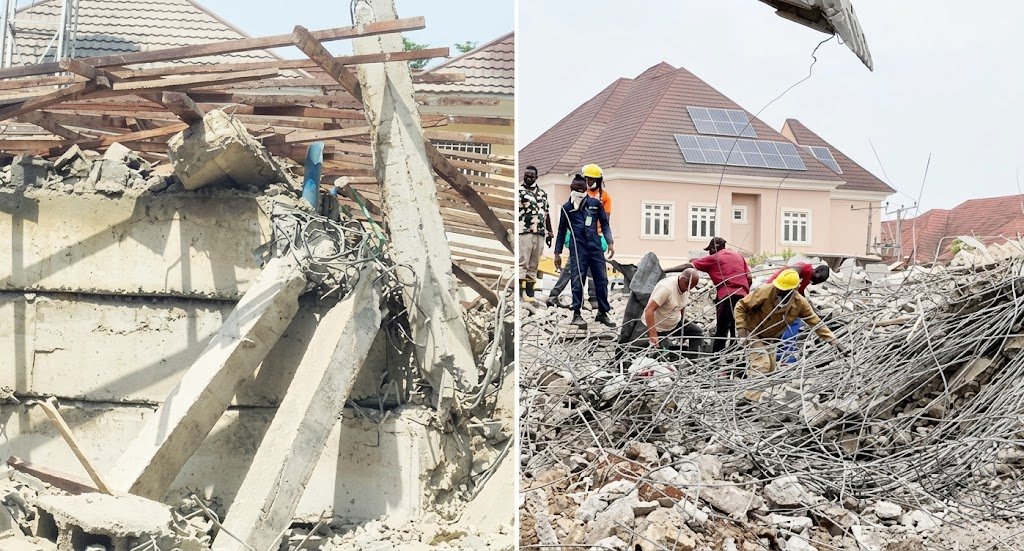
fire incidents have caused an estimated ₦4.6 trillion in property and business asset losses over four years
Nigeria recorded an estimated ₦4.6 trillion in losses from fire incidents between 2022 and 2025, while building collapses killed 321 people and injured 344 others between 2015 and 2025, highlighting the financial and human costs of weak safety standards across the country's built environment.
The figures, disclosed by the President and Chairman of the Governing Council of the Chartered Institute of Forensics and Certified Fraud Investigators of Nigeria (CIFCFIN), Dr Iliyasu Gashinbaki, point to persistent weaknesses in building supervision, construction practices and regulatory enforcement.
/ You Might Also Like /




Gashinbaki presented the findings during the induction of the first group of Certified Engineering Failure Forensic Investigation (CEFFI) professionals, an initiative designed to strengthen investigations into engineering failures and improve accountability.
The estimated ₦4.6 trillion in fire-related losses represents an average of approximately ₦1.15 trillion annually. The losses cover destroyed properties, goods and business assets, demonstrating the wider economic consequences of fire incidents beyond the immediate damage to buildings.
Separately, a 2026 engineering study identified 111 validated building-collapse incidents nationwide between 2015 and 2025, resulting in 321 deaths and 344 injuries.
Lagos Accounts for More Than Half of Recorded Building Collapses
Building collapses remain a major concern in Nigeria's urban property markets, where residential, commercial and public structures have repeatedly failed, sometimes resulting in fatalities, displacement and significant financial losses.
Lagos accounts for more than half of recorded building-collapse incidents nationwide, with major disasters in 2021, 2022 and 2024 claiming lives and destroying properties.
Federal Government figures cited in recent reporting also indicate that Nigeria has recorded more than 650 building collapses and over 1,600 deaths since 1974.
Experts have associated recurring structural failures with substandard building materials, poor construction practices, inadequate professional supervision and attempts to reduce development costs.
These problems can emerge at different stages of a construction project, from land assessment and foundation design to material selection, structural execution and final inspections.
For property owners and investors, building failures can result in the loss of capital, prolonged legal disputes, business interruption and reduced confidence in affected locations.
Poor Construction Standards Increase Property Investment Risks
The financial consequences of building failures extend beyond the cost of replacing damaged structures.
Fire incidents can destroy household belongings, commercial inventory, equipment and other business assets, while structural collapses can expose developers, contractors and property owners to substantial financial and legal liabilities.
The risks are particularly significant in residential and commercial developments where inadequate supervision or the use of substandard materials can compromise structural integrity.
Construction cost pressures can also create incentives for some developers and contractors to substitute approved materials, reduce specifications or bypass essential technical procedures.
However, reducing construction costs at the expense of safety can expose projects to much greater financial losses over their lifetime.
For investors, the figures reinforce the importance of technical due diligence, professional certification, independent supervision and compliance with approved building designs before committing capital to property development.
CIFCFIN, COREN and NBRRI Introduce Forensic Engineering Initiative
To strengthen investigations into engineering failures, CIFCFIN has partnered with the Council for the Regulation of Engineering in Nigeria (COREN) and the Nigeria Building and Road Research Institute (NBRRI) through the Certified Engineering Failure Forensic Investigation initiative.
The programme brings together engineering, forensic science, law, regulation and investigation to improve the examination of structural failures and preserve evidence where negligence, fraud, professional misconduct or deliberate safety violations may have occurred.
Gashinbaki said forensic engineering could help establish the causes of building failures and provide technical evidence for regulatory or legal action.
The initiative is intended to move investigations beyond emergency responses and repairs towards identifying the underlying causes of structural failures and determining responsibility.
For Nigeria's property market, stronger investigations could help improve accountability among developers, contractors, engineers, material suppliers and other professionals involved in construction.
Experts Call for Stricter Building Inspections and Material Certification
Experts have called for stronger penalties for manufacturers, suppliers, contractors and professionals whose negligence contributes to structural failures.
They also recommended mandatory certification for block manufacturers, regular laboratory testing of construction materials and tighter checks on imported building products.
Local councils were urged to license and inspect block-making facilities, publish lists of certified producers and withdraw licences from businesses that repeatedly fail to meet required standards.
Another recommendation is mandatory physical inspection at critical stages of construction, including foundation, lintel and roofing works.
Such inspections would help regulators identify deviations from approved designs and detect construction defects before buildings become occupied.
Experts also proposed digital building-permit platforms that would make approval documents, inspection records and compliance status more accessible to the public.
The recommendations place emphasis on improving enforcement rather than relying solely on building regulations and documentation submitted during approval processes.
What the Figures Mean for Nigeria's Housing and Real Estate Market
The financial losses and fatalities associated with fire incidents and building collapses highlight the importance of safety as a fundamental requirement for sustainable property development.
For developers, stronger construction oversight and material testing can reduce the risk of structural defects, project disruptions and financial liabilities.
For buyers and investors, the findings reinforce the need to verify building approvals, engage qualified professionals and assess the structural condition of properties before purchase or occupation.
The figures also raise questions about the effectiveness of existing inspection and enforcement systems, particularly in rapidly expanding urban centres where development pressures can outpace regulatory capacity.
While the proposed forensic engineering initiative could improve investigations after failures occur, preventing future incidents will require consistent inspections, reliable construction materials, professional accountability and effective enforcement of building standards.
Ultimately, protecting Nigeria's housing stock requires treating building safety not as an additional development expense but as an essential part of property investment, construction quality and long-term asset protection.
READ MORE