NLC Sets Two Week Deadline for Petrol Price Cuts and Minimum Wage Talks

NLC demands lower petrol prices and fresh minimum wage negotiations
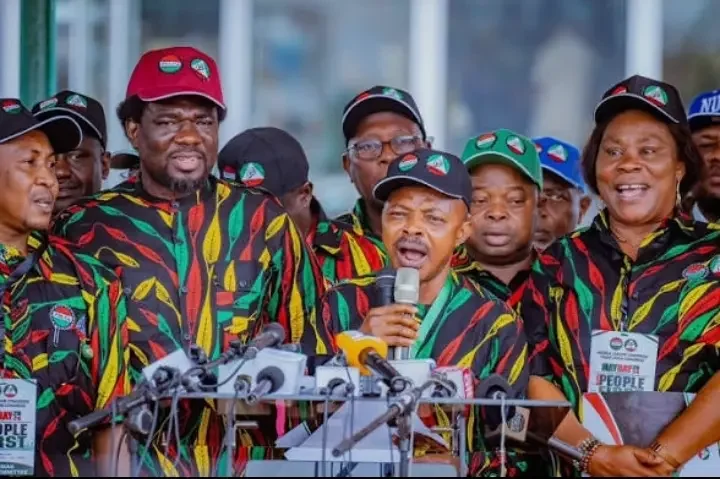
The Nigeria Labour Congress (NLC) has given the Federal Government two weeks, beginning October 9, to reduce petrol prices, commence negotiations for a new national minimum wage and implement outstanding agreements with workers.
The ultimatum followed a joint meeting of the NLC’s National Executive Council and Central Working Committee in Abuja. In a communiqué signed by its president, Joe Ajaero, the labour organisation warned that failure to address its demands within the stipulated period could lead to further action.
/ You Might Also Like /




The union said the depreciation of the naira and rising living costs had eroded the purchasing power of the current national minimum wage, making it increasingly difficult for workers to afford essential goods and services.
NLC Demands Lower Petrol Prices
The Congress wants the government to reduce petrol prices nationwide to the level prevailing when the current national minimum wage was signed into law in 2024.
It argued that rising petrol prices have increased transport fares and the cost of food and other essential commodities, placing additional pressure on workers and low-income households.
The demand comes as the government pursues temporary measures to contain fuel-price pressures, including a 30-day petrol discount at NNPC Retail stations and a proposed ceiling on petrol landing costs. The NLC’s demand for a return to 2024 price levels goes beyond these temporary interventions.
Minimum Wage Renegotiation Must Begin in October
The NLC also demanded that negotiations for a new national minimum wage begin before the end of October.
The current national minimum wage stands at ₦70,000 per month, following its approval in 2024. However, the Congress maintains that subsequent increases in living costs and the weakening of the naira have reduced what workers can purchase with their salaries.
The union is seeking a living wage that reflects prevailing economic conditions and enables workers to meet essential expenses, including food, housing, healthcare, transportation and education.
The ultimatum calls for the commencement of negotiations within the specified period; it does not mean a new minimum wage has already been agreed or approved.
Labour Seeks Payment of Wage Awards and Implementation of Agreements
Beyond petrol prices and wage negotiations, the Congress called for the implementation of tax relief for workers and immediate payment of wage awards intended to cushion the effects of rising living costs.
It also demanded compliance with the Terms of Settlement reached with the Joint Health Sector Unions and Assembly of Healthcare Professionals on February 5, 2026, alongside action on outstanding demands from the Joint Public Sector Negotiating Council.
The NLC said the government must address these commitments within the two-week period. It warned that failure to do so would prompt its relevant organs to consider further steps.
The demands reflect a broader labour dispute over the relationship between workers’ earnings, government commitments and the cost of essential goods and services.
Rising Living Costs Put Household Budgets Under Pressure
The ultimatum highlights the pressure that higher transport, food and other living expenses place on household budgets when wages fail to keep pace.
For salaried households, these costs compete with rent, mortgage repayments, utilities, education and healthcare. When transport and food absorb a larger share of monthly income, households have less money available for housing, savings and other longer-term commitments.
The effect can be particularly significant for low-income renters and aspiring homeowners, whose ability to save for deposits or meet housing payments depends on how much income remains after essential expenses.
Implications for Housing Affordability
The NLC’s demands are relevant to the housing market because wage levels and transport costs influence households’ ability to secure and sustain accommodation.
Higher petrol prices can increase the cost of transporting building materials and operating construction equipment, while higher transport fares raise the daily cost of commuting between residential areas and employment centres. These pressures can affect both housing delivery costs and the amount households can afford to spend on rent.
A new minimum wage could improve workers’ capacity to meet housing expenses if any increase keeps pace with living costs. However, the effect would depend on the size of the eventual adjustment, its implementation across eligible employers and changes in prices.
Reducing petrol prices could also ease some transport and logistics costs, although the extent to which those savings reach renters and homebuyers would depend on how businesses respond.
Neither measure alone would resolve Nigeria’s housing affordability challenges, which also involve land costs, construction expenses, infrastructure shortages and limited access to long-term housing finance.
Outlook
The two-week ultimatum places renewed pressure on the Federal Government to respond to labour’s demands by approximately October 23, 2026. The NLC has not specified a single automatic action that will follow the deadline, saying further steps will be determined by the relevant organs of the Congress.
The immediate issues are whether the government will begin minimum wage negotiations, respond to the demand for lower petrol prices and implement outstanding agreements with workers.
For households, the significance of any response will depend on whether it improves real purchasing power and reduces the share of income consumed by essential expenses, including transport and housing.
READ MORE