Nigeria’s Power Reforms Offer Model for Strengthening Global Energy Security - Minister
Nigeria positions power sector reforms as a model for stronger energy security
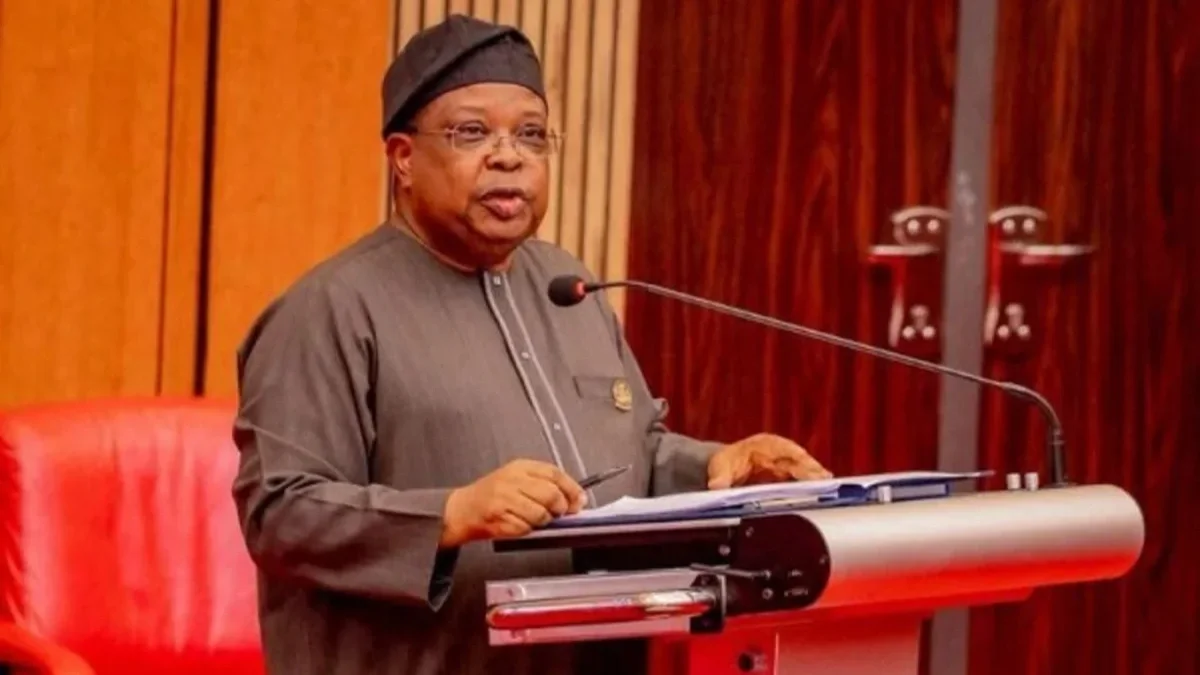
Nigeria’s power sector reforms could provide a model for developing economies seeking to strengthen energy security amid geopolitical uncertainty and fragmentation, Minister of Power Joseph Tegbe has said.
Tegbe made the remarks at the opening plenary of the 50th Middle East Energy 2026 Leadership Summit in Dubai, where he spoke on energy security and the effect of geopolitics. He argued that modern energy security now depends on the resilience of the entire energy system rather than simply the availability of oil and gas reserves.
/ You Might Also Like /




The minister identified electricity grids, critical mineral supply chains, financing and institutions capable of maintaining energy supply during disruptions as increasingly important components of energy security.
Electricity Reform Moves Beyond Federal Monopoly
Tegbe pointed to Nigeria’s Electricity Act 2023 as a major turning point in the development of the country's electricity market.
According to the minister, the legislation ended the long-standing federal monopoly over electricity and created a framework for the emergence of 37 electricity markets across the country.
The reform has allowed states to take a greater role in electricity generation, distribution and regulation within the framework established by the legislation.
Tegbe said the reform agenda under President Bola Ahmed Tinubu is focused not only on restructuring the electricity market but also on establishing the regulatory certainty required to attract long-term capital.
He stressed that investors can assess commercial risk, but uncertainty around regulations and contractual arrangements can discourage investment.
Government Targets More Investment in Power Sector
The minister's comments come as the Federal Government seeks to attract more private capital into Nigeria's electricity industry.
The government said in March that its power-sector reforms had attracted $2 billion in investment and reduced sector liabilities to N146 billion. It also said 16 state electricity markets had been activated.
These developments form part of a wider attempt to move Nigeria's electricity industry towards a more commercially sustainable structure.
For the sector to attract substantially larger volumes of private capital, however, investors will need confidence that regulatory frameworks, contracts and payment arrangements will remain predictable over the life of their investments.
Energy Security Is Broader Than Oil and Gas
Tegbe also argued that energy security can no longer depend exclusively on access to hydrocarbons.
Nigeria has more than 200 trillion cubic feet of proven natural gas reserves and has supplied liquefied natural gas to international markets in Europe and Asia for decades, according to the minister.
However, he said modern energy security requires resilience across the entire energy system.
That includes dependable electricity grids, diversified energy sources, access to finance, reliable supply chains and institutions capable of responding to disruptions.
The argument is particularly relevant to Nigeria, where abundant energy resources have not always translated into reliable electricity supply for households and businesses.
Research by the Institute for Security Studies notes that Nigeria's electricity challenges include ageing infrastructure, weak transmission networks and inadequate power generation, leaving many households and businesses dependent on petrol and diesel generators.
Africa’s Energy Gap Creates Investment Opportunity
The minister also highlighted Africa's large unmet electricity demand.
Tegbe said about 600 million Africans still lack access to electricity, while the continent has substantial natural resources, solar potential, a young population and rapidly growing energy demand.
He called on international investors and development partners to move beyond the extraction of Africa's raw resources and support local processing, manufacturing, skills development and long-term financing.
For Nigeria, this approach could create opportunities across electricity generation, transmission, distribution, renewable energy, gas infrastructure and energy-related manufacturing.
The minister's message also positions reliable electricity as a foundation for broader economic development rather than simply a utility-sector objective.
Reliable Power Is Critical to Nigeria’s Housing Market
The implications extend beyond the electricity industry.
Reliable power is a critical component of housing and property development because residential buildings depend on electricity for lighting, water pumping, security systems, lifts, cooling, communications and other essential services.
Where public electricity supply remains unreliable, developers and estate managers often need to invest in alternative power infrastructure.
These additional costs can increase service charges, raise property management expenses and affect the overall affordability of housing.
The impact is particularly important in large residential estates and mixed-use developments, where electricity demand can be substantial.
A more reliable national electricity system could therefore reduce the dependence on expensive private backup power and improve the operating environment for property owners and developers.
Infrastructure Reliability Can Influence Property Investment
Power infrastructure also influences the attractiveness of locations for property investment.
Developers generally favour locations where access to electricity, roads, water, drainage and other infrastructure can support residential and commercial activity.
Where infrastructure remains inadequate, developers may need to absorb additional costs to provide private alternatives.
For investors, this can affect project feasibility, expected returns and the long-term competitiveness of particular locations.
This makes the government's focus on electricity-sector reform relevant to Nigeria's wider infrastructure and property investment environment.
Regulatory Certainty Remains Critical
The minister's emphasis on regulatory certainty is particularly important for infrastructure investment because electricity projects typically require significant upfront capital and long investment periods.
Power plants, transmission infrastructure, distribution networks and renewable-energy projects cannot be developed on the same short investment cycle as many conventional businesses.
Investors therefore require confidence in licensing arrangements, tariffs, contracts, payment structures and the broader regulatory environment.
PricewaterhouseCoopers previously identified regulatory uncertainty and coordination between federal and state authorities as important issues that could affect the progress of Nigeria's electricity reforms.
Improving coordination and maintaining predictable rules will therefore remain important if the reforms are to translate into sustained investment.
Power Reform Could Support Industrial and Urban Development
A stronger electricity system could have wider economic consequences.
Manufacturers and businesses currently spend significant resources securing alternative electricity supplies. More dependable grid power could reduce these costs and improve the operating environment for productive sectors.
For the construction and property industries, improved electricity availability could support the development of new urban areas and reduce some of the infrastructure costs associated with establishing large residential communities.
It could also make emerging locations more viable for investment by reducing the need for developers to independently provide power infrastructure.
Reform Must Translate Into Reliable Supply
While the reforms have opened the electricity market to greater state participation and private investment, the ultimate test will be whether they improve electricity reliability for households and businesses.
The success of the reform programme will depend on the ability to attract sufficient investment into generation, transmission and distribution while ensuring that the market remains financially sustainable.
The Federal Government must also address the infrastructure and operational constraints that continue to limit the amount of electricity delivered to consumers.
For the housing market, the most meaningful outcome will be whether improvements in the power system translate into lower operating costs and more reliable services for residential communities.
Conclusion
Nigeria is positioning its electricity-sector reforms as a potential model for developing economies seeking greater energy security and investment. At the Middle East Energy 2026 Leadership Summit, Power Minister Joseph Tegbe highlighted regulatory certainty, resilient grids, financing and stronger institutions as central to the country's approach.
For Nigeria's housing and property sector, the significance of the reforms extends beyond electricity supply. A more reliable power system could reduce infrastructure and operating costs, improve the viability of new developments and strengthen the attractiveness of emerging urban areas.
The long-term impact will ultimately depend on whether regulatory reforms and investment commitments translate into stronger generation, transmission and distribution infrastructure and, most importantly, more reliable electricity for households and businesses.
READ MORE