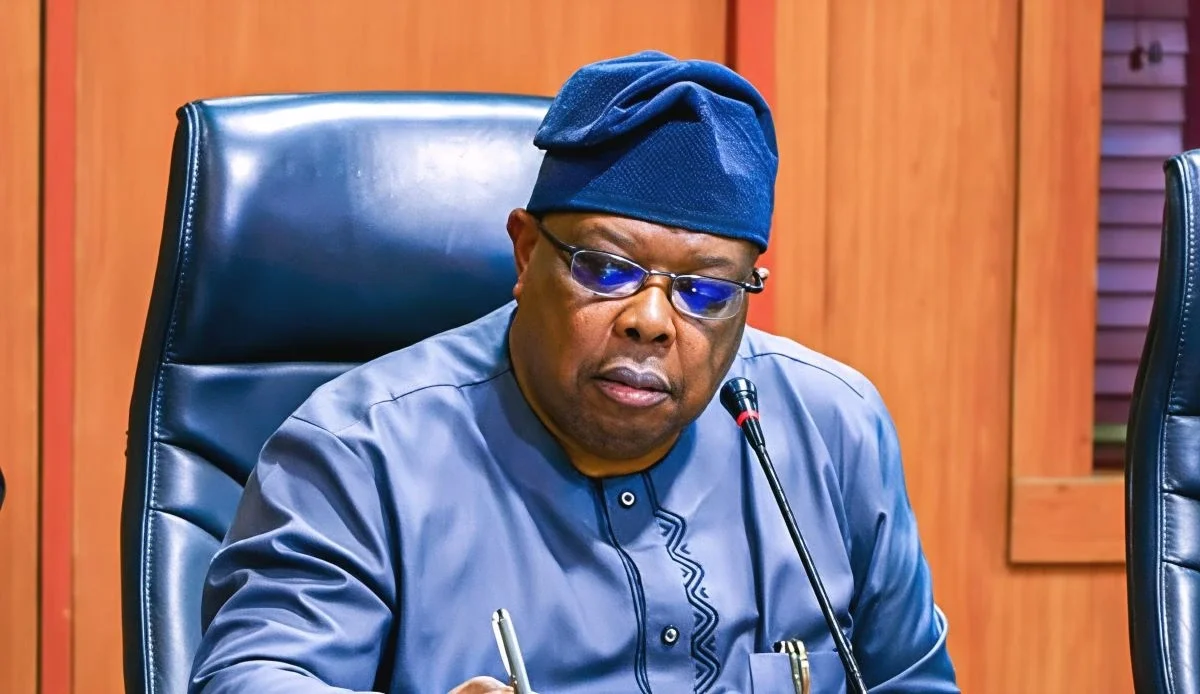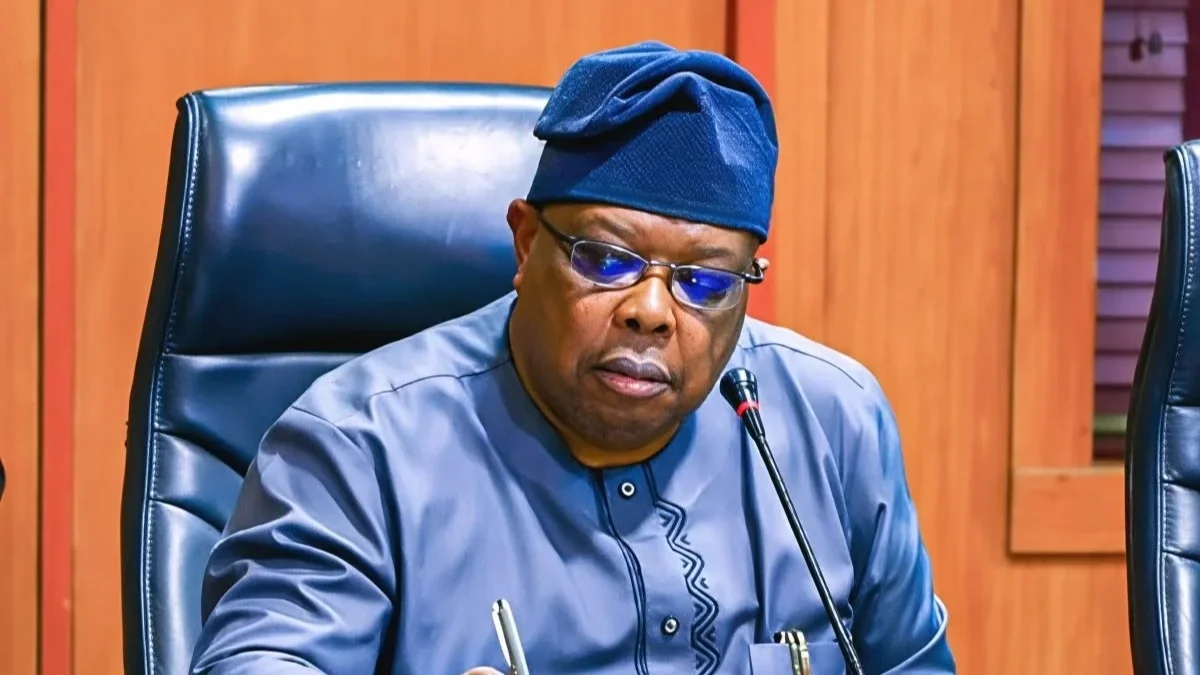
Power Minister Joseph Tegbe
Nigeria has unveiled a new electricity-sector roadmap aimed at stabilising the national grid, expanding transmission capacity and attracting investment, with the government targeting improvements across three major economic corridors.
/ You Might Also Like /




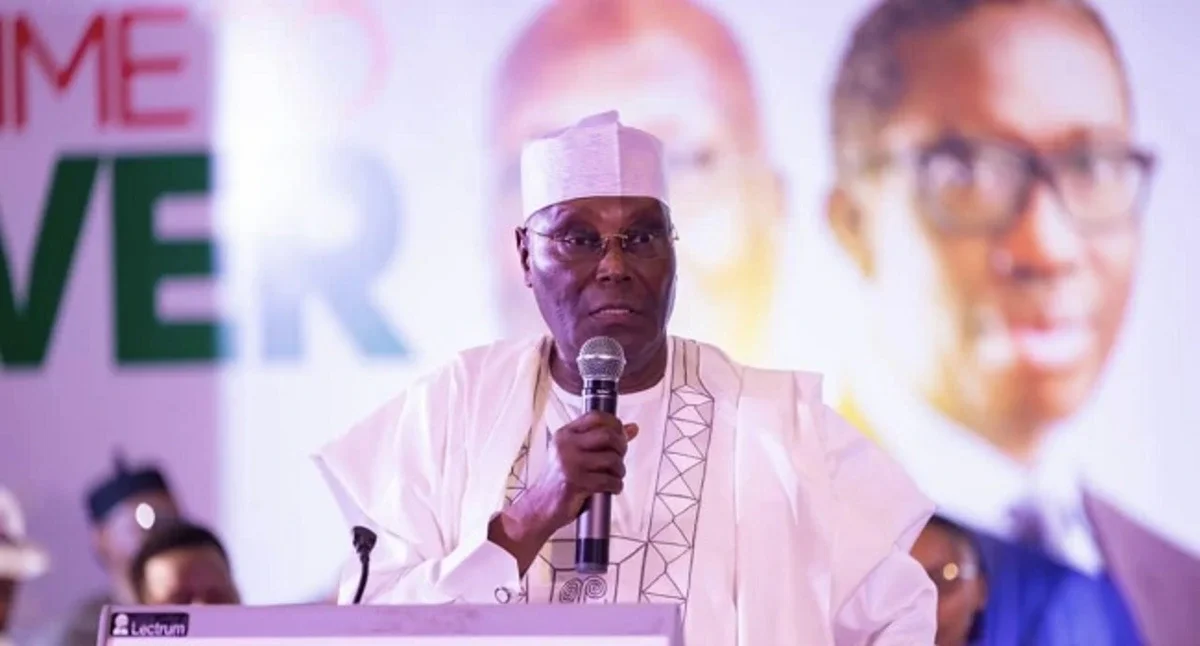
Minister of Power Joseph Tegbe announced the strategy at the Nigeria Energy Leadership Summit and Exhibition 2026 in Lagos, where he said the government must move beyond designing reforms to delivering measurable improvements in electricity supply, system performance and the financial sustainability of the sector.
The roadmap identifies gas supply constraints, overstretched transmission infrastructure, distribution losses and accumulated industry liabilities as major obstacles to reliable power delivery.
For households, property developers and businesses, the outcome will depend on whether the proposed measures translate into more consistent electricity supply and lower dependence on costly alternative power sources.
Government Prioritises Three Economic Corridors
The roadmap identifies three priority corridors for coordinated investment in electricity generation, transmission and distribution:
Lagos–Ogun: A major industrial and commercial corridor.
Benin–Enugu–Port Harcourt: A route connecting economic centres across southern Nigeria.
Abuja–Kaduna–Kano: A corridor linking the Federal Capital Territory with key commercial and industrial centres in the north.
The strategy aims to align electricity infrastructure with demand, concentrating resources where improved power delivery could support industrial productivity and economic activity.
Rather than treating generation, transmission and distribution as separate challenges, the government intends to coordinate improvements across the electricity value chain. This approach is designed to make better use of existing assets while expanding capacity to meet future demand.
However, the announcement does not establish a delivery timetable or confirm the amount of new investment committed to each corridor. The practical impact will depend on project selection, funding, coordination and implementation.
₦3.3 Trillion Power-Sector Debt Remains a Challenge
The government is also working to improve the electricity market’s financial position. Tegbe said it had paid ₦1.23 trillion out of an estimated ₦3.3 trillion in legacy sector liabilities.
The government is seeking to address outstanding obligations while preventing new liabilities from accumulating through measures to reduce financial leakages and improve the sector’s sustainability.
The debt burden matters because electricity operators need sufficient cash flow to maintain infrastructure, pay suppliers and invest in equipment. Persistent financial pressures can undermine investment across the value chain, even when new infrastructure plans are in place.
The minister also highlighted the Presidential Metering Initiative, the Distribution Sector Recovery Programme and the Meter Acquisition Fund as part of efforts to reduce technical and commercial losses.
These initiatives are intended to improve metering, strengthen revenue collection and address weaknesses that affect the financial performance of distribution companies.
What the Roadmap Means for Housing and Property Development
Reliable electricity remains an important consideration in Nigeria’s housing and property markets. Developers need power for construction activities, while residents and commercial tenants often rely on generators, inverters and solar systems when public supply is inadequate.
Unreliable electricity can increase the cost of operating residential estates, commercial buildings and construction businesses. Developers may also face additional expenses when projects require alternative power arrangements, while landlords and property managers must consider energy costs when setting service charges and assessing a property’s competitiveness.
If the government’s strategy improves supply in the targeted corridors, industrial and commercial operators could benefit from more dependable electricity. Better power availability could also support construction-material production and other activities linked to housing delivery.
However, the roadmap does not directly promise lower building costs, cheaper rents or reduced estate service charges. Those outcomes would depend on the scale and consistency of improvements, as well as whether businesses pass any savings on to customers.
The geographic focus also means that the benefits may not reach all parts of the country at the same time. Developers and investors will need to assess actual electricity performance in their locations rather than rely solely on national reform announcements.
Implementation Will Determine the Outcome
The new roadmap adds to Nigeria’s wider efforts to address longstanding electricity-sector problems and attract private investment. The Electricity Act 2023 also established a framework for state participation in electricity markets, creating opportunities for greater competition and different approaches to power supply.
The immediate challenge is to convert the new priorities into funded projects, completed infrastructure and measurable improvements for consumers.
Progress will need to be assessed through indicators such as grid stability, transmission capacity, distribution performance, electricity availability and the settlement of outstanding sector liabilities.
For Nigeria’s property market, the significance of the plan lies not simply in the announcement of another reform programme, but in whether it reduces the cost and uncertainty associated with securing dependable electricity.
Until improvements become evident, the roadmap should be viewed as a policy direction rather than evidence that the country’s power constraints have been resolved.
READ MORE