Nigeria Launches National Student Housing Programme to Bridge Accommodation Gap
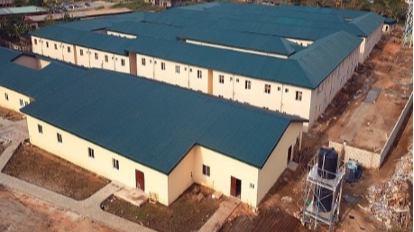
Public-Private Partnership Drives New Student Housing Across Nigerian Campuses
The Federal Government of Nigeria has advanced its National Student Housing Programme, a large-scale initiative designed to address the acute shortage of student accommodation across tertiary institutions. The programme, structured as a public-private partnership, aims to deliver thousands of modern hostel units nationwide to improve student welfare and academic outcomes.
The initiative forms part of broader efforts to strengthen education infrastructure and reduce pressure on off-campus housing markets, where high costs and poor living conditions remain persistent challenges.
/ You Might Also Like /




Large-Scale Rollout Across Institutions
The programme targets the delivery of approximately 38,400 hostel bed spaces across 24 tertiary institutions, including universities, polytechnics, and colleges of education. According to project disclosures, each site will feature purpose-built hostels with an average capacity of 1,600 beds.
Pilot projects are already underway in selected locations, with phased expansion planned across Nigeria’s six geopolitical zones. The rollout reflects a coordinated effort to standardise student accommodation and close infrastructure gaps within the higher education system.
Public-Private Partnership Model
The National Student Housing Programme is being implemented through collaboration between the Federal Government, the Tertiary Education Trust Fund (TETFund), Family Homes Funds Limited, and private sector investors.
This financing structure is designed to attract private capital into education infrastructure while reducing the fiscal burden on government. By leveraging private sector expertise and funding, the programme aims to accelerate delivery timelines and improve construction quality.
Addressing a Critical Supply Gap
Nigeria’s student population continues to outpace available accommodation. Industry estimates indicate that fewer than 15 percent of students in public tertiary institutions have access to on-campus housing, forcing the majority to rely on often inadequate and expensive off-campus options.
The shortage has broader implications for student safety, academic performance, and overall campus experience. Overcrowding, poor sanitation, and long commuting distances remain common challenges in major university towns.
Modern Facilities and Student-Centric Design
The new housing developments are designed to provide modern, purpose-built accommodation with integrated amenities. Planned features include ensuite rooms, study areas, reading rooms, cafeterias, laundromats, and retail outlets.
These facilities aim to create a conducive learning environment while aligning Nigerian student housing with international standards. Improved living conditions are expected to support academic performance and reduce non-academic stress factors.
Economic and Investment Implications
Beyond education, the programme carries broader economic significance. Construction activities are expected to generate employment, stimulate local economies, and deepen private sector participation in infrastructure delivery.
For investors, the initiative signals a growing opportunity in purpose-built student accommodation (PBSA), an asset class that remains underdeveloped in Nigeria. The structured PPP model provides a framework for scalable investment in the sector.
Execution Risks and Policy Considerations
Despite its scale, the programme faces execution risks. Key challenges include ensuring affordability for students, maintaining facilities over time, and achieving consistent implementation across multiple institutions.
Effective regulatory oversight and transparent concession frameworks will be critical to sustaining investor confidence and ensuring long-term viability. Aligning rental pricing with student income levels will also be essential to prevent exclusion.
Outlook
Nigeria’s National Student Housing Programme represents a strategic intervention in both the education and housing sectors. By addressing accommodation deficits through a structured public-private model, the initiative aims to improve student welfare while unlocking new investment opportunities.
For policymakers, the priority remains effective execution and scalability. For investors, the programme highlights the emergence of student housing as a viable infrastructure asset class within Nigeria’s evolving real estate market.
READ MORE