Foreign Investment in Nigeria’s Manufacturing Sector Plunges 51.44% in Two Years
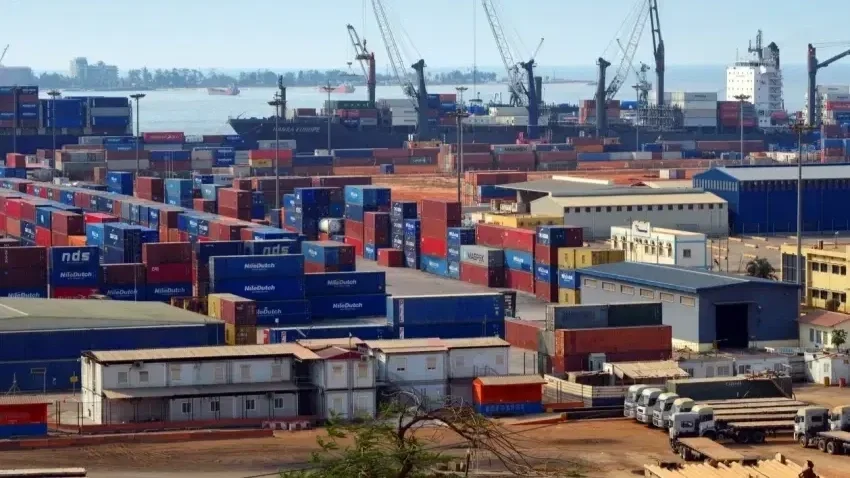
Nigeria Manufacturing Investment Falls to $772 Million Amid Capital Surge
Foreign investment into Nigeria’s manufacturing sector declined by 51.44% between 2023 and 2025, falling to $772.45 million, according to data from the National Bureau of Statistics, highlighting weakening investor confidence in the country’s real sector despite a surge in overall capital inflows.
Sharp Decline in Manufacturing Inflows
Data released by the National Bureau of Statistics shows that capital inflows into manufacturing dropped from $1.59 billion in 2023 to $1.43 billion in 2024, before declining further to $772.45 million in 2025.
/ You Might Also Like /




The contraction reflects a sustained downward trend rather than a one-off decline, signalling structural challenges within Nigeria’s industrial sector.
More significantly, the manufacturing sector’s share of total capital importation fell sharply from 49.73% in 2023 to 11.58% in 2024, and further to just 3.33% in 2025.
This shift indicates a major reallocation of foreign capital away from productive investment into other segments of the economy.
Disconnect Between Total Inflows and Real Sector Investment
The decline in manufacturing investment comes amid a strong surge in total capital importation into Nigeria.
According to NBS data, total foreign inflows increased from $3.91 billion in 2023 to $12.32 billion in 2024, before rising further to $23.22 billion in 2025.
This divergence highlights a structural imbalance: while Nigeria is attracting foreign capital, the bulk of these inflows are not directed toward long-term productive sectors such as manufacturing.
Instead, investors are increasingly favouring short-term financial instruments, including money market assets and government securities, which offer quicker returns and lower operational risks.
Portfolio Investment Dominance and Sectoral Imbalance
A breakdown of fourth-quarter 2025 data underscores this trend. Total capital importation reached $6.44 billion, with portfolio investments accounting for approximately 85.14% of inflows.
In contrast, foreign direct investment (FDI) typically associated with long-term industrial projects remained significantly lower at $357.80 million, representing just 5.55% of total inflows.
Sectoral allocation further illustrates the imbalance. The banking sector attracted the largest share of inflows at $3.85 billion (59.75%), followed by financing at $1.94 billion (30.15%). Meanwhile, manufacturing received only $308.93 million, equivalent to 4.79% of total inflows during the period.
Implications for Industrialisation and Economic Diversification
The sharp decline in manufacturing investment raises concerns about Nigeria’s industrialisation agenda and its long-term economic diversification strategy.
Manufacturing plays a critical role in job creation, value addition, and export development. Reduced foreign investment in the sector may constrain production capacity, limit technology transfer, and weaken competitiveness.
Analysts warn that persistent underinvestment in the real sector could undermine efforts to reduce dependence on oil revenues and expose the economy to external shocks.
The trend also signals that while macroeconomic reforms may be improving financial market attractiveness, structural bottlenecks such as infrastructure deficits, energy costs, and policy uncertainty continue to deter long-term industrial investment.
Nigeria’s 51.44% decline in manufacturing investment over two years reflects a growing shift in foreign capital allocation away from productive sectors toward short-term financial assets.
While rising overall capital inflows indicate renewed investor interest in the economy, the weak performance of the manufacturing sector underscores unresolved structural challenges.
Sustained industrial growth will depend on policy reforms that improve the operating environment, reduce production costs, and restore investor confidence in long-term manufacturing investments.
READ MORE