Dangote Explains Why Refinery Rejected NNPC’s Bid to Increase Stake
Dangote Explains Decision to Block Additional NNPC Equity in Refinery
President of the Dangote Group, Aliko Dangote, has revealed why the Dangote Petroleum Refinery rejected an attempt by the Nigerian National Petroleum Company (NNPC) Limited to increase its equity stake in the multi-billion-dollar refinery project. Dangote stated that the decision was driven by plans to broaden ownership of the refinery through a future public listing that would allow wider Nigerian participation.
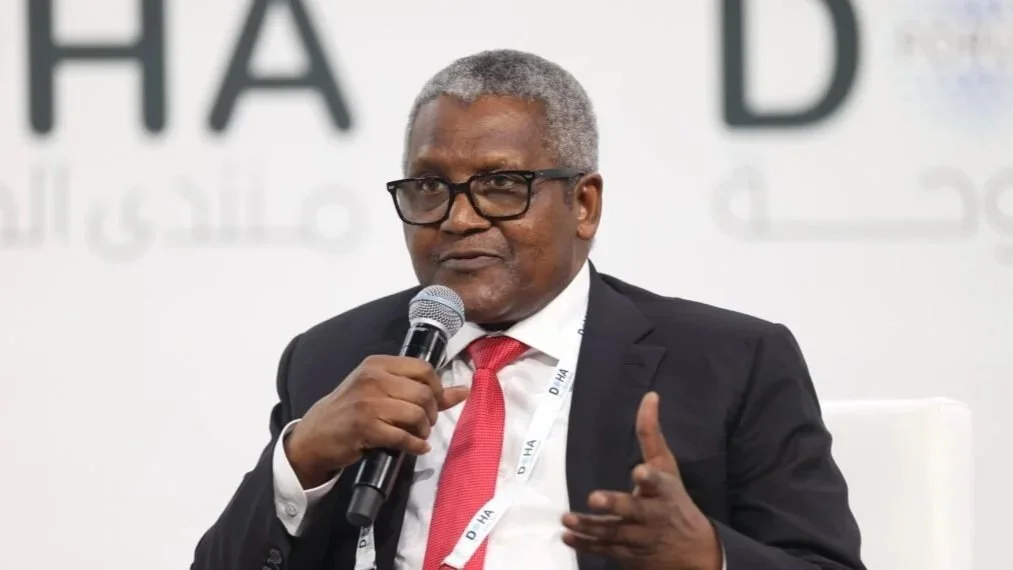
Dangote disclosed this during an interview with Nicolai Tangen, Chief Executive Officer of Norges Bank Investment Management, the manager of Norway’s sovereign wealth fund. During the discussion, he confirmed that NNPC currently owns about 7.25 per cent of the refinery but sought to acquire additional shares.
/ You Might Also Like /




According to Dangote, the refinery owners rejected the proposal because the company intends to distribute ownership more broadly through a planned stock market listing.
Dangote Targets Wider Nigerian Participation
Speaking during the interview, Dangote explained that the company wants ordinary Nigerians and institutional investors to have the opportunity to own part of the refinery rather than concentrating ownership further within a single government-controlled entity.
He stated that expanding public participation aligns with the company’s long-term strategy of opening the refinery to broader investment once regulatory and market conditions support a formal listing process.
The planned listing is expected to position the refinery among the most significant energy-related public offerings in Africa’s capital markets. Industry observers believe the move could deepen participation in Nigeria’s energy infrastructure sector while improving liquidity within the domestic stock market.
Dangote had previously disclosed plans to list part of the refinery business on the Nigerian Exchange as part of broader expansion and financing objectives.
NNPC’s Existing Stake in the Refinery
NNPC initially acquired a stake in the Dangote Refinery in 2021 through a $1 billion investment intended to secure a 20 per cent ownership structure. However, the state-owned oil company later retained only 7.25 per cent equity after failing to complete payment for the remaining stake allocation.
The ownership structure has remained a major point of interest within Nigeria’s oil and gas sector due to the strategic importance of the refinery to domestic fuel supply and energy security.
Dangote noted during the interview that although NNPC expressed interest in purchasing additional equity, the refinery management preferred a broader ownership model ahead of the proposed initial public offering.
Refinery Remains Central to Nigeria’s Fuel Supply
The Dangote Petroleum Refinery, located in the Lekki Free Trade Zone in Lagos, remains Africa’s largest single-train refinery with an installed refining capacity of 650,000 barrels per day.
Since commencing fuel production operations, the refinery has significantly altered Nigeria’s downstream petroleum market by increasing domestic refining output and reducing dependence on imported fuel products.
Recent industry data analysed by Nairametrics showed that petrol imports into Nigeria declined by more than 60 per cent in the first quarter of 2026 as local refinery supply increased substantially. Domestic refineries supplied approximately 3.18 billion litres of petrol during the period, with the Dangote Refinery accounting for the largest share of commercial local production.
The development has strengthened the refinery’s strategic importance within Nigeria’s broader energy transition and fuel supply framework.
Public Listing Could Reshape Energy Investment Landscape
Analysts believe the planned public listing of the refinery could become one of the most closely watched corporate transactions in Africa’s energy sector.
According to reports, Dangote Group plans to make a portion of the refinery available to public investors through stock exchange listings that may include both Nigerian and international markets.
Market observers note that a successful listing could improve transparency, diversify funding sources, and increase retail participation in Nigeria’s energy infrastructure sector.
The listing could also help finance planned expansion projects at the refinery. Dangote previously disclosed intentions to expand refining capacity to approximately 1.4 million barrels per day in the coming years.
Policy Stability Remains Key Concern
Beyond ownership discussions, Dangote also highlighted policy inconsistency and regulatory uncertainty as major risks affecting large-scale investments in Nigeria.
Industry experts have repeatedly identified regulatory unpredictability, foreign exchange volatility, and infrastructure constraints as critical factors influencing investor confidence within Nigeria’s oil and gas sector.
Despite these challenges, the refinery continues to represent one of the largest private-sector industrial investments in Africa and remains central to Nigeria’s ambitions of achieving energy self-sufficiency.
Outlook for Nigeria’s Downstream Oil Sector
The rejection of NNPC’s bid for additional equity signals Dangote Group’s intention to maintain a more diversified ownership structure ahead of the refinery’s anticipated market listing.
For investors and policymakers, the development highlights the growing strategic significance of the Dangote Refinery within Nigeria’s evolving downstream petroleum industry.
The refinery’s expanding operational capacity, combined with falling petrol import volumes, continues to reshape fuel supply dynamics across Nigeria and parts of West Africa.
As preparations for the refinery’s public listing progress, market participants will closely monitor regulatory developments, ownership structures, and expansion plans that could influence the future of Africa’s largest refining project.
READ MORE