Nigeria’s Economy Resilient to Global Shocks, CBN Declares
Reforms Strengthen Nigeria’s Economic Resilience, Says Central Bank
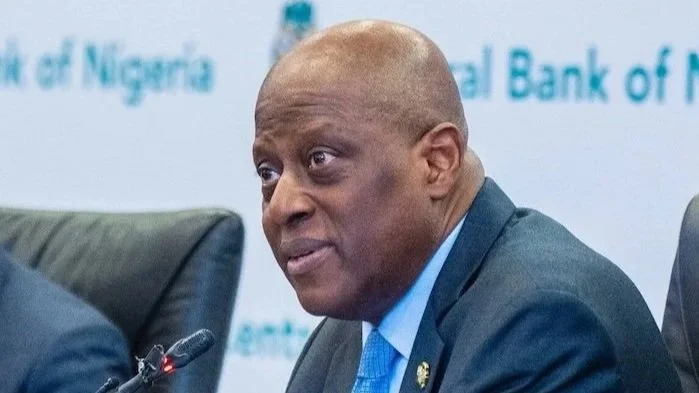
The Governor of the Central Bank of Nigeria, Olayemi Cardoso, has stated that Nigeria’s economy is now better positioned to withstand global shocks, citing the impact of ongoing monetary and structural reforms. Speaking at an international forum, he emphasised that policy discipline and institutional changes have strengthened economic stability and investor confidence.
Reforms Strengthen Economic Shock Absorption
Cardoso highlighted that recent reforms have significantly improved Nigeria’s capacity to absorb external pressures, including geopolitical tensions and global financial volatility.
He noted that the economy has transitioned from a phase of instability to one of resilience, supported by stronger policy frameworks and improved macroeconomic management. According to him, these reforms have created “stronger capacity to withstand shocks” and positioned Nigeria for sustained growth
/ You Might Also Like /




The reforms include tighter monetary policy, improved fiscal coordination, and structural adjustments aimed at restoring credibility to Nigeria’s economic management.
Improved Foreign Exchange Market and Policy Transparency
A key pillar of the CBN’s strategy has been reforming the foreign exchange (FX) market. Cardoso stated that enhanced transparency and liquidity have improved investor confidence and reduced distortions that previously affected capital flows.
The introduction of a new FX framework has simplified trade and investment processes, making it easier for foreign investors to participate in Nigeria’s economy.
Additionally, the central bank has prioritised consistent communication and data transparency, helping to rebuild trust among stakeholders and global investors.
Rising Investor Confidence and Capital Inflows
The CBN governor revealed that foreign investors accounted for approximately 28 percent of total inflows into Nigeria’s ongoing banking sector recapitalisation programme.
This level of participation reflects renewed global confidence in Nigeria’s financial system, driven by reforms and improved macroeconomic indicators.
Nigeria’s shift toward a more market-driven policy environment has also enhanced its attractiveness relative to other emerging markets, particularly as investors seek higher yields and growth opportunities.
Macroeconomic Stability and Growth Outlook
Cardoso reported improvements in key macroeconomic indicators, including moderating inflation and increased exchange rate stability. He noted that these developments provide a foundation for long-term economic expansion.
Projections suggest that Nigeria’s economy will continue to grow, supported by both oil and non-oil sectors, as well as increased domestic investment and stronger external balances.
He emphasised that maintaining stability remains a priority, particularly in managing inflation and ensuring a predictable policy environment.
Global Context and Risk Factors
Despite the positive outlook, the CBN acknowledged that global risks remain significant. Ongoing geopolitical tensions, including conflicts affecting energy markets, could influence oil prices, capital flows, and inflation dynamics.
However, Cardoso stressed that Nigeria’s improved economic fundamentals provide a buffer against such shocks, reducing vulnerability compared to previous years.
Policy Direction: From Stabilisation to Capital Mobilisation
The central bank signalled a strategic shift from stabilisation to capital mobilisation, focusing on attracting long-term investment and supporting economic expansion.
This phase will prioritise strengthening financial institutions, deepening capital markets, and enabling private sector growth. The ongoing banking sector recapitalisation is expected to enhance lending capacity and support key sectors such as infrastructure and technology.
The Central Bank of Nigeria’s assessment underscores a turning point in the country’s economic trajectory. With reforms delivering improved stability, transparency, and investor confidence, Nigeria is increasingly positioned to withstand global shocks.
Sustaining this resilience will depend on consistent policy implementation, continued structural reforms, and the ability to convert renewed investor interest into long-term, productive investment.
READ MORE