Nigeria Signs $1 Billion Steel Deal with Indian Firm to Boost Local Production
Tinubu’s Industrial Push Gains Momentum with $1bn Steel Investment Deal
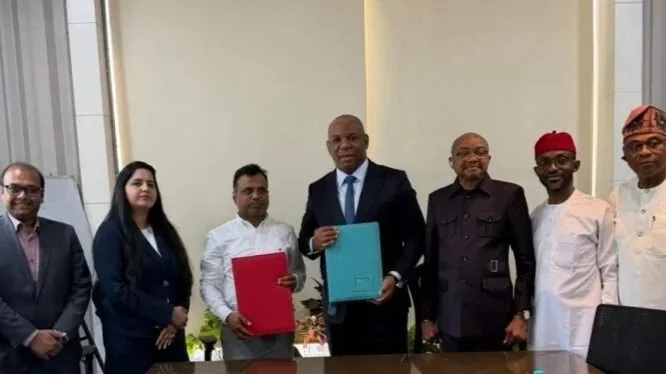
Nigeria has signed a $1 billion agreement with India-based Rashmi Metaliks Group to boost domestic steel production, reduce import dependence, and strengthen industrial capacity. The deal, signed by the Minister of Steel Development, Shuaibu Abubakar Audu, during an official visit to India on April 15, 2026, forms part of the Federal Government’s broader industrialisation strategy.
/ You Might Also Like /




Strategic Push to Revive Nigeria’s Steel Industry
The agreement marks a significant step in Nigeria’s efforts to reposition its steel sector as a driver of economic growth. According to the Ministry of Steel Development, the partnership will attract investment across production, processing, and infrastructure within the steel value chain over a three-year period.
Audu described the deal as a milestone in advancing Nigeria’s industrial agenda, noting that it aligns with the government’s focus on attracting foreign direct investment and expanding local manufacturing capacity.
Reducing Import Dependence and Conserving Foreign Exchange
Nigeria currently relies heavily on imported steel despite possessing substantial natural resources. Estimates indicate that the country consumes about $10 billion worth of steel annually, underscoring a significant gap between domestic production and demand.
The new investment aims to close this gap by strengthening local production capabilities. By increasing domestic output, the government expects to reduce pressure on foreign exchange reserves and improve trade balances.
Leveraging Technology and Integrated Production Systems
The agreement follows the minister’s inspection of Rashmi Metaliks’ integrated steel facility in Kolkata, where he highlighted the company’s advanced production systems as a model for Nigeria’s industrial development.
The partnership is expected to facilitate technology transfer, enabling Nigeria to adopt more efficient and globally competitive steel manufacturing processes. Industry analysts note that access to modern production systems will be critical in improving productivity and lowering production costs.
Economic Impact: Jobs, Infrastructure, and Industrial Growth
The Federal Government projects that the deal will generate employment opportunities, stimulate infrastructure development, and deepen value-chain integration across key sectors. Steel remains a critical input for industries such as construction, automotive, telecommunications, and defence.
Nigeria’s iron ore reserves—estimated at over three billion tonnes—provide a strong resource base to support long-term industry expansion. However, unlocking this potential has remained a persistent challenge due to underinvestment and policy inconsistencies.
Policy Alignment and Industrial Ecosystem Development
The steel investment aligns with broader policy initiatives aimed at strengthening domestic manufacturing. Complementary measures, including vehicle recycling and stricter import regulations under the End-of-Life Vehicle (ELV) Policy and Vehicle Conformity Assessment Programme (VehCAP), are expected to support demand for locally produced steel.
These policies are designed to create a more integrated industrial ecosystem by linking raw material supply, manufacturing, and end-use markets.
Persistent Structural Challenges
Despite repeated commitments to revitalise the steel sector, Nigeria has struggled to achieve sustained progress. Projects such as the Ajaokuta Steel Company have remained largely inactive for decades, highlighting structural and operational challenges within the industry.
The success of the new agreement will depend on execution, policy consistency, and the ability to attract complementary investments across the value chain.
The $1 billion steel production deal with Rashmi Metaliks represents a strategic attempt to reposition Nigeria’s industrial base and reduce reliance on imports. While the agreement signals renewed investor confidence and policy direction, its long-term impact will hinge on effective implementation and sustained reforms. If executed successfully, the partnership could mark a turning point in Nigeria’s ambition to become a competitive player in the global steel market.
READ MORE