NDIC, Wema Bank Clash Over Banana Island Properties Valued at ₦63bn
Wema Bank Rejects NDIC Claims in ₦63bn Banana Island Property Dispute
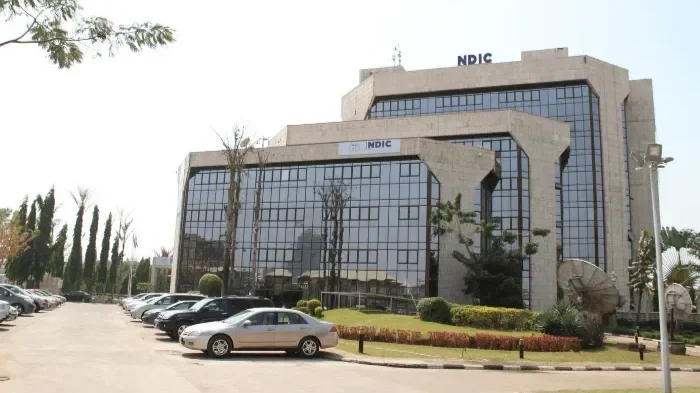
The Nigeria Deposit Insurance Corporation (NDIC) and Wema Bank have entered into a high-stakes legal dispute over ownership and control of prime Banana Island properties in Lagos valued at more than ₦63 billion.
The dispute, currently before the Federal High Court in Lagos, centres on assets allegedly linked to the defunct Gulf Bank Plc, whose operating licence was revoked by the Central Bank of Nigeria (CBN) in 2006 following insolvency and capital adequacy failures. Acting as liquidator of the failed institution, the NDIC is seeking recovery of multiple high-value properties which it claims were unlawfully transferred or sold by Wema Bank.
/ You Might Also Like /




The case has drawn significant attention within Nigeria’s banking and real estate sectors because of the scale of the disputed assets and the legal questions surrounding debt recovery, banking liquidation powers, and ownership rights over distressed assets.
NDIC Challenges Wema Bank Over Banana Island Assets
According to court filings, the NDIC instituted two separate suits against Wema Bank under the Failed Banks (Recovery of Debts and Financial Malpractices in Banks) Act. The corporation alleges that Wema Bank improperly assumed control of multiple properties in Banana Island linked to Gulf Bank before and after the bank entered liquidation.
The first suit concerns six properties located across Zones J, K, L, and P of Banana Island. The NDIC claims the plots, measuring approximately 13,794 square metres, were acquired between 1998 and 2003 through Euston Wenberg Engineering Company Limited, which it described as a shell company linked to Gulf Bank. Based on estimated market rates of ₦4.5 million per square metre, the corporation values the properties at roughly ₦62 billion.
The NDIC argued that although the acquisitions were recorded internally as loan accounts, the properties remained beneficial assets of Gulf Bank and should therefore form part of the liquidation process for the benefit of depositors and creditors.
Dispute Over Alleged Interbank Deposit
At the centre of the dispute is an alleged interbank placement reportedly valued at ₦771.79 million. The NDIC claims Wema Bank took custody of the properties as security for the deposit, but a joint CBN-NDIC examination conducted in September 2005 allegedly found no supporting records in Gulf Bank’s books confirming the existence of such a transaction.
The corporation further alleged that Wema Bank later presented two managers’ cheques worth ₦250 million in favour of Euston Wenberg Engineering Limited, arguing that the instruments suggested a property purchase transaction rather than legitimate debt recovery. NDIC also described the transaction value as commercially implausible given prevailing Banana Island property prices at the time.
In a separate suit, the NDIC accused Wema Bank of unlawfully disposing of another six Banana Island properties allegedly acquired through Bacad Finance and Investment Limited, later renamed Supra Commercials Limited, an entity in which Gulf Bank reportedly held more than 80 percent equity.
The corporation stated that Gulf Bank had intended to develop the properties into a 72-unit luxury residential estate known as Bacad Estate in partnership with Shelter Afrique.
NDIC Seeks Recovery of Properties and Funds
The NDIC is seeking court declarations voiding the alleged sales and demanding either the return of the title documents or payment equivalent to the current market value of the properties.
In addition to the property claims, the corporation accused Wema Bank of collecting ₦401 million from United Bank for Africa (UBA), acting as NDIC’s agent bank, without lawful authorisation. According to the NDIC, official records indicated that Wema Bank was entitled to only ₦1.635 million as the outstanding balance owed following Gulf Bank’s liquidation.
The corporation argues that the disputed transactions undermined the liquidation process and reduced recoverable assets intended for depositors and creditors of the defunct bank.
Wema Bank Rejects Allegations
Wema Bank has strongly denied the allegations, describing NDIC’s claims as “false, misleading, and wholly unsubstantiated.”
According to the bank, the dispute originated from an interbank placement of ₦4.6 billion made to Gulf Bank in 2002, which later became delinquent after the outstanding balance declined to approximately ₦1.2 billion. Wema Bank stated that it subsequently initiated recovery measures as part of efforts to protect depositors’ funds and shareholder interests.
The bank also claimed that investigations by the Economic and Financial Crimes Commission (EFCC) revealed that diverted Gulf Bank funds were used to acquire the Banana Island properties through separate corporate entities, including Bacad Finance and Euston Wenberg Engineering.
Wema Bank maintained that those companies voluntarily relinquished their interests in the properties as part of debt settlement arrangements. The lender further argued that the NDIC had previously acknowledged the underlying indebtedness in correspondence issued in 2007 and 2009.
The bank has challenged the court’s jurisdiction and argued that the claims are statute-barred under Lagos State limitation laws because the disputed transactions occurred nearly two decades ago.
Implications for Banking and Real Estate Sectors
The dispute underscores the growing complexity of asset recovery processes involving failed financial institutions in Nigeria. Legal analysts say the case could establish important precedents regarding creditor rights, statutory liquidation powers, and the enforceability of security interests tied to distressed banking assets.
The matter also highlights the enormous value attached to premium real estate in Banana Island, one of Nigeria’s most expensive residential districts and a major concentration point for luxury developments, private equity investment, and high-net-worth property ownership.
Industry observers note that prolonged litigation involving high-value urban assets may affect investor confidence in distressed asset transactions and commercial real estate financing. Questions surrounding title security, asset tracing, and institutional transparency remain critical concerns for both domestic and international investors.
The outcome of the case may also influence how banks structure collateral arrangements and enforce recovery rights involving complex ownership structures and special-purpose corporate entities.
Court Proceedings Continue
The Federal High Court in Lagos has adjourned the matter to June 25, 2026, for further proceedings.
As both parties continue to defend their claims, the case is expected to remain closely watched by stakeholders across Nigeria’s banking, legal, and property sectors due to its potential implications for financial regulation, liquidation processes, and ownership rights over distressed assets.
READ MORE