Lagos Targets ₦73.15 Trillion GDP in 2026, Reinforces Economic Growth Strategy
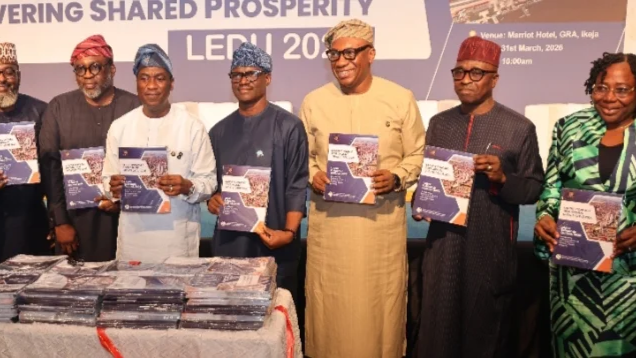
Lagos Unveils Ambitious ₦73.15tn GDP Projection Under LEDU 2026
The Lagos State Government has projected its Gross Domestic Product (GDP) to reach ₦73.15 trillion in 2026, signalling continued economic expansion driven by strategic planning and data-led governance. The projection was unveiled in the Lagos Economic Development Update (LEDU) 2026, positioning the state as a key driver of Nigeria’s long-term growth ambitions.
Growth Trajectory and Economic Context
The 2026 projection builds on an estimated nominal GDP of ₦62.66 trillion in 2025, reflecting steady year-on-year expansion. Lagos remains Nigeria’s commercial hub, accounting for a significant share of national output and serving as a centre for finance, trade, transport, and technology.
/ You Might Also Like /



State authorities attribute this growth trajectory to “intentional governance” and disciplined fiscal management. The LEDU framework has evolved into a core policy instrument, guiding investment decisions, resource allocation, and economic priorities across sectors.
Policy Framework Driving Expansion
The LEDU 2026 report emphasises resilience, competitiveness, and shared prosperity as central pillars of Lagos’ economic strategy. Officials highlight that institutional reforms, improved data systems, and targeted infrastructure investments have strengthened the state’s economic fundamentals.
The government also links its progress to the broader T.H.E.M.E.S+ development agenda, which prioritises transportation, healthcare, education, and digital infrastructure. These investments aim to sustain productivity growth and enhance the business environment.
Sectoral Strength and Structural Dynamics
Lagos’ economy remains largely service-driven, with strong contributions from finance, communications, construction, and trade. This diversified structure has enabled the state to maintain resilience despite global economic uncertainties.
However, stakeholders have raised concerns about long-term sustainability. The Nigerian Economic Summit Group has called for a stronger focus on industrialisation, arguing that a shift toward production and manufacturing is essential to sustain growth, create jobs, and improve productivity.
Investment and Competitiveness Outlook
The state’s economic outlook aligns with its long-term ambition to build a $1 trillion economy by 2052. Policymakers emphasise the need for regulatory stability, infrastructure expansion, and private sector participation to convert Lagos’ economic scale into higher productivity and inclusive growth.
Improving transportation systems, reducing business costs, and strengthening human capital development remain key priorities. These factors are critical to attracting both domestic and foreign investment.
Implications for Nigeria’s Broader Economy
As Nigeria’s largest economic centre, Lagos plays a pivotal role in national growth dynamics. The state contributes a substantial share of GDP and serves as a hub for innovation, finance, and trade across West Africa.
Sustained growth in Lagos has positive spillover effects on employment, infrastructure development, and fiscal revenues at both state and federal levels. However, ensuring that growth translates into improved living standards remains a key policy challenge.
Outlook
The ₦73.15 trillion GDP projection underscores Lagos State’s ambition to consolidate its position as Africa’s leading urban economy. Achieving this target will depend on maintaining fiscal discipline, deepening structural reforms, and addressing constraints such as infrastructure gaps and industrial capacity.
As the LEDU framework continues to guide policy, Lagos’ ability to balance rapid growth with inclusivity and sustainability will determine the long-term impact of its economic expansion.
READ MORE