COREN Launches Investigation Into Abuja Building Collapse, Vows Sanctions
Engineering Regulator Begins Probe Into Fatal Abuja Building Collapse
The Council for the Regulation of Engineering in Nigeria (COREN) has launched an investigation into the recent building collapse in Abuja, warning that developers, engineers, and officials found responsible could face sanctions under existing engineering regulations.
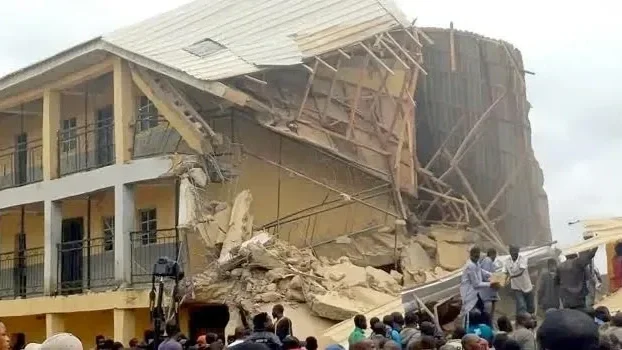
The investigation follows the collapse of a building under construction in the Durumi 3 area near Gudu Market in the Federal Capital Territory (FCT), an incident that resulted in multiple casualties and renewed concerns over construction standards in Nigeria’s capital city
/ You Might Also Like /




Speaking during a media briefing in Abuja, COREN Registrar, Prof. Okorie Uche, disclosed that the council had constituted an investigative panel to determine both the immediate and underlying causes of the collapse. According to him, the panel is expected to begin work within two weeks and will identify all individuals and organisations connected to the project for possible regulatory action.
Preliminary findings reveal discrepancies
According to COREN, preliminary investigations have already uncovered inconsistencies relating to the identity of the engineering personnel linked to the project.
Uche stated that the individual initially identified as the project engineer was allegedly not the actual consultant responsible for the collapsed structure. He explained that the individual had previously worked with the company on another project and that his professional details were allegedly transferred to the current project site without authorisation.
The COREN Registrar further clarified that although the individual involved worked within the engineering sector, he was not a certified engineer legally authorised to serve as a consultant for such a project. According to him, the engineering registration number displayed at the construction site reportedly belonged to a different individual classified as an engineering technologist rather than a registered consulting engineer.
The council said both individuals had been invited to provide clarification as part of the ongoing investigation.
Concerns over substandard materials and weak oversight
COREN also raised concerns over the widespread use of substandard construction materials and poor compliance with engineering procedures within Nigeria’s building industry.
According to Uche, tests conducted on the collapsed structure indicated that the concrete strength fell below approved engineering standards. He stated that while the concrete mix was expected to achieve a compressive strength of 25 newtons per millimetre square, laboratory analysis reportedly showed a lower strength level of approximately 18 newtons per millimetre square.
The Registrar further alleged that some reinforcement rods sold in Nigerian markets are frequently mislabelled, with products marketed as higher-grade materials measuring below standard specifications when tested.
According to COREN, developers often bypass quality assurance procedures by engaging unqualified personnel and failing to conduct proper testing on construction materials before use. The council warned that such practices continue to contribute to recurring structural failures across the country.
FCT building collapses under increasing scrutiny
The latest incident has intensified scrutiny of construction practices and regulatory oversight within the Federal Capital Territory, where building collapse cases have continued to raise public safety concerns.
A South Africa-based human rights organisation, the Human Rights Association (HRA), recently called for an independent and transparent investigation into the Durumi 3 collapse, arguing that the tragedy reflects broader systemic failures within the construction and regulatory environment.
According to the organisation, at least five construction workers died while several others sustained injuries after the structure collapsed during construction activities.
The HRA also referenced studies indicating that dozens of building collapses have occurred within the FCT over the past decade, with many incidents linked to poor supervision, substandard materials, weak enforcement, and the absence of proper geotechnical assessments.
Regulatory agencies seek stronger enforcement
The Federal Capital Territory Administration (FCTA) has also ordered investigations into the incident. Reports indicate that FCT Minister Nyesom Wike directed relevant agencies to conduct a full-scale inquiry into the collapse and identify possible regulatory breaches associated with the project.
COREN said stronger collaboration between the council, the Abuja Metropolitan Management Council, and the Standards Organisation of Nigeria (SON) would be necessary to improve compliance monitoring and reduce engineering failures nationwide.
The council also acknowledged ongoing operational challenges linked to funding constraints following its defunding in 2023 but maintained that it remains committed to strengthening engineering regulation and professional accountability across Nigeria.
Nigeria’s recurring building collapse challenge
Building collapses remain a persistent issue across several Nigerian cities, particularly in rapidly urbanising areas where enforcement of building regulations often faces institutional and operational limitations.
Industry experts have repeatedly linked structural failures to a combination of factors, including quackery, inadequate supervision, poor-quality materials, design flaws, weak regulatory enforcement, and non-compliance with approved engineering standards.
According to previous COREN statements, the council possesses statutory authority under the Engineers (Registration, etc.) Act to sanction and prosecute individuals or firms found culpable in cases involving infrastructure collapse.
In 2025, COREN also entered into a partnership with the Independent Corrupt Practices and Other Related Offences Commission (ICPC) aimed at improving oversight of engineering projects, combating corruption, and addressing the growing incidence of substandard construction nationwide.
Outlook
The Abuja building collapse investigation is likely to increase pressure on regulatory authorities, developers, and engineering professionals to strengthen compliance with construction standards and safety procedures.
As COREN expands its probe, the outcome may influence future enforcement measures relating to professional certification, material testing, project supervision, and accountability within Nigeria’s construction sector.
Analysts say sustained regulatory enforcement, stronger quality assurance systems, and improved coordination among oversight agencies will remain critical to reducing the frequency of building collapses and restoring public confidence in the country’s built environment.
READ MORE