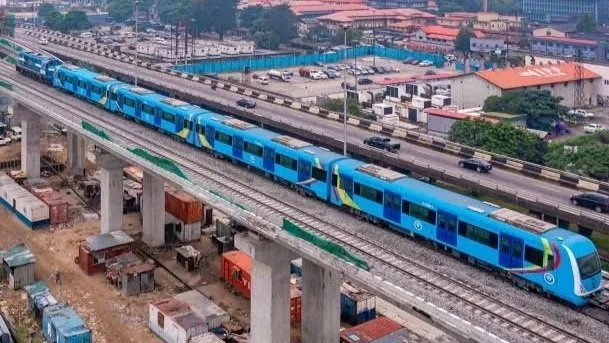
Lagos’ Blue and Red rail lines face questions over service frequency
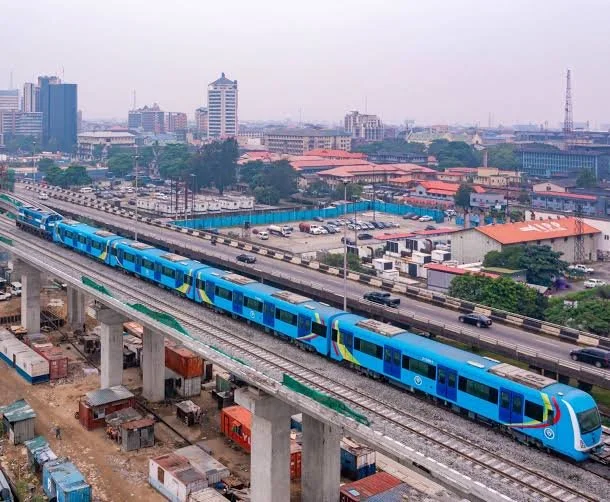
Lagos State’s Blue and Red rail lines have yet to make a significant impact on traffic congestion across the wider city, as limited service frequency, restricted route coverage and weak integration with other transport services constrain their reach, transport researcher Tonami Playman has said.
/ You Might Also Like /




Playman made the assessment in an interview with Nairametrics, arguing that the rail network needs more frequent train services, wider coverage and better-coordinated bus routes to attract substantially more passengers away from road transport.
The debate comes as Lagos expands its rail infrastructure and prepares to extend the Blue Line beyond Mile 2, while the Federal Airports Authority of Nigeria (FAAN) has proposed a monorail connecting Murtala Muhammed International Airport to the rail network.
Passenger figures cited in the interview illustrate the gap between rail and bus usage. Afolabi Olamide, co-founder and chief executive of Touch and Pay Technologies, which operates the Cowry fare payment platform, said regulated buses record more than five million passenger trips monthly, compared with approximately 500,000 on the Blue Line and 100,000 on the Red Line.
The figures raise questions about how effectively Lagos is translating its investment in rail infrastructure into a wider shift from road transport.
Low Train Frequency Limits Rail’s Impact
Playman argued that the Blue Line remains too short to influence traffic across Lagos significantly, while its reported operating frequency of four trains per hour limits its ability to attract more commuters.
He was more critical of the Red Line’s service frequency, which he described as inadequate for a system intended to support large-scale urban mobility.
He said the government should aim for at least 10 to 12 trains per hour on the Blue Line, alongside improved service frequency on the Red Line.
Higher frequency could reduce waiting times and make rail a more practical option for commuters who currently depend on buses and private vehicles. However, achieving that target would require sufficient rolling stock, reliable power, maintenance capacity and operational funding.
The rail lines also need to serve more destinations and connect effectively with bus services. Without these improvements, passengers may continue to rely on road transport for parts of their journeys, limiting the overall effect on congestion.
Blue Line Extension Will Require More Trains
Lagos plans to extend the Blue Line from Mile 2 towards FESTAC, Alakija and Trade Fair, with the state targeting February 2027 for the additional stations to begin operations.
Playman welcomed the extension but said the government must expand the train fleet if it wants to maintain or increase service frequency along the longer route.
He estimated that extending the line would require additional trains even to sustain the existing level of service. He also argued that a higher-frequency operation would need a substantially larger fleet.
The extension could improve access to rail transport for residents and businesses along the Lagos-Badagry corridor. Its wider impact, however, will depend on the frequency of services, station accessibility and the availability of connecting transport.
The project also illustrates a broader challenge facing large infrastructure investments: extending physical coverage does not automatically guarantee higher passenger numbers unless services meet commuters’ needs.
Airport Monorail Faces Questions Over Priorities
Playman also questioned the proposed airport monorail intended to connect the international and domestic terminals at Murtala Muhammed International Airport with the Red Line at Ikeja.
He argued that Lagos should prioritise strengthening the existing rail network and improving bus connections before committing resources to a dedicated airport service.
His concern is that an airport link could attract relatively few passengers compared with investments that improve daily commuting for the wider population. He cited Prague as an example of a major urban transport system that relies on bus connections to its airport rather than a dedicated airport railway.
Playman said airport passengers represent only a small proportion of the people travelling across a metropolitan area, making it important to assess projected ridership and value for money before approving a specialised link.
The proposal therefore raises questions about how Lagos should allocate limited transport funding between new infrastructure and improvements to existing services.
A final decision should consider projected passenger demand, construction and operating costs, alternative bus connections and how effectively the project would integrate with the wider transport network.
Rail Connectivity Could Influence Property Demand
For Lagos’ property market, the performance of the rail network matters because reliable public transport can improve access to workplaces, commercial centres and essential services.
Properties near well-connected stations may become more attractive to residents and businesses seeking predictable commuting times. Improved transport can also expand the areas where workers can realistically live while maintaining access to employment hubs.
However, the benefits depend on the quality of the entire journey. A fast train service may offer limited advantages if passengers face long waits for connecting buses, expensive last-mile transport or difficult access to stations.
For developers, investors and property owners, the implications extend beyond the presence of a rail station. Service frequency, reliability, affordability, pedestrian access and integration with other transport modes can all affect a location’s practical accessibility.
The proposed Blue Line extension could strengthen connectivity along the Lagos-Badagry corridor if the new stations are supported by dependable services and coordinated bus routes. Yet improved connectivity should not automatically be equated with higher property values; any effect will depend on local demand, infrastructure quality and wider market conditions.
Ridership Should Guide Future Investment
Playman identified passenger ridership as a key measure of whether transport investments deliver value for money. He argued that Lagos should evaluate rail projects against expected passenger numbers and track their performance from planning through operation.
Ridership is important, but it should be considered alongside other indicators, including journey times, service frequency, punctuality, passenger capacity, operating costs and connections with other transport modes.
The Lagos Metropolitan Area Transport Authority (LAMATA) has also identified last-mile connectivity, capacity, maintenance, power supply and fare sustainability as priorities for improving the Blue Line. It has said the network should operate as part of an integrated system linking rail, buses, ferries and future corridors.
The challenge for Lagos is to ensure that new infrastructure and operational improvements work together to make public transport a practical alternative to private vehicles and road-based services.
Ultimately, the success of the state’s rail investment will depend not only on the kilometres of track built, but on how many people use the system, how reliably it serves them and whether it improves mobility across the city.
READ MORE