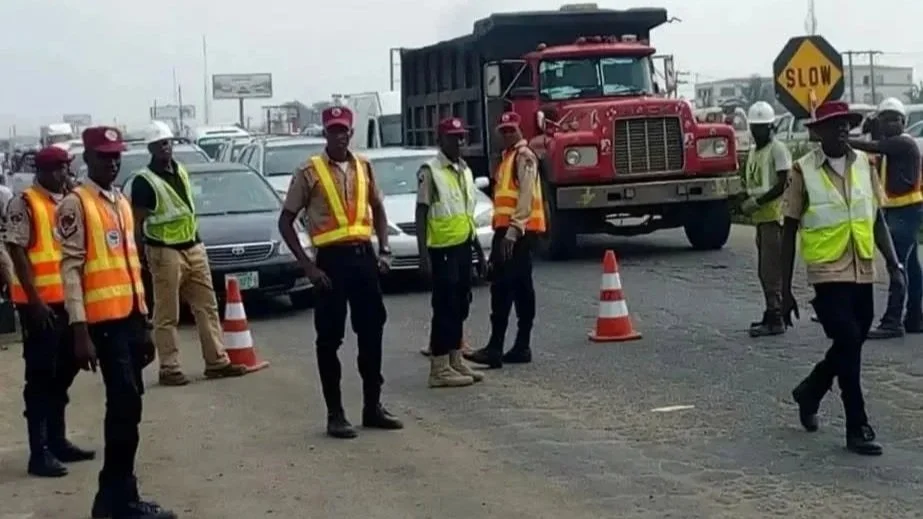
FG begins repairs on the Kara Berger Bridge
The Federal Government will begin repairs on the Kara Berger Bridge section of the Lagos-Ibadan Expressway on Tuesday, September 8, with the rehabilitation expected to last two weeks.
The intervention will involve replacing deteriorating expansion joints on the busy bridge, while motorists should expect lane restrictions and possible delays, particularly during peak travel periods. The Federal Government had earlier postponed the repairs following concerns about traffic management and the potential disruption to commuters.
/ You Might Also Like /




Repairs to focus on deteriorating expansion joints
The repair works are being carried out following a directive from the Minister of Works, David Umahi, and are intended to improve the structural integrity and safety of the bridge.
According to officials, the expansion joints have deteriorated after prolonged use. These components allow bridge structures to accommodate movement caused by temperature changes, and their failure can increase the risk of cracking, buckling and other structural problems.
The rehabilitation is scheduled to run until September 22, subject to completion of the works as planned.
Traffic restrictions expected along Lagos-Ibadan Expressway
Motorists using the corridor should expect temporary lane restrictions during the project.
The work will be carried out in phases, with one portion of the affected carriageway restricted while traffic is managed through the remaining section. After the initial phase, work will shift to the other side.
Traffic and security agencies, including the Federal Road Safety Corps, Ogun State Traffic Compliance and Enforcement Agency, Lagos State Traffic Management Authority and the Nigeria Police Force, are expected to assist with traffic control.
Motorists have been advised to plan journeys ahead and allow additional travel time, particularly during peak periods.
Alternative routes may come under pressure
Officials have advised motorists travelling towards Ibadan to consider alternative routes, including the Ogijo–Ikorodu corridor and routes around the Sango and Abeokuta areas where appropriate.
However, motorists who continue to use the Lagos-Ibadan Expressway will still be able to pass through the construction zone under controlled traffic arrangements.
The traffic implications are significant because the Lagos-Ibadan Expressway serves commuters, commercial vehicles and businesses moving between Lagos and Ogun State.
What the repair means for the Lagos-Ogun property corridor
Beyond the immediate traffic disruption, the repair highlights the importance of transport infrastructure to the property market along the Lagos-Ogun axis.
The Lagos-Ibadan Expressway is a major access route for residential communities, industrial areas, commercial centres and emerging developments around Berger, Kara, Arepo, Magboro, Mowe, Ibafo and other parts of the corridor.
Reliable road infrastructure can improve accessibility to these locations and support property development by reducing travel barriers between residential areas and employment centres.
Conversely, recurring congestion and infrastructure deterioration can reduce the attractiveness of locations that depend heavily on a particular transport corridor.
Infrastructure remains important to housing expansion
The Kara Bridge intervention also illustrates the broader relationship between infrastructure investment and housing supply.
As land and housing costs push residents further from central Lagos, many households increasingly depend on locations in Ogun State and other parts of the metropolitan fringe. Efficient transport connections become essential for making these peripheral housing locations viable for workers who commute into Lagos.
For developers, infrastructure reliability can influence decisions about where to acquire land and launch new projects. For residents, travel time and transport costs increasingly form part of the effective cost of housing.
Repairs expected to improve long-term safety
Although the two-week intervention is expected to create short-term inconvenience, officials have described the work as necessary to address a deteriorating component of the bridge.
The replacement expansion joints are expected to have a service life of between 10 and 20 years, according to the Federal Ministry of Works' Ogun State controller.
The challenge will be to complete the work within the announced timeframe while maintaining adequate traffic flow through one of Nigeria's busiest transport corridors.
Outlook
The Kara Bridge repairs will create short-term pressure for commuters and businesses along the Lagos-Ogun corridor, but the intervention is important for maintaining the safety and functionality of the route.
For the housing market, the episode reinforces the importance of sustained investment in roads and other transport infrastructure as urban expansion pushes more households towards locations outside Lagos' core.
Successful completion of the repairs could strengthen the reliability of the corridor, while further investment in alternative routes and public transport will be important for supporting long-term housing and economic growth across the wider Lagos metropolitan area.
READ MORE