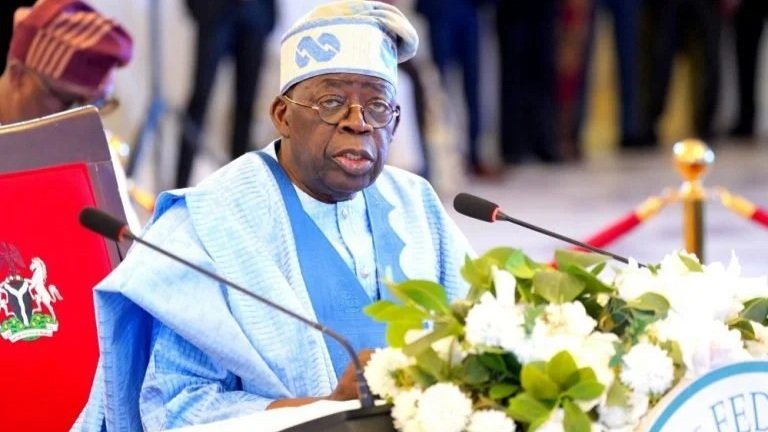
President Bola Tinubu
Nigeria’s drive to expand gas supply is gaining momentum as indigenous engineering firm Lee Engineering Group builds two compressor stations designed to help the Escravos–Lagos Pipeline System (ELPS) transport up to 2.3 billion standard cubic feet of gas daily.
/ You Might Also Like /




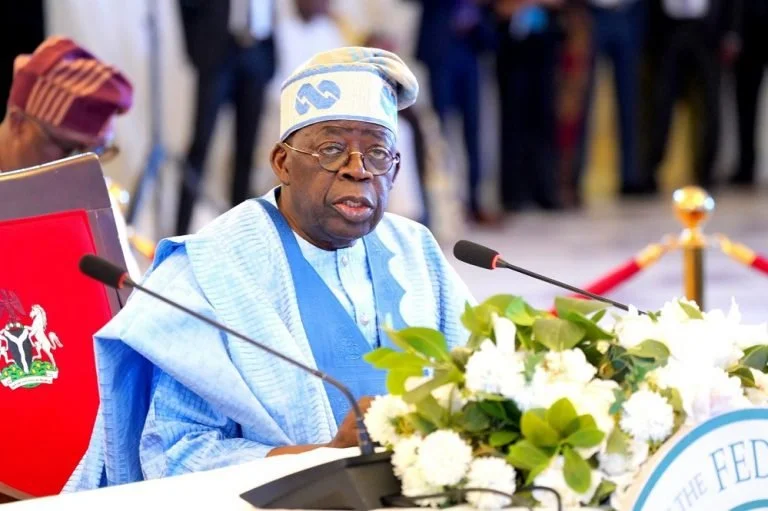
President Bola Tinubu has urged international oil companies operating in Nigeria to award more contracts to capable local engineering and manufacturing firms, saying domestic participation should translate into skilled jobs, technology development and greater economic value retained within the country.
The project links the government’s local-content agenda with a major energy infrastructure objective: enabling an expanded gas pipeline to operate at its designed capacity and improving supplies to power plants, industries and regional export markets.
Compressor Stations Expected to Unlock Pipeline Capacity
Lee Engineering is handling the engineering, procurement and construction of two midline compressor stations in Edo State. The facilities are intended to increase operating pressure along the pipeline and enable it to transport gas at its designed capacity.
The Escravos–Lagos Pipeline System’s capacity was expanded from 1.1 billion to 2.3 billion standard cubic feet per day under the ELPS II project. However, compressor infrastructure is required to support the higher throughput.
Once operational, the stations are expected to improve gas transportation to power plants and industrial users along the pipeline corridor. The additional capacity could also support gas exports to neighbouring West African countries through the West African Gas Pipeline.
The development highlights the importance of supporting infrastructure in Nigeria’s gas sector. Increasing pipeline capacity does not automatically guarantee higher deliveries: reliable supply also depends on gas production, processing, operational performance and demand from end users.
Tinubu Calls for More Contracts for Indigenous Firms
Tinubu made his appeal for greater local participation while receiving Lee Engineering Group Chairman Leemon Ikpea at the State House in Abuja.
The President said his administration’s Nigeria First policy should translate into more opportunities for Nigerian engineering and manufacturing companies, particularly those with the technical capacity to execute complex energy projects.
He urged international oil companies to strengthen partnerships with competent indigenous firms and expand the use of locally manufactured equipment.
Tinubu also highlighted executive orders and presidential directives introduced in 2024 to improve local-content compliance, reduce contracting costs and shorten approval timelines. The measures are intended to make project delivery more efficient while expanding opportunities for Nigerian businesses.
The policy challenge is to ensure that local-content requirements build lasting technical capacity and competitive businesses. Greater participation by domestic firms can retain more spending within Nigeria, but project delivery must still meet the required standards for cost, safety, quality and reliability.
Lee Engineering Expands Domestic Fabrication Capacity
Ikpea said Lee Engineering’s fabrication yard in Warri, Delta State, is manufacturing some components for the compressor stations. He described the facility as equipped with advanced fabrication technology and said Nigerian companies had invested in equipment, skills and technical capabilities to handle increasingly complex projects.
Domestic fabrication can support local employment, strengthen industrial supply chains and reduce reliance on imported components where Nigerian manufacturers can meet project specifications.
For local engineering firms, participation in major infrastructure projects can also create opportunities to develop expertise in engineering, procurement, construction and fabrication. These capabilities may support further work across Nigeria’s energy industry and other infrastructure sectors.
However, the longer-term value of local participation will depend on whether Nigerian firms can sustain their capabilities, compete on cost and quality, and secure a consistent pipeline of projects.
Gas Infrastructure Holds Implications for Industry and Electricity
The planned increase in pipeline throughput comes as Nigeria seeks to use its gas resources to support electricity generation, manufacturing and broader industrial development.
More reliable gas transportation could help power plants obtain fuel and provide industrial users with a more dependable energy supply. Gas availability also matters to businesses that rely on it as a feedstock or fuel, including manufacturers and producers of fertiliser and petrochemicals.
The benefits will depend on whether the additional transportation capacity translates into actual gas deliveries. Production constraints, supply agreements, pipeline reliability and the operational performance of connected facilities will influence the extent to which industries benefit.
The project also demonstrates how infrastructure investment and local-content policy can intersect. Building domestic expertise in major energy projects may create jobs and strengthen local suppliers, while improved gas transportation can support the wider economy.
Project Delivery Will Test Nigeria’s Local-Content Drive
The compressor stations represent an opportunity to connect Nigeria’s local-content objectives with the practical requirements of expanding energy infrastructure.
For the government, the priority is to ensure that its policies create meaningful contracts for capable Nigerian companies while supporting efficient project delivery. For indigenous firms, the challenge is to demonstrate that domestic engineering and manufacturing capacity can deliver complex infrastructure reliably and competitively.
The ultimate measure of success will be whether the stations are completed and commissioned as planned, whether the pipeline achieves its designed capacity, and whether the additional gas reaches power plants, industrial users and export markets.
If those objectives are achieved, the project could strengthen Nigeria’s gas transportation network while providing a practical example of how indigenous engineering firms can contribute to major national infrastructure.
READ MORE