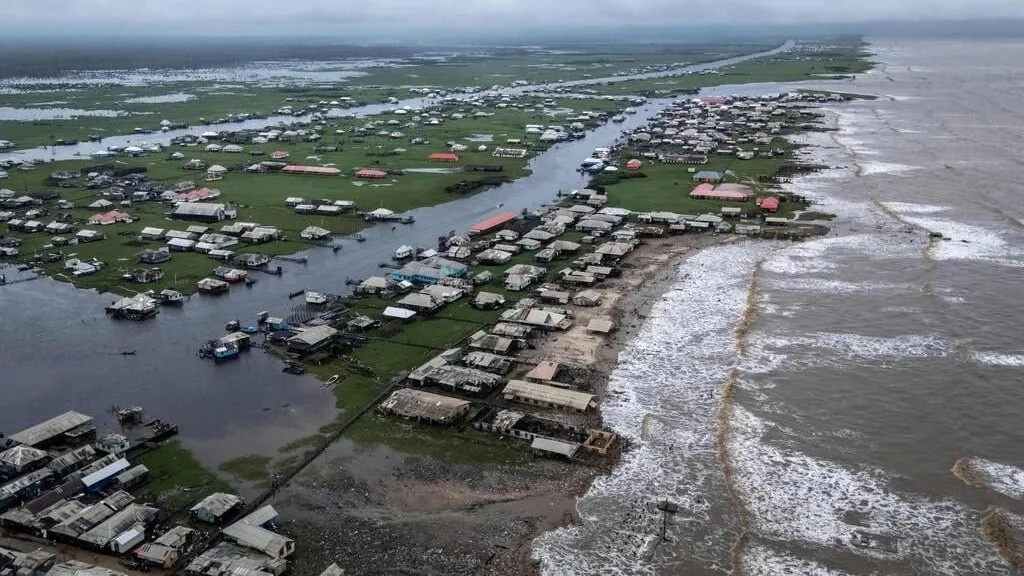
Atlantic Ocean surges threaten homes and infrastructure in Aiyetoro, Ondo State.
The Nigerian Senate has urged the Federal Government to urgently protect Aiyetoro and other vulnerable coastal communities from Atlantic Ocean surges, warning that continued shoreline erosion is destroying homes, public infrastructure, livelihoods and cultural heritage.
/ You Might Also Like /




The lawmakers called for a properly funded shoreline protection programme involving the Federal Ministry of Environment, the Niger Delta Development Commission (NDDC), the Ondo State Government and the Ondo State Oil Producing Areas Development Commission (OSOPADEC). They also sought immediate humanitarian assistance for residents facing displacement.
Senate Warns of Widespread Destruction in Aiyetoro
The Senate’s resolution followed a motion sponsored by Senator Dayo Faduyile on the need for immediate and comprehensive shoreline protection in Aiyetoro, a coastal community in Ilaje Local Government Area of Ondo State.
Lawmakers expressed concern over reports that approximately 80% of buildings in the community had been lost to sea incursion. The destruction has reportedly affected residential properties, schools, healthcare facilities, places of worship and traditional institutions.
Continued erosion threatens to displace more residents while weakening the economic and social foundations of the community. Fishing and other coastal livelihoods are particularly vulnerable when homes, access routes and supporting infrastructure are damaged.
The Senate warned that further delays could deepen the humanitarian crisis and accelerate the loss of property, livelihoods and cultural heritage.
Government Agencies Asked to Review Shoreline Protection Projects
The Senate called on the Federal Government to work with the Ondo State Government and OSOPADEC to implement a comprehensive shoreline protection programme.
It also requested a transparent review of previous and ongoing shoreline protection contracts in Aiyetoro. The review is expected to examine project funding, implementation status, outstanding obligations and completion timelines.
The demand reflects concerns about whether previous interventions have delivered the protection required by affected communities. The Senate wants greater accountability to ensure that allocated funds and awarded contracts translate into completed projects.
The lawmakers also urged the government to consider appropriate budgetary provisions and international climate adaptation financing. Potential interventions include shoreline protection, land reclamation where technically suitable, and restoration of essential community infrastructure.
Any lasting solution will require detailed coastal assessments and engineering designs suited to local conditions. Without appropriate planning, shoreline interventions may fail to address the causes of erosion or transfer the problem to neighbouring areas.
NEMA Asked to Provide Emergency Assistance
Beyond long-term infrastructure, the Senate urged the National Emergency Management Agency (NEMA) and relevant state authorities to provide immediate humanitarian support to vulnerable residents.
The requested assistance includes access to safe water, healthcare and temporary shelter for people whose homes and livelihoods are threatened by the advancing ocean.
Emergency support is particularly important for displaced households and residents who have lost access to basic services. However, relief measures alone cannot resolve the underlying risk if coastal erosion continues unchecked.
The Senate therefore combined its call for humanitarian assistance with demands for a sustained shoreline protection programme.
Senate Sets Four-Week Monitoring Deadline
To strengthen oversight, the Senate mandated its Committees on Environment, Niger Delta Development Commission and Special Duties to engage relevant ministries, agencies and stakeholders.
The committees are expected to monitor progress and report back to the chamber within four weeks for further legislative action. The Committee on Legislative Compliance was also directed to monitor adherence to the resolutions.
Senator Samson Ekong called for affected areas in Akwa Ibom South to be included in the intervention, while Senate President Godswill Akpabio emphasised the need to protect shorelines more broadly.
The wider appeal reflects the exposure of several coastal communities to erosion, flooding and the effects of changing sea conditions. However, the scale and causes of the risks vary by location, making site-specific assessments important.
Implications for Housing and Coastal Property
The situation in Aiyetoro highlights the direct relationship between coastal environmental risks and housing security. When the shoreline advances into settled areas, households can lose homes and land, while damaged roads, schools and healthcare facilities weaken the viability of entire communities.
For property owners, developers and investors, coastal erosion creates risks that extend beyond individual buildings. It can undermine land values, damage infrastructure, disrupt access and increase the costs of maintaining or replacing properties.
The challenge also has implications for housing policy. Coastal settlements require planning decisions that account for erosion risk, drainage, changing shorelines and the long-term safety of residential development. Where protection is technically and economically viable, investment in coastal infrastructure may help safeguard existing communities. In areas where risks cannot be adequately managed, planned relocation and support for affected residents may need consideration.
The Senate’s call for a review of existing contracts is therefore significant for assessing whether public investment is addressing the risks facing residents. Transparent project delivery and reliable maintenance will be essential to protecting housing and infrastructure over time.
Funding and Implementation Will Determine the Outcome
The Senate’s resolution puts renewed pressure on federal and state authorities to respond to Aiyetoro’s worsening shoreline crisis. The immediate priorities are humanitarian support, an assessment of existing protection projects and a clear plan for delivering effective interventions.
The four-week reporting deadline creates an opportunity for lawmakers to scrutinise progress, although the resolution itself does not guarantee that funding will be released or construction completed within that period.
For Aiyetoro and other vulnerable coastal communities, the critical test will be whether the government moves from repeated calls for intervention to funded, technically sound and properly monitored projects.
The outcome will affect not only environmental protection but also housing security, local livelihoods and the future of communities facing the loss of habitable land.
READ MORE