Group Demands Cancellation of Illegal Mining Permits in Nigeria’s National Parks
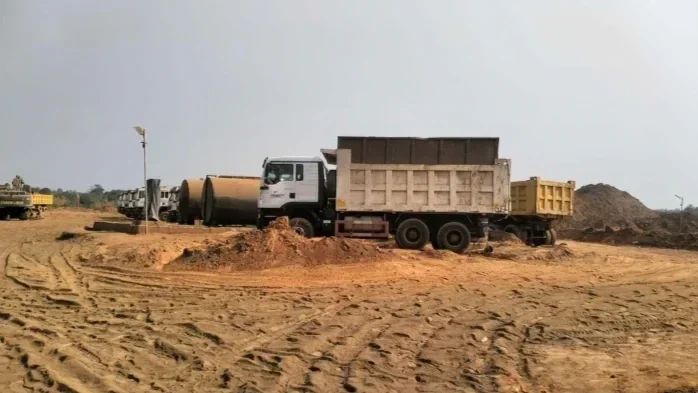
Group raises mining concerns.
Bincike International has called on the Federal Government to revoke illegally issued mining permits operating within Nigeria’s protected reserves and prosecute individuals and organisations involved in unlawful mining activities.
The non-governmental organisation also urged authorities to restore degraded areas, warning that unregulated mining is damaging agricultural land, contaminating water sources and threatening communities that depend on affected ecosystems.
/ You Might Also Like /




Group raises concerns over mining in protected areas
Executive Director of Bincike International, Dr Elisha Bello, said illegal mining continues in some areas with limited regard for environmental regulations, human rights and worker safety.
He also raised concerns about child labour and the connection between illegal mining and insecurity in some rural communities.
According to Bello, Nigeria's deposits of critical minerals provide an opportunity for economic development, but illegal exploitation allows criminal networks to benefit from the country's natural resources while government and host communities lose potential revenue.
Cross River and Gashaka Gumti parks cited
Bincike International specifically alleged that illegal mining has encroached on environmentally sensitive areas, including Cross River National Park and Gashaka Gumti National Park.
The organisation claimed that some mining activities in these locations operate under improperly issued or fraudulently obtained licences and could breach provisions of Nigeria's mining and national park laws.
The allegations have implications beyond mineral extraction because protected areas serve environmental, agricultural and ecological functions that can be difficult to restore once severely degraded.
Mining threatens land and water resources
The organisation warned that mining within protected landscapes could accelerate deforestation, soil erosion and water contamination.
Bincike International also highlighted risks to biodiversity, identifying species such as the Cross River gorilla, forest elephants and chimpanzees as potentially affected by continued environmental degradation.
Land degradation and water contamination can also affect communities beyond conservation areas by reducing the productivity and usability of surrounding land.
For rural property development and agricultural investment, environmental degradation can reduce the long-term economic value of affected locations and increase the cost of remediation.
Nigeria's mineral wealth presents economic opportunity
Bello acknowledged the commercial potential of Nigeria's mineral resources, particularly lithium.
He argued that high-grade mineral deposits could generate greater economic value if the sector operates within a properly regulated framework, with more minerals processed locally and incorporated into formal supply chains.
The emphasis on local processing is significant because mineral beneficiation can create demand for industrial facilities, logistics networks, energy infrastructure and supporting commercial development.
However, expanding mining activity without adequate environmental controls could create competing pressures on land, water resources and nearby communities.
Group calls for greater transparency
Bincike International called for stronger transparency mechanisms across the mining sector, including independent audits and public monitoring of mineral extraction.
The organisation said these measures could help ensure that royalties and other mineral-related revenues reach government and host communities.
It also called for stronger enforcement of environmental and human-rights standards, improved action against child labour, better protection for conservation personnel and measures to address links between illegal mining, environmental degradation and insecurity.
Host communities urged to play greater role
The group also advocated greater participation by host communities in protecting conservation areas.
It argued that communities should have a formal stake in safeguarding protected lands and natural resources, which could strengthen local ownership of conservation efforts.
Community involvement can also help authorities identify unauthorised activities earlier and improve accountability around the use of natural resources.
Environmental protection has property-market implications
Although the issue centres on mining and conservation, its implications extend to land use and property development.
Protected areas, agricultural land and residential developments compete within broader land-use systems. Weak enforcement of land-use regulations can create uncertainty for investors and developers, particularly where environmental restrictions are unclear or inconsistently applied.
For property investors, environmental due diligence is therefore important when considering land close to mining areas, conservation zones or mineral-processing activities.
Clear zoning, enforceable environmental standards and transparent licensing can reduce disputes and improve confidence in long-term land investments.
Outlook
Bincike International's call for the cancellation of allegedly illegal mining permits highlights growing concerns over the management of Nigeria's mineral resources and protected lands.
The challenge for policymakers is to balance the economic opportunities created by critical minerals with the need to protect ecosystems, agricultural land and host communities.
For the wider land and property market, stronger enforcement of environmental and land-use regulations could provide greater certainty for investors while helping prevent development and economic activity from creating long-term environmental liabilities.
READ MORE