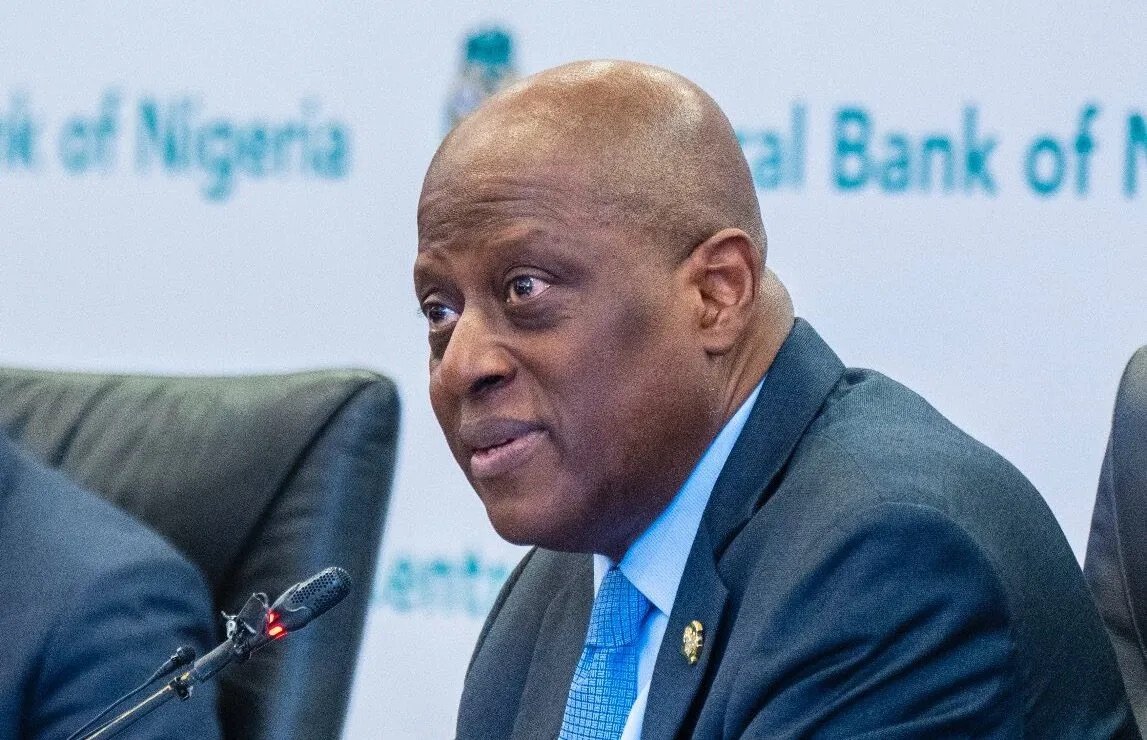
Central Bank of Nigeria Governor Olayemi Cardoso
The Central Bank of Nigeria (CBN) has introduced a risk-based regulatory framework for non-security virtual assets, bringing stablecoin issuers, digital-asset service providers and related payment activities under more structured licensing and supervisory requirements.
The regulations, issued through a circular dated November 5, 2026, cover stablecoins, deposit money tokens, virtual asset payment services, peer-to-peer platforms, custody, transfers, remittances, clearing and settlement. They took effect on the date of issuance.
/ You Might Also Like /




The framework marks a significant expansion of formal oversight of Nigeria’s digital financial market. It seeks to address risks associated with customer assets, liquidity, cybersecurity and financial crime while providing clearer operating requirements for businesses serving Nigerian users.
CBN establishes licensing and capital requirements
The new rules require issuers and service providers involved in regulated non-security virtual asset activities to obtain the appropriate CBN licence or authorisation.
They also introduce requirements covering capital adequacy, reserve backing, liquidity and redemption arrangements. These provisions are intended to ensure that operators have sufficient financial resources and appropriate safeguards to support their activities.
The requirements vary according to the type of business. Naira-referenced stablecoin issuers face a minimum capital requirement of ₦10 billion, while issuers of foreign currency-referenced stablecoins must maintain at least ₦15 billion. Other virtual asset service providers, including businesses offering payment, transfer and custody services, face a minimum capital requirement of ₦1 billion.
The capital thresholds raise the entry requirements for operators and could influence the structure of Nigeria’s digital asset industry, particularly among smaller businesses that may need additional investment or partnerships to meet the new standards.
SEC retains authority over security-related digital assets
The CBN framework recognises that its regulatory mandate does not override the statutory responsibilities of the Securities and Exchange Commission (SEC) or other competent authorities.
The distinction is important because digital assets can perform different functions. Some primarily facilitate payments and transfers, while others may qualify as securities or investment products and therefore fall within capital-market regulation.
Operators whose activities cut across different regulatory areas may need approvals from the relevant authorities. This approach is intended to reduce gaps and overlaps in supervision while preserving the responsibilities established under existing laws.
The Federal Government has also established a broader coordination framework for virtual asset regulation, with the CBN, SEC and other agencies expected to work together on oversight of the sector.
New rules tighten consumer protection and financial crime controls
The regulations introduce requirements for safeguarding customer and reserve assets, improving disclosures and establishing complaints-management procedures.
They also address corporate governance, internal controls, technology risk, cybersecurity and operational resilience. These provisions reflect the risks that can arise when financial services depend on digital platforms and complex transaction systems.
On financial crime, the framework requires measures covering anti-money laundering, counter-terrorist financing and counter-proliferation financing. These include sanctions screening, transaction monitoring, blockchain analytics, Travel Rule compliance and due diligence on counterparties.
The CBN has also provided for regulatory reporting, supervisory access, information sharing, enforcement and administrative sanctions. Orderly wind-down arrangements are included to help protect customers if a regulated operator can no longer continue its business.
Implications for Nigeria’s digital finance market
The new framework could reshape competition in Nigeria’s virtual asset industry by increasing the financial and compliance requirements for operators. Businesses will need to assess their activities, licensing obligations and capital positions against the new rules.
For stablecoin issuers, the capital and reserve requirements could encourage stronger institutional backing and improve confidence in redemption arrangements. For payment and custody providers, compliance obligations may increase operating costs but could also strengthen the credibility of services offered to consumers and businesses.
The regulations also have implications for financial institutions that interact with virtual asset operators, particularly where digital assets support payments, remittances and transfers across borders.
The challenge for regulators will be to enforce the requirements consistently without creating unnecessary barriers to legitimate innovation. A clearer regulatory environment could encourage responsible investment, but the cost of compliance may also prompt consolidation among smaller operators.
The CBN’s framework therefore represents more than a new set of rules for cryptocurrency-related businesses. It is an attempt to integrate a growing segment of digital finance into Nigeria’s wider financial oversight system. Its effectiveness will depend on implementation, coordination with other regulators and the ability to protect consumers while allowing viable digital financial services to develop.
READ MORE