Delta lawmakers approve higher capital spending for 2027
The Delta State House of Assembly has passed a ₦1.272 trillion budget for the 2027 fiscal year, increasing the proposed allocation for capital expenditure by ₦35.2 billion to ₦842 billion.
The approved budget exceeds the ₦1.23 trillion proposal presented by Governor Sheriff Oborevwori on 16 November 2026. Lawmakers retained the proposed ₦430 billion for recurrent expenditure but raised capital spending from ₦806.8 billion to accommodate additional priority projects.
/ You Might Also Like /




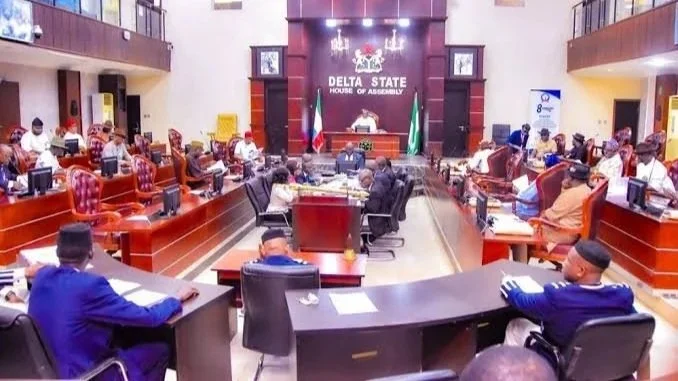
The Assembly passed the Appropriation Bill through a voice vote during plenary in Asaba on Wednesday, 25 November. The bill now awaits the governor’s assent before it can become law.
Delta Assembly Increases Capital Allocation by ₦35.2 Billion
Presenting the report of the House Committee on Finance and Appropriation, its chairman, Marilyn Okowa-Daramola, said the committee recommended an increase in capital expenditure to provide additional funding for priority projects.
She explained that the adjustment was intended to accelerate infrastructure development, improve residents’ living conditions, stimulate economic activity and promote inclusive development across the state.
The revised capital allocation of ₦842 billion represents about 66.2 per cent of the approved budget, while recurrent expenditure accounts for approximately 33.8 per cent.
The budget framework identifies education, agriculture, healthcare, industrialisation and youth empowerment as key development priorities. It also emphasises agricultural production and processing, food security, access to healthcare and skills development for young people.
Budget Awaits Governor’s Assent
The Majority Leader of the Assembly, Emeka Nwaobi, moved the motion for the adoption of the committee’s report, which was seconded by Festus Okoh. The bill subsequently passed its third reading before lawmakers approved it through a voice vote.
Speaker Dennis Guwor directed that a clean copy of the Appropriation Bill be forwarded to Governor Oborevwori for assent.
Until the governor signs the bill, the approved spending plan remains an appropriation bill rather than an enacted budget. The assent process will therefore determine when the state can formally begin implementation of the 2027 fiscal plan.
Capital Spending Takes Larger Share of Delta’s 2027 Budget
The allocation of ₦842 billion to capital expenditure places infrastructure and development projects at the centre of the state's proposed spending priorities.
Capital expenditure typically covers long-term public investments such as roads, bridges, public buildings, schools, healthcare facilities and other infrastructure. These investments can influence economic activity by improving connectivity, supporting businesses and expanding access to public services.
For Delta’s property and construction sectors, the scale and composition of capital spending will matter more than the headline budget figure alone. Road construction, drainage, bridges and other infrastructure projects can improve access to residential and commercial locations, influence land values and reduce some of the costs associated with property development.
However, the Assembly’s approval does not by itself establish which specific projects will receive the additional ₦35.2 billion. The eventual impact will depend on project selection, procurement, funding releases and the pace of implementation.
Delta’s 2027 Budget Is Lower Than the 2026 Spending Plan
The ₦1.272 trillion budget is substantially below Delta State’s ₦1.729 trillion approved budget for 2026, representing a reduction of approximately ₦457 billion, or 26.4 per cent.
The lower budget envelope suggests a tighter spending plan for the coming fiscal year, although the implications will depend on the state’s revenue performance and the extent to which approved capital projects receive funding.
The increase in capital expenditure during legislative review indicates that lawmakers sought to protect or expand funding for development priorities despite the smaller overall budget.
For contractors, property developers and businesses operating in Delta, the implementation of the capital programme will be an important indicator of public-sector demand for construction, engineering and related services in 2027.
Implementation Will Determine the Budget’s Economic Impact
Delta’s 2027 budget places a substantial share of public spending on capital projects, with lawmakers increasing the allocation to ₦842 billion before passing the bill.
The next test will be the governor’s assent and the state government’s ability to translate the approved allocations into completed projects. Timely procurement, predictable funding releases and transparent budget performance reporting will determine whether the higher capital allocation delivers the intended infrastructure and economic benefits.
READ MORE