Dangote Builds Nearly 7,000 Machine Construction Fleet as Nigeria’s Industrial Projects Expand

Dangote’s construction fleet nears 7,000 machines
Dangote Projects Ltd has expanded its construction equipment holdings to nearly 7,000 machines, building one of the largest privately controlled construction fleets in the world as Dangote Industries scales up refinery, fertiliser and other industrial projects.
Edwin Devakumar, Group Vice President of Dangote Industries, said the company initially acquired 2,563 pieces of equipment, including 320 cranes, for construction of the Dangote Petroleum Refinery. It subsequently added more than 4,000 machines as refinery and fertiliser projects expanded.
/ You Might Also Like /




The scale of the fleet highlights the significant construction capacity required to deliver large industrial projects in Nigeria and the extent to which major private investors are increasingly developing their own project-delivery infrastructure.
Dangote Builds Construction Capacity Around Mega-Projects
The decision to acquire thousands of machines was driven partly by a shortage of local construction capacity, according to Devakumar.
Dangote had approached major construction companies before commencing the refinery project but was told they did not have sufficient capacity to execute work of the required scale. Bringing foreign contractors into the project would also have required them to transport their equipment into Nigeria and subsequently remove it.
The group instead chose to build its own construction capability.
That decision has since produced a large equipment base supporting the refinery and fertiliser businesses.
The development follows Dangote's earlier $400 million agreement with XCMG Construction Machinery to acquire additional equipment for its refining and industrial expansion across Africa.
Refinery Construction Required More Than Heavy Equipment
The scale of the refinery project also exposed infrastructure gaps beyond construction machinery.
Dangote had to establish additional facilities and supply-chain capabilities because some materials and infrastructure were not available at the scale required.
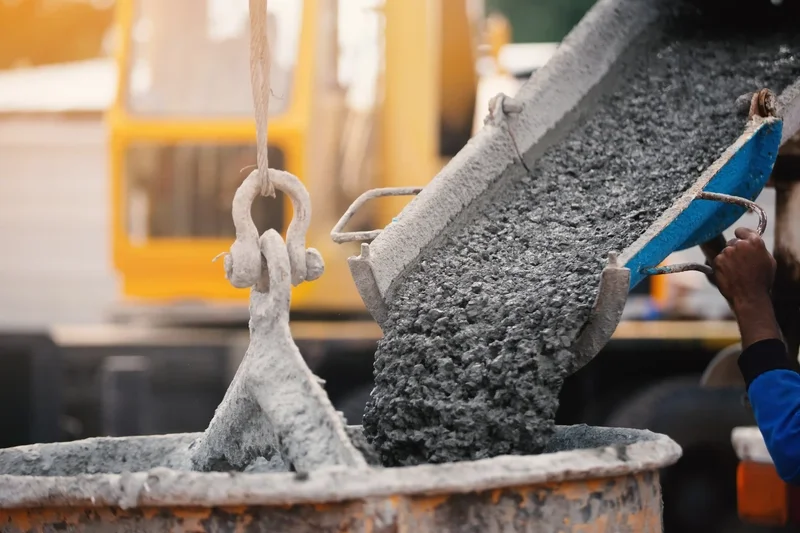
The group developed a quarry with capacity of 10 million tonnes per year and obtained the necessary mining and environmental approvals. It also invested in concrete-production and material-handling capacity, including concrete pumps and transit mixers.
The project further required its own port infrastructure because existing facilities could not handle some of the extremely heavy equipment required for the refinery.
According to Devakumar, some equipment brought to the project weighed as much as 3,000 tonnes.
Mega-Projects Are Creating New Industrial Infrastructure
The development demonstrates how large industrial projects can create infrastructure ecosystems beyond the core facility itself.
The refinery project required quarries, material-handling systems, port infrastructure, equipment yards, worker accommodation and other supporting facilities.
At its peak, about 63,000 people were working on the refinery project, while accommodation infrastructure was developed for about 50,000 people.
For Nigeria's property market, this creates an important secondary effect.
Large industrial projects generate demand for logistics facilities, warehouses, staff accommodation, commercial services and other forms of supporting real estate around project locations.
Ibeju-Lekki Emerges as a Major Industrial Development Corridor
The Dangote refinery has significantly reinforced the industrial character of the Lekki corridor, particularly around Ibeju-Lekki.
The refinery is located within the Lekki Free Zone and currently has crude-processing capacity of about 700,000 barrels per day, with an expansion pathway towards 1.4 million barrels per day.
Continued investment around the refinery can support wider demand for industrial property, logistics facilities, worker accommodation and commercial services.
This makes the scale of Dangote's construction fleet relevant beyond the construction sector itself. It reflects the physical infrastructure being assembled to support a broader industrial cluster.
Dangote Plans Further Industrial Expansion Across Africa
Dangote's construction capacity is also being positioned for projects beyond the existing Lagos refinery.
The group is preparing for the groundbreaking of a planned refinery in Lamu, Kenya, with a proposed 1,000MW power plant. Engineers India Limited has been appointed to provide project management consultancy and engineering, procurement and construction management services for the refinery and petrochemical complex.
The group is also expanding the Lagos refinery, with plans to increase capacity from about 700,000 barrels per day towards 1.4 million barrels per day.
Dangote has indicated plans to spend about $50 billion in capital expenditure between 2026 and 2030, compared with $25 billion invested during the previous five-year period.
Construction Capacity Has Wider Implications for Nigeria
The development points to a broader issue in Nigeria's construction market: the availability of equipment and contractors capable of executing projects at increasingly large scales.
Where local capacity is limited, developers can face higher costs, longer project timelines and greater dependence on foreign contractors and imported equipment.
Dangote's approach shows one alternative developing an internal construction ecosystem around large, long-term investment programmes.
However, the scale of the investment also demonstrates the capital intensity of major infrastructure and industrial construction.
Implications for Real Estate and Housing
The most direct NHM implication lies in the development of industrial and supporting real estate around major investment corridors.
Large industrial facilities require more than factories and processing plants. They create demand for roads, power, logistics, warehouses, worker accommodation, retail facilities and other supporting services.
As industrial activity expands around Lekki and other project locations, these requirements can create opportunities for developers and investors in industrial property and supporting residential developments.
The housing effect, however, depends on whether surrounding infrastructure and land-use planning keep pace with industrial expansion. Without adequate transport, utilities and planned residential areas, rapid industrialisation can also place pressure on existing communities and housing supply.
Outlook
Dangote Projects' near-7,000-machine construction fleet represents more than an expansion in equipment holdings. It reflects the scale of construction capacity required to execute some of Nigeria's largest industrial projects and the infrastructure gaps that major private investors have had to address themselves.
With Dangote planning substantial capital expenditure through 2030 and expanding its industrial footprint across Africa, the construction capacity built around its projects could support a wider ecosystem of infrastructure, logistics and property development.
For Nigeria's built environment, the broader question is whether this type of private-sector capacity can contribute to a deeper domestic construction industry capable of delivering large infrastructure, industrial and real estate projects without relying as heavily on external contractors and imported project capacity.
READ MORE