Cement Imports Put South Africa’s Local Building Materials Industry Under Pressure
Cement imports pressure South African producers
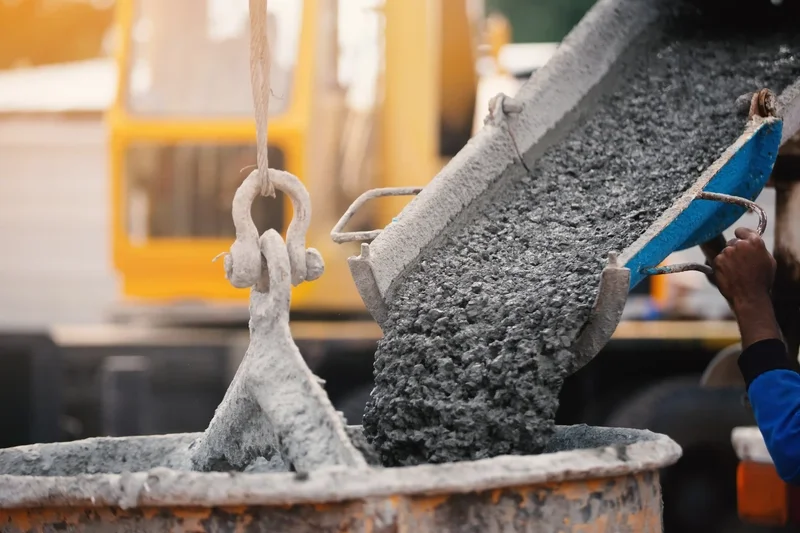
South Africa’s cement industry is facing growing pressure from imported products, with local manufacturer PPC warning that continued import growth could weaken domestic production, investment and industrial capacity.
PPC CEO Matias Cardarelli said the company was particularly concerned about cement imports from Mozambique and Vietnam, warning that continued growth could eventually encourage producers to move production and investment into neighbouring countries and supply the South African market from there.
/ You Might Also Like /




The issue has implications beyond the cement industry because cement remains one of the fundamental inputs into residential construction, commercial property, infrastructure and other forms of real estate development.
Imports Intensify Pressure on Local Cement Producers
PPC's warning comes amid weaker cement demand and increased competition in South Africa.
The company's South Africa and Botswana cement sales volumes fell 8% during the five months to August 2026 compared with the same period a year earlier. PPC attributed the difficult operating environment partly to weak demand, elevated diesel costs and aggressive price discounting.
The company has argued that increasing imports could make domestic cement production less commercially sustainable.
PPC is particularly focused on imports from Mozambique and Vietnam, with an anti-dumping application before South Africa's International Trade Administration Commission (ITAC) already progressing.
Anti-Dumping Investigation Targets Mozambique and Vietnam
The dispute has moved beyond industry concerns into a formal trade investigation.
ITAC found prima facie evidence supporting an investigation into cement imports from Mozambique and Vietnam following applications from local producers including Sephaku Cement and Afrimat.
The preliminary findings cited alleged dumping margins of about 90% for cement from Mozambique and 37% for Vietnamese cement. ITAC also identified evidence relating to declining market share, sales volumes, profitability and employment among local producers.
The investigation does not itself establish that dumping has occurred. Its significance is that the evidence submitted by local manufacturers was considered sufficient to justify further investigation.
Local Manufacturing Investment Is at Stake
For PPC, the issue extends beyond current sales volumes.
The company has argued that maintaining a level playing field between domestic producers and importers is important for continued investment, employment and industrial capacity.
This matters because cement production requires significant long-term capital investment in plants, quarries, energy infrastructure, logistics and distribution networks.
If domestic manufacturers cannot compete sustainably, investment in additional production capacity could become less attractive.
Conversely, restrictions on imports can also have consequences for construction companies and consumers if they reduce access to competitively priced cement.
The policy challenge therefore involves balancing the interests of domestic manufacturers with the need for competitive prices and reliable construction-material supply.
Construction Sector Faces a Supply-Cost Balancing Act
Cement is a major input into housing, commercial buildings, roads and other infrastructure.
A stronger domestic manufacturing base can provide greater supply security and reduce exposure to international shipping costs, foreign exchange movements and disruptions in external supply chains.
However, domestic production also carries substantial costs, including energy, transportation, raw materials and plant investment.
The competitiveness of local producers therefore directly affects the cost structure facing construction companies and property developers.
Housing and Real Estate Implications
For the property market, the development highlights the importance of building-material supply chains.
Housing developers depend on predictable access to cement and other materials when budgeting and scheduling projects. Significant changes in cement prices or availability can affect construction costs, project timelines and ultimately the prices of completed properties.
At the same time, protecting local manufacturing capacity can support employment and investment in the broader construction ecosystem.
The South African experience therefore illustrates a wider issue for African housing markets: the affordability of housing is linked not only to land and finance, but also to the strength and competitiveness of domestic building-material industries.
A Wider African Building-Materials Issue
The dispute also has relevance beyond South Africa.
African countries are simultaneously trying to increase housing delivery and develop domestic manufacturing capacity. Cement and other construction materials sit at the intersection of those two objectives.
Greater local production can strengthen industrial capacity and supply security, but manufacturers must remain competitive enough to prevent construction costs from rising unnecessarily.
For countries with large housing deficits, the balance is particularly important because high construction costs can restrict the number of homes developers can deliver at affordable prices.
Dangote’s South African Operation Is Also Exposed
The dispute has a direct connection to Nigeria through Dangote Cement's South African subsidiary, Sephaku Cement.
Sephaku is among the producers seeking trade protection as South Africa investigates alleged dumping of cement from Mozambique and Vietnam.
That makes the development relevant to Nigeria's largest cement producer and illustrates how the company's building-materials interests extend across African markets.
It also demonstrates the growing importance of regional cement production and cross-border competition within Africa's construction-materials market.
Implications for Construction Investment
The immediate outcome of South Africa's anti-dumping investigation could influence how cement manufacturers assess future production and investment decisions.
A favourable outcome for domestic producers could strengthen the incentive to maintain or expand local production capacity. On the other hand, measures that significantly restrict imports could affect the availability and pricing of cement for construction companies.
For developers, contractors and infrastructure investors, the key issue is therefore not simply whether cement is locally produced or imported, but whether the market can provide reliable, competitively priced and sustainable supply.
Outlook
South Africa's rising cement imports have opened a wider debate about the future of domestic building-material manufacturing and the balance between import competition and industrial capacity.
PPC's warning comes as the company invests in its new RK3 integrated cement plant in the Western Cape, while simultaneously dealing with weaker cement demand and import competition.
For the construction and real estate sectors, the outcome matters because cement availability and pricing feed directly into project economics.
The broader lesson for African housing markets is that expanding housing supply requires more than land, finance and developers. A competitive and resilient domestic building-materials industry is also an important part of the housing delivery chain.
READ MORE