The Federal Government and state governments are strengthening agricultural production planning
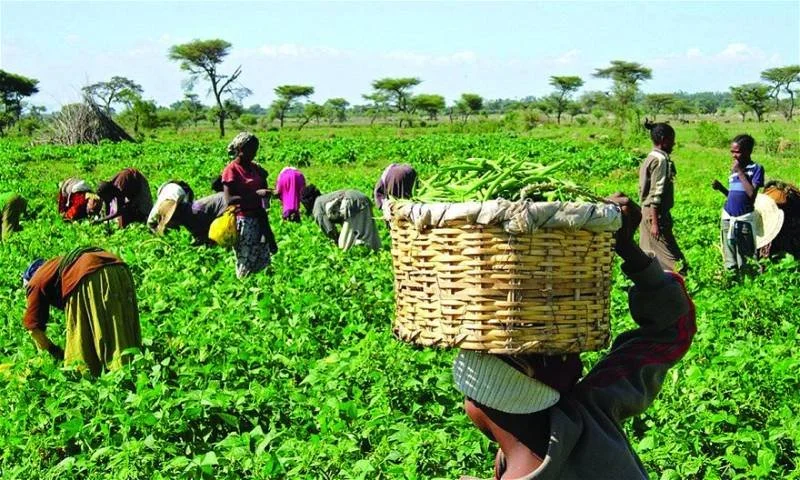
The Federal Government and state governments have agreed to strengthen coordination across agricultural production and marketing to stabilise food prices, protect farmers’ earnings and reduce the cost burden on Nigerian households ahead of the 2027 farming season.
The agreement emerged from the 48th meeting of the National Council on Agriculture and Food Security (NCAFS), where Minister of Agriculture and Food Security, Abubakar Kyari, urged states to improve production planning and align agricultural output with market demand.
/ You Might Also Like /




The initiative follows repeated fluctuations in food prices that have affected both consumers and farmers. While households face higher costs when food prices rise, farmers often struggle to recover production expenses when market prices fall sharply after harvests.
Kyari said stronger coordination between producing and consuming states, farmers, processors and investors would help address these market imbalances and create more predictable conditions across the agricultural value chain.
Food inflation highlights pressure on households and farmers
The Minister highlighted the volatility in food inflation over the past three years, noting that the rate reached 40.87% in June 2024 before declining to 8.89% in January 2026. It subsequently increased to 19.59% in September 2026.
He attributed some of the renewed cost pressures to disruptions in international energy, shipping and fertiliser markets linked to the conflict in the Middle East.
According to Kyari, the price of urea fertiliser exceeded $850 per tonne in April 2026, increasing production costs for farmers. Higher energy and transportation expenses have also added pressure to agricultural operations and the prices consumers pay for food.
He argued that stabilising food prices requires more than increasing agricultural output. Governments must also improve supply planning, strengthen market connections and ensure farmers can sell their produce at prices that cover production costs.
FG expands agricultural financing and farmer support
The Federal Government identified agricultural financing and input support as key components of its strategy to improve food production and protect farmers.
Kyari said the National Agricultural Development Fund (NADF) had strengthened its operations, with its Farm Input Support Programme reaching more than 115,000 beneficiaries across 25 states and the Federal Capital Territory.
The fund had also disbursed ₦16.27 billion through agribusiness financing to support activities across the agricultural sector.
The Bank of Agriculture, which the government is recapitalising, has provided financing to more than 500,000 smallholder farmers. It is also anchoring the ₦200 billion Guaranteed Minimum Price Programme, designed to protect eligible farmers from selling their produce at distress prices.
The programme is intended to support farmers when market prices fall below acceptable levels, helping them recover production costs while reducing the risks associated with sudden price declines.
FG deploys more tractors to increase agricultural production
The government is also expanding access to mechanised farming through the Renewed Hope National Agricultural Mechanisation Programme.
According to Kyari, the second phase involves 1,500 tractors and more than 8,000 supporting implements. This follows the deployment of 2,000 tractors and over 9,000 implements under the first phase.
The programme aims to reduce dependence on manual labour, lower production costs and improve farming efficiency.
Greater access to machinery could also help farmers cultivate larger areas of land and increase output, although the availability of equipment, maintenance services, fuel and financing will influence its impact.
Kyari stressed that production planning must also reflect the requirements of food processors and other industries. He cited maize as an example, explaining that fluctuations in its price affect feed manufacturers, poultry producers and food processing businesses, with the resulting costs eventually reaching consumers.
FG targets stronger links between farmers and processors
The Federal Government is expanding agro-industrial initiatives to improve the relationship between agricultural production and industrial demand.
Kyari said the Special Agro-Industrial Processing Zones initiative would encourage local processing and strengthen the market for agricultural produce. The Rural Access and Agricultural Marketing Project is also improving connections between farming communities and commercial markets.
The government is preparing the World Bank-supported AGROW Project, which is expected to strengthen commercial partnerships between smallholder farmers and agribusinesses.
These initiatives seek to address challenges that extend beyond farm production, including inadequate processing facilities, storage limitations, transportation costs and unreliable access to buyers.
The Minister also identified opportunities under the African Continental Free Trade Area (AfCFTA), noting that Nigerian agricultural producers could expand into regional markets if they meet international requirements for product quality, safety and reliable supply.
Enugu targets agricultural investment and agro-industrial growth
Enugu State Governor Peter Mbah used the meeting to highlight his administration's efforts to develop agriculture into a commercially driven and industrialised sector.
Mbah said the state was targeting economic growth from approximately $4.4 billion to $30 billion, with agriculture expected to play a significant role.
He disclosed that the state had supported more than 60,000 farmers, assembled 107 tractors and registered over 84,000 farmers in a digital database. Other initiatives include a 260 Farm Estates Programme and a 187,000-hectare land bank.
The state is also pursuing investments in palm production, the Songhai agricultural initiative, Sunrise Flour Mills, livestock development and agricultural processing.
Mbah said the government was moving beyond a production-focused approach towards an agro-industrial model in which agricultural produce would undergo processing, storage and value addition before reaching consumers and commercial markets.
Enugu State Commissioner for Agriculture and Agro-Industrialisation, Patrick Ubru, said the state expected agriculture to contribute $12 billion, representing 40% of its targeted $30 billion economic output by 2031.
He added that investments in warehouses, processing facilities and market infrastructure would support farmers and attract private investment into the sector.
State coordination remains central to food price stability
Ahead of the 2027 farming season, Kyari called on state commissioners for agriculture to improve production forecasts, coordinate supply between producing and consuming areas and align farm output with industrial demand.
He said better planning would help reduce food waste, prevent farmers from recording losses and provide manufacturers with more reliable supplies of agricultural raw materials.
The Minister also cited National Bureau of Statistics figures showing that Nigeria's economy grew by 4.43% in the second quarter of 2026. Agriculture expanded by 4.39% during the period and accounted for 26.15% of real gross domestic product.
The Federal Government's strategy therefore places greater emphasis on coordination across the agricultural value chain, rather than relying solely on increased production to address food inflation.
Whether the approach delivers more stable food prices will depend on how effectively federal and state governments implement their commitments, improve market access and ensure that financing, mechanisation, storage and processing investments reach farmers and agribusinesses.
READ MORE