Cash held outside Nigeria’s banking system rose to ₦4.92 trillion in September 2026
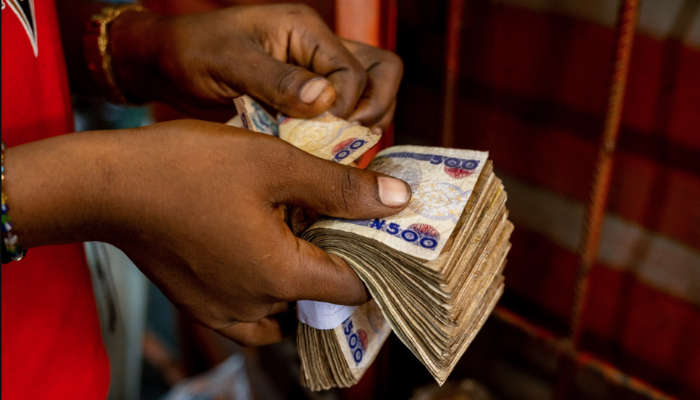
The Central Bank of Nigeria faces a continuing challenge in reducing reliance on physical cash, with currency held outside banks increasing by ₦48.7 billion in September to ₦4.92 trillion. The latest figure marks a second consecutive monthly increase and comes as the regulator pursues wider digital-payment adoption and greater financial inclusion.
/ You Might Also Like /




Cash Outside Banks Records Second Monthly Increase
Central Bank of Nigeria data show that cash held outside the banking system rose from ₦4.87 trillion in August to ₦4.92 trillion in September, an increase of approximately 1%.
The September figure was also 10.3% higher than the ₦4.47 trillion recorded in the corresponding month of 2025, indicating that physical cash holdings remain substantial despite the expansion of digital financial services.
The latest increase follows a three-month decline between May and July 2026. Cash outside banks fell from ₦5.19 trillion in May to ₦4.92 trillion in June and ₦4.80 trillion in July before rising again in August and September.
Despite the recent recovery, the September figure remains below the levels recorded during several months in the first half of 2026.
CBN Targets Lower Cash Dependence by 2028
The increase comes as the CBN seeks to expand digital payments, deepen financial inclusion and reduce dependence on physical currency.
Under its Nigeria Payment System Vision 2028, the apex bank aims to reduce cash held outside banks to below 40% of total currency in circulation. It is also targeting financial inclusion for 95% of Nigeria’s adult population by 2028.
The strategy builds on the growth of Nigeria’s digital-payment ecosystem, supported by mobile banking, fintech platforms, instant bank transfers, mobile money and point-of-sale services.
Achieving the targets will require more than the availability of electronic payment channels. Consumers and businesses also need reliable payment infrastructure, affordable transaction services and confidence that electronic transfers will work when required.
For businesses operating in cash-dependent segments of the economy, the shift towards digital payments will also depend on whether electronic transactions are convenient and practical for everyday purchases.
Rising Cash Holdings Do Not Necessarily Mean Digital Payments Are Falling
The increase in cash outside banks highlights the continued role of physical currency in Nigeria’s financial system, but it does not establish that Nigerians are using electronic payments less frequently.
The CBN’s measure captures physical cash held outside the banking system. It does not directly measure the volume or value of digital transactions, which can grow alongside cash holdings.
The figures should therefore be considered alongside electronic-payment activity, financial inclusion data and the wider composition of money supply to assess progress towards a less cash-dependent economy.
The distinction is important because the policy objective is not simply to reduce cash holdings, but to encourage a financial system in which households and businesses can access and use formal financial services efficiently.
Implications for Property Transactions and Housing Finance
The continued use of physical cash has implications for property transactions, particularly in segments where payments, deposits and other dealings take place outside formal banking channels.
Greater adoption of traceable electronic payments could improve transaction records and make it easier for property businesses to document receipts and payments. It could also support more transparent financial processes for developers, estate agents, landlords and property buyers.
However, the September figures do not establish how much cash outside banks is being used in real estate transactions. Nor do they show that the increase reflects a rise in cash-based property purchases.
For housing finance, wider access to formal financial services and reliable digital payment systems could make it easier for households to manage payments and interact with financial institutions. These benefits would depend on affordability, access to banking services and the availability of suitable mortgage products.
Payment Infrastructure Remains Critical to the CBN’s Target
The latest data underline the challenge facing the CBN as it pursues its 2028 payment-system objectives. Although digital payments have expanded, cash remains an important part of Nigeria’s financial activity.
Progress will depend on improving the reliability and accessibility of electronic payments while ensuring that individuals and businesses can conduct transactions without unnecessary cost or disruption.
The next indicators to watch include the proportion of currency held outside banks, growth in electronic-payment activity and progress towards the CBN’s financial-inclusion target.
For now, the September increase shows that reducing reliance on physical cash remains an ongoing task, even as Nigeria’s digital-payment infrastructure continues to develop.
READ MORE