Bad Roads, Rickety Trucks, Extortion Deepen Lagos Logistics Crisis
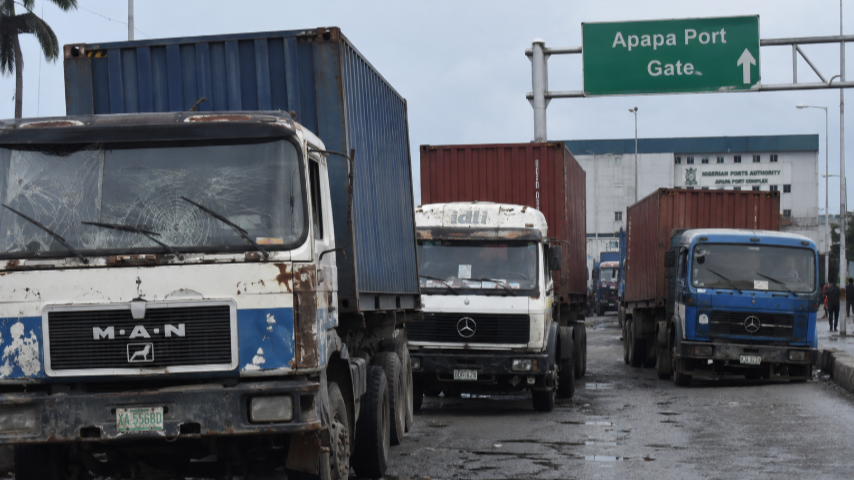
Lagos port logistics under pressure
Poor road infrastructure, deteriorating trucks, vandalism and extortion are worsening logistics challenges around Lagos ports, increasing the difficulty and cost of moving cargo through one of Nigeria’s most important trade corridors.
/ You Might Also Like /




Poor roads accelerate truck deterioration
Truck operators say the condition of roads serving the Lagos ports remains one of the biggest factors affecting vehicle maintenance.
Heavy-duty trucks regularly operate on damaged roads while also spending extended periods in traffic. The rainy season further worsens road conditions and increases the strain on vehicles.
According to truck owners cited in the report, privately owned operators account for between 60% and 65% of trucks serving the ports. Unlike large logistics companies with structured maintenance systems and replacement fleets, many private operators have limited financial capacity to repair or replace damaged vehicles quickly.
The resulting deterioration has contributed to an increase in trucks operating with defective or missing safety components.
Vandalism and extortion add to operating costs
Truck operators also face vandalism and extortion along port access routes.
The investigation found that hoodlums and touts allegedly vandalise trucks when drivers refuse to pay money demanded at various points. Drivers have reported losing batteries, jacks, wheel spanners, mobile phones and other valuables.
Some operators also allege that trucks sustain additional damage during roadside enforcement activities.
These costs compound the financial pressure on truck owners, making it more difficult to maintain vehicles to the required safety standards.
Safety compliance remains mandatory
The Nigerian Ports Authority requires trucks accessing the ports to meet its Minimum Safety Standard (MSS).
The Association of Maritime Truck Owners said operators are expected to maintain functional headlamps, brake systems, reflector lights and other essential safety features.
According to the association, the NPA conducts inspections before issuing MSS stickers, with vehicles that fail to meet the requirements denied port access.
However, operators argue that trucks can deteriorate after inspection because of road conditions, vandalism and other problems encountered along the port corridors.
The situation creates a gap between regulatory requirements and the operating environment facing truck owners.
Port delays affect importers and businesses
The logistics challenges extend beyond truck operators.
Port users told The Sun that vandalism, vehicle breakdowns and poor road conditions can delay the movement of consignments, leaving imported goods in transit for longer periods.
Longer transit times can increase demurrage, vehicle operating costs and other logistics expenses for importers and clearing agents.
These additional costs can eventually feed into the prices of goods transported from the ports to markets and distribution centres across the country.
Logistics costs have implications for construction
The problem has particular significance for Nigeria’s construction and property sectors because a large volume of building materials, machinery and other project inputs move through Lagos ports.
When poor roads, traffic congestion and truck breakdowns delay cargo movement, developers and contractors can face higher transportation and handling costs.
Delays can also affect project schedules where construction materials arrive later than planned.
For large developments, repeated increases in logistics costs can affect overall project economics, particularly when developers operate on tight margins or fixed-price contracts.
Port access roads remain a critical infrastructure issue
The Lagos ports serve as a major gateway for Nigeria's import and export activities, making the condition of surrounding roads important to the wider economy.
Rehabilitating port access roads could reduce vehicle damage, improve journey times and lower the cost of moving cargo.
Truck operators have therefore called on government authorities to prioritise road rehabilitation and eliminate illegal checkpoints and extortion along the corridors.
Improved road infrastructure would also support more efficient movement between ports, industrial areas, warehouses, markets and urban centres.
Logistics efficiency affects industrial and real estate development
The challenges around Lagos ports have implications beyond transportation.
Efficient logistics networks are important to the development of industrial parks, warehouses, distribution centres and other commercial property.
Where businesses face persistent delays and high transport costs, demand for strategically located logistics facilities can increase as companies seek to shorten supply chains and position warehouses closer to ports and major markets.
For Lagos, improving port connectivity could therefore support both trade competitiveness and the development of industrial and logistics real estate.
Private operators face growing financial pressure
The dominance of private truck operators makes the sustainability of the haulage system particularly important.
Large logistics companies may have the financial capacity to maintain fleets, deploy recovery vehicles and replace damaged trucks. Smaller operators often face greater difficulty absorbing repeated repair, enforcement and operating costs.
Without improvements to road conditions and security along the port corridors, the financial pressure could continue to reduce the ability of smaller operators to maintain compliant vehicles.
Outlook
The logistics challenges around Lagos ports highlight the connection between road infrastructure, transport safety, trade efficiency and property development.
Rehabilitating port access roads and tackling vandalism and illegal charges could reduce the cost of moving goods while improving the roadworthiness of commercial vehicles.
For Nigeria’s housing and construction sectors, a more efficient logistics network could help moderate transportation-related costs and improve the reliability of building-material supply chains. The longer-term benefit will depend on coordinated investment in roads, port infrastructure, enforcement and haulage regulation.
READ MORE