The Federal Government has inaugurated an 81-kilometre section of the Abuja-Kaduna highway
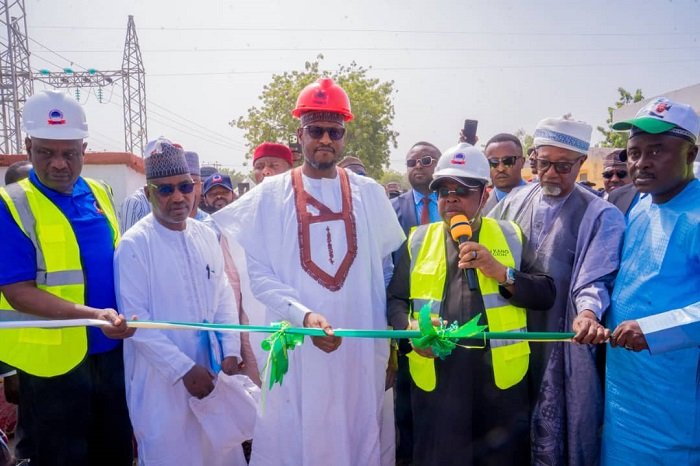
President Bola Tinubu has inaugurated an 81-kilometre section of the Abuja–Kaduna highway, marking a milestone in the Federal Government’s road infrastructure programme across north-western Nigeria.
The section, constructed with continuously reinforced concrete pavement and fitted with street lighting, forms part of the wider Abuja–Kaduna–Zaria–Kano highway corridor, a major transport route connecting the Federal Capital Territory with important commercial centres in Kaduna, Zaria and Kano.
/ You Might Also Like /




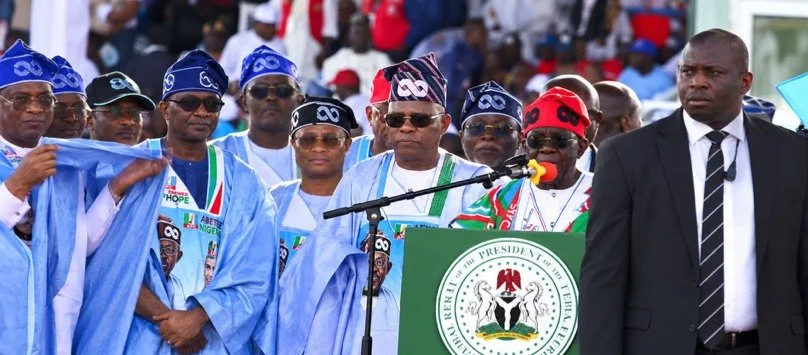
The inauguration took place in Kaduna on Saturday, 24 October 2026, ahead of the All Progressives Congress presidential campaign launch for the 2027 general election. The infrastructure development, however, has broader implications for transport connectivity, logistics and economic activity beyond the political event.
The Presidency said 118 kilometres of the first lot of the Abuja–Kaduna–Zaria–Kano highway had been completed, including the 81-kilometre section inaugurated by Tinubu. A further 164 kilometres under the second lot had also been completed, according to government figures.
Concrete Pavement and Street Lighting Aim to Improve Travel
The newly inaugurated section uses continuously reinforced concrete pavement, a road construction method designed to provide a durable surface for sustained traffic.
Street lighting has also been installed along the stretch to improve visibility for motorists travelling at night. The combination of road construction and lighting is intended to improve travel conditions along a corridor used by private motorists, commercial transport operators and businesses moving goods between the Federal Capital Territory and the North-West.
The practical benefits will depend on the condition of the wider route, road safety enforcement, maintenance and the performance of connecting sections. Completing one stretch does not mean the entire Abuja–Kaduna–Zaria–Kano corridor is finished.
Federal Government Lists Wider North-West Road Programme
The inauguration forms part of a broader government programme covering road construction and rehabilitation across the North-West.
Presidential spokesperson Bayo Onanuga said the Federal Government had completed 348 kilometres of inherited and newly initiated road projects across the region, while another 1,811 kilometres were at different stages of completion.
Other projects highlighted by the government include the Kaduna–Pambegua road and sections of the Sokoto–Badagry Superhighway. The government also reported ongoing work on routes linking Sokoto, Zamfara, Zaria, Kano and surrounding communities.
However, the figures cover multiple projects at different stages. Their wider economic impact will depend on completion timelines, funding, maintenance arrangements and whether the roads deliver reliable connections between population centres and commercial hubs.
Better Road Connectivity Could Support Property Development
The Abuja–Kaduna–Zaria–Kano corridor is significant for the housing and real estate sector because transport access influences where households live, where businesses operate and where developers consider new projects.
More reliable road connections can reduce travel friction between employment centres and residential areas, improve access to services and make the movement of construction materials and other goods more efficient.
For developers and investors, improved connectivity may strengthen the case for evaluating locations along major transport routes. However, road improvements do not automatically produce higher property prices, rental growth or new development. Those outcomes also depend on land availability, infrastructure such as electricity and water, security, affordability and demand.
The wider benefits will therefore be clearer as the government completes the remaining sections and road users experience the effects on travel time, safety and transport costs.
Completion of the Wider Corridor Remains Important
The 81-kilometre inauguration marks progress on a major national transport route, but the remaining sections and connections will determine how much of the corridor’s intended benefit can be realised.
For businesses, households and property investors, the key measures to watch are the completion of outstanding works, the quality of road connections, maintenance and the extent to which improved transport translates into more dependable movement between cities.
The Federal Government has presented the project as part of its wider infrastructure expansion programme. Its long-term value will ultimately depend on consistent delivery and the corridor’s ability to support safer travel, trade and regional economic activity.
READ MORE